

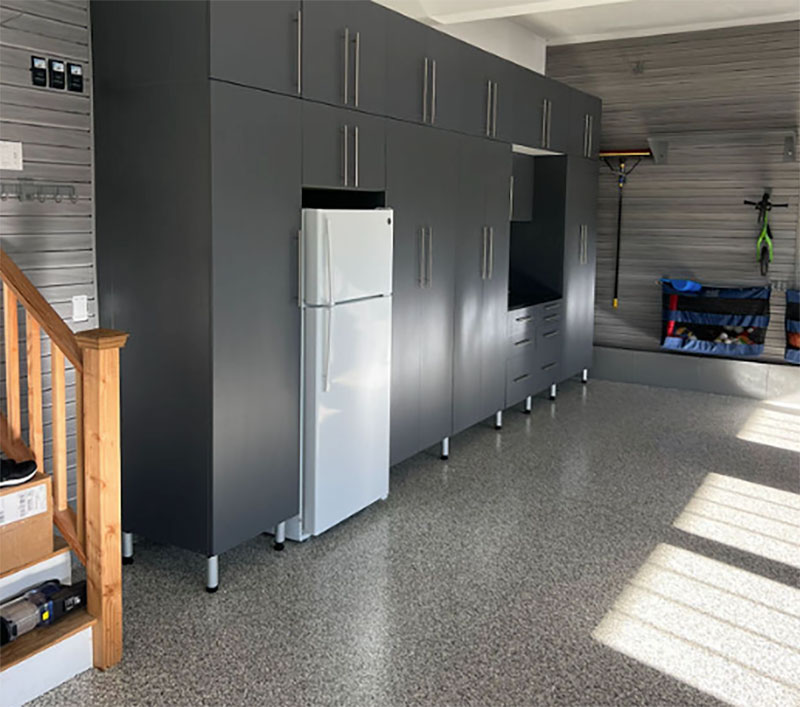
Garage epoxy in northwest area settings faces unique environmental conditions that influence how the coating behaves both during installation and over time. Cooler temperatures, frequent rain, and higher humidity levels all play a role in how the floor cures, how long it lasts, and what kind of preparation is needed before applying a new coating. This guide explains how the northwest climate affects garage epoxy and what homeowners should understand before planning a project.
How Temperature Affects Garage Epoxy
In northwest regions, temperatures can shift quickly throughout the year. These changes influence how epoxy bonds to concrete and how long it takes to set.
Cooler Temperatures Slow Down Curing
Epoxy needs a specific temperature range to harden correctly. If the environment is too cold:
- The coating may take longer to firm up
- The surface may not level as smoothly
- Additional time may be needed before walking or parking on the floor
This doesn’t harm the coating, but it does require more patience and careful timing.
Warm Weather Improves Conditions
Warmer months usually offer more stable curing conditions. This is why many installations take place in late spring or summer, when temperatures stay consistent throughout the day and night.
How Humidity and Moisture Influence Garage Epoxy
The northwest is known for high humidity and regular rainfall. Since concrete absorbs moisture easily, the slab beneath the epoxy must be dry and stable before any coating is applied.
Moisture Inside the Concrete
Concrete can hold water from rain, snowmelt, and surrounding soil. Too much moisture can:
- Slow down the bonding process
- Cause bubbles or cloudiness
- Lead to long-term adhesion issues
Moisture testing and proper surface preparation help prevent these problems.
Ambient Humidity
High humidity in the air can also affect epoxy during installation. When humidity rises:
- The coating takes longer to set
- The finish may appear softer until curing is complete
- Additional ventilation may be required
This is especially true during fall and winter months.
Rain and Stormy Weather Considerations
Even if a garage is covered, rain still influences the concrete around it. When the ground becomes saturated, moisture can move upward through the slab.
Why Ground Moisture Matters
If the underlying concrete is damp:
- The coating may not bond evenly
- The surface could form small pinholes
- Dry times may extend
Scheduling installations after long periods of rain requires extra attention to slab conditions.
Impact of Freeze and Thaw Cycles
Some northwest areas experience freeze and thaw patterns that affect both concrete and epoxy coatings.
Concrete Expansion and Contraction
When temperatures shift:
- Concrete expands and contracts naturally
- Small hairline cracks can form
- These cracks may appear under the coating if the floor wasn’t repaired before installation
Proper prep helps reduce these effects.
Daily Use Conditions in Northwest Regions
Weather doesn’t just affect installation. It also affects how garage epoxy performs day to day.
Road Salt and Winter Debris
Vehicles bring in:
- Salt
- Sand
- Water
- Mud
These materials can slowly wear down the top layer. Regular cleaning helps keep the surface in good shape.
Constant Moisture From Rain
Wet tires and dripping water create puddles that sit on the floor. While epoxy handles this well, frequent moisture means:
- The surface should be cleaned more often
- Mats can help collect water near entry points
Best Times of Year for Garage Epoxy in Northwest Areas
Because of the climate, certain seasons provide better conditions for installation.
Spring and Summer
These months offer:
- More predictable temperatures
- Lower humidity
- Faster curing
- Less ground moisture
Fall and Winter
Installations are still possible but may require:
- Longer dry times
- Extra moisture checks
- More temperature control
- Careful planning around storms
Garage epoxy in northwest area environments performs well when temperature, humidity, and moisture conditions are understood and managed correctly. Cooler weather, frequent rain, and seasonal shifts all influence how the coating cures and how long it lasts. By planning around these factors and understanding how the climate interacts with concrete, homeowners can achieve a smooth, long-lasting surface that holds up to daily use in a wet, cooler region.