

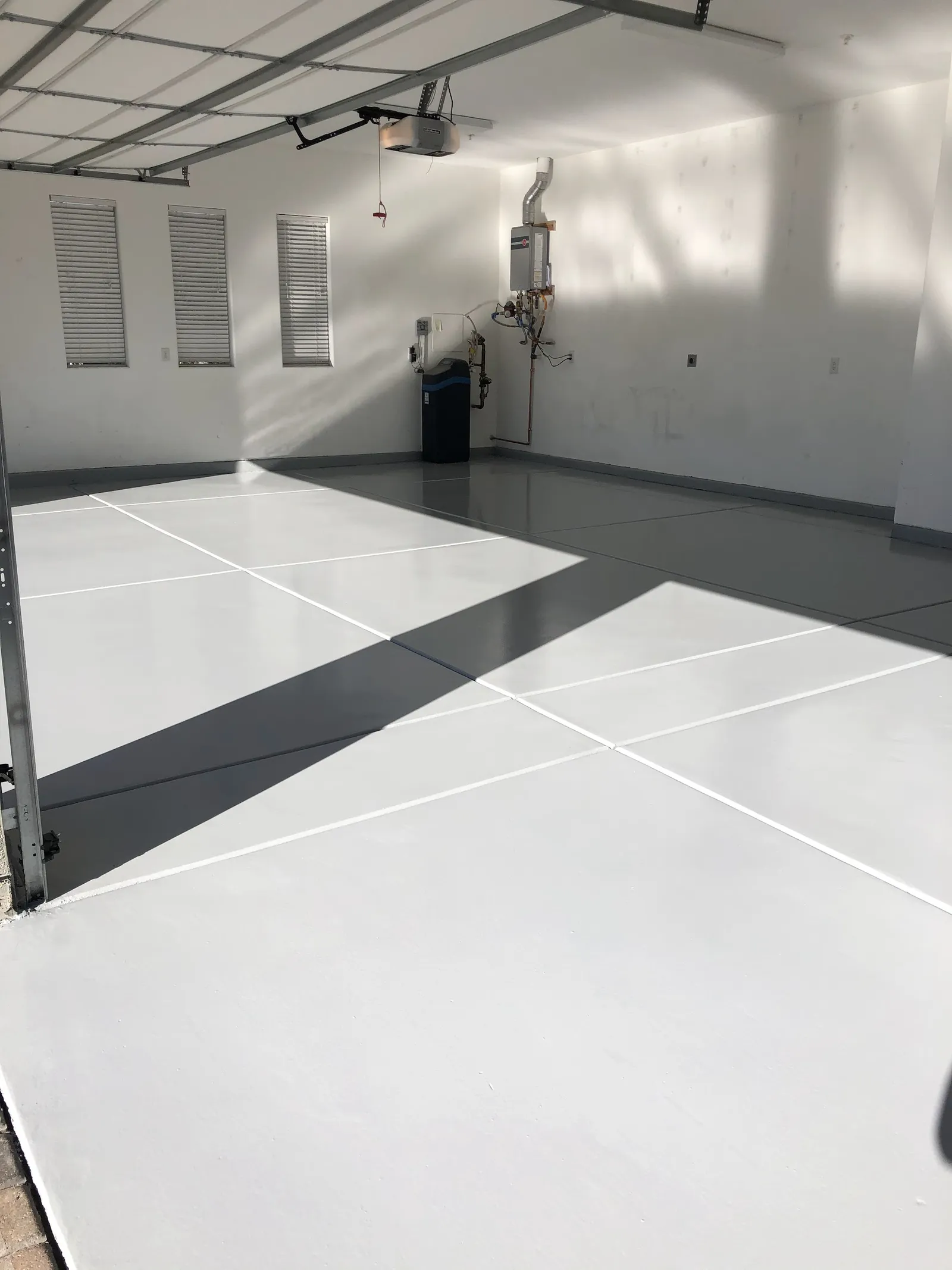
Garage floor coating preparation has two halves. The contractor handles the concrete. You handle everything sitting on it, and the second half causes more delays and more bad days than the first.
This is the homeowner’s side of the job: what to move, when to move it, what to arrange before the crew arrives, and what to do afterwards so a good installation stays good. The contractor’s side, the grinding and profiling work, is a separate subject covered in concrete surface preparation.
Two weeks out
Decide where the contents of the garage are going. A two car garage holds more than people estimate, and in a valley summer the driveway is not a good temporary store for anything with a plastic housing or a screen. Arrange a storage container, a side yard with shade, or space inside the house, and do it early rather than the night before.
Sort out parking for the whole period, not just the install day. Foot traffic returns to a new coating well before vehicles do, and the vehicle number is the one that will determine how long the cars are out. Ask for both return to service times in writing at booking, because the answer changes with the season and with the system, as explained in choosing when to schedule a floor coating.
Check what is attached to the garage and cannot simply be carried out. A water heater, a water softener, a second refrigerator or freezer, a laundry pair, built in cabinets and a workbench bolted to the wall all need a decision: work around it, disconnect it, or move it. Work around it is normal and fine, and it needs to be agreed in advance because it changes the layout of the work and where the coating terminates.
One week out
Empty everything you can. Shelving units, bikes, sports equipment, boxes, the lawn equipment, the tool chest. If wall mounted shelving is staying, say so, because the crew needs to know whether to cut in under it or coat through.
Plan the appliance question. A freezer full of food that needs to stay running through the job needs a working outlet somewhere else, and an extension cord across a work area is not it. Sort out where it plugs in before the day, and move perishable contents if the outage will be long.
Deal with pets. Grinding is loud and dusty, doors are open, and a nervous animal and an open garage door are a bad combination. Plan for them to be somewhere else for the noisy part of the day.
Ask about power and water. Grinders, vacuums and shot blasters draw serious current, and a crew may need dedicated circuits or their own generator. Water access is often needed too. Confirm what they expect from the house rather than discovering it at eight in the morning.
Garage floor coating preparation mistakes to avoid
Do not pressure wash the slab beforehand. It feels helpful and it is not: it puts water into a slab that is about to be tested for moisture and coated, and the concrete then has to dry again before anything can happen.
Do not acid etch it yourself. Acid etching is not equivalent to mechanical preparation, it leaves residue, it does not produce a measurable profile, and it puts more water and chemistry into the floor. If you have already done it, tell the contractor, because it changes what they find.
Do not paint or seal anything in advance, and do not degrease with a household product that leaves a film. Some cleaners deposit residue that has to be ground off and, worse, can be invisible.
Do not hide the oil stains. Point them out. Oil that has soaked into concrete has to be ground past, and a stain the crew finds after they have quoted is a change order, whereas one they see at the assessment is scope.
The day before
Sweep the floor and get everything off it including the last few boxes in the corner. Clear a path from the driveway into the garage so equipment can come in. Make sure the garage door works properly and can stay open for the day, since it will be. Confirm the arrival time and how long the crew expects the noisy phase to run, and warn the neighbors if you like them, because grinding concrete is genuinely loud. If a homeowners association governs your street, check whether it sets start times for contractor work, because that is a common and avoidable first morning argument.
What the day looks like
Preparation first, and it is the loud, dusty phase. A crew doing it properly runs shrouded equipment connected to vacuums and seals the door into the house, because the dust is respirable silica rather than nuisance dust. Then crack and joint work, then priming, then the body coat and the broadcast, then the topcoat, with waiting time between coats that depends on the system and the temperature.
Expect the garage to be inaccessible for the whole period, expect smell, and expect the crew to want the space to themselves while material is wet. How the sequence runs from assessment to handover is on the process page.
After the crew leaves
Respect the cure times. That is the single most important thing a homeowner controls, and early vehicle return is the most common cause of hot tire pickup on a floor that was installed correctly. Walking on it early is usually less damaging than parking on it early, but both have numbers attached and both are in the proposal if you asked for them.
Keep water off it for the first period, keep grit off it while it is at its most vulnerable, and put felt pads under anything with metal feet before it goes back on the floor. When the contents return, do it in stages rather than dragging everything back in one afternoon.
For long term care, sweep or dust mop regularly, because grit under a tire or a foot is what abrades a topcoat, and clean with what the manufacturer allows rather than whatever is under the sink. The full garage specification, including the topcoat decisions that determine how it ages, is in the Las Vegas garage floor coatings guide, residential systems are on the residential flooring page, and the full range is on the services page.
Frequently asked questions
How long will my garage be out of use?
Longer than the installation itself, because cure is the binding constraint. Foot traffic returns first and vehicles considerably later, and both times shift with the season, since a cold slab in winter extends cure well past a summer schedule. Ask for both numbers in writing at booking so you can plan parking rather than guess.
Do I have to move the water heater or the freezer?
Usually not. Coating around fixed equipment is normal, and it needs to be agreed in advance because it changes where the coating terminates and how the crew sequences the floor. What does need planning is power for anything that must stay running, since an extension cord across a live work area is not a solution.
Should I clean or pressure wash the floor before the crew arrives?
Sweep it and clear it. Do not pressure wash it, because that puts water into a slab that is about to be moisture tested and coated, and the concrete then has to dry again. Do not use household degreasers that leave a film, and point out oil stains rather than trying to hide them.
How much dust does the preparation make?
A great deal, which is why it is controlled rather than tolerated. Equipment runs with shrouds connected to vacuums rated for concrete dust, and the doorway into the house is sealed. The dust is respirable silica, so a crew grinding an attached garage with no extraction is a reason to stop the job, not a minor untidiness.
When can I put the shelving and boxes back?
After the stated cure period, and in stages rather than all at once. Put felt pads under metal feet, avoid dragging heavy items across the surface, and keep grit off the floor while the topcoat is at its most vulnerable. Sweeping regularly from then on does more for the life of the finish than anything else you can do.