

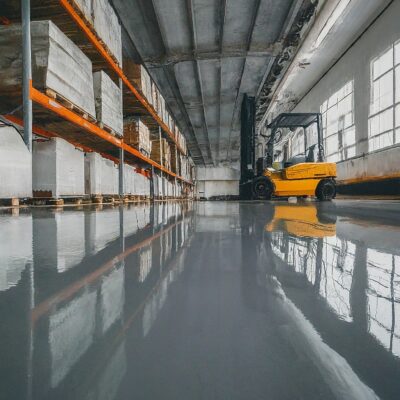
Commercial epoxy flooring is a reliable option for businesses that deal with constant movement, rolling loads, and frequent cleaning. It bonds with concrete to create a strong, seamless surface built for long-term use. This guide breaks down how it works, where it’s used, system options, expected costs, and what to consider when choosing the right setup.
What Is Commercial Epoxy Flooring?
Commercial epoxy flooring is a multi-layer resin system made from a mix of resin and hardener. Once applied to concrete, it cures into a dense, solid surface. It performs well in places that need durability, easy cleaning, and resistance to spills. Thickness varies depending on the amount of traffic and the type of work being done on the floor.
Where It’s Commonly Used
Businesses use epoxy flooring in many different environments, including:
- Warehouses and storage buildings
- Retail stores and customer-facing spaces
- Healthcare facilities
- Manufacturing plants
- Restaurants
- Commercial kitchens
These locations favor epoxy because it supports constant use, reduces dust, and keeps surfaces easier to clean.
Types of Commercial Epoxy Flooring Systems
Different spaces call for different epoxy builds. The most common options include:
Standard Epoxy
A smooth, uniform system suitable for retail, storage, and general commercial use.
Quartz Systems
A textured system that handles moisture, heat, and aggressive cleaning—common in commercial kitchens and food prep areas.
Urethane Mortar
Built for intense conditions. Works well in restaurants, breweries, food processing, and industrial environments.
Epoxy with Polyaspartic Topcoats
A faster-curing option that supports busy operations needing quicker turnaround.
Metallic and flake finishes also exist but are mainly chosen for appearance rather than heavy traffic.
How Commercial Epoxy Floors Are Installed
The installation process affects performance more than anything else. It generally includes:
- Surface Prep – Grinding the concrete so the coating bonds correctly.
- Repairs – Fixing cracks, pits, and weak spots.
- Base Coat – The main colored layer that builds strength.
- Optional Texture – Quartz or flakes for grip where needed.
- Topcoat – A clear, protective layer that adds resistance and longevity.
Commercial Epoxy Flooring Cost
Several factors influence cost:
- Square footage – Larger areas often lower the cost per square foot.
- Concrete condition – Damaged floors raise prep time.
- System type – Quartz and urethane mortar cost more than standard epoxy.
- Thickness – More material raises the price.
- Add-ons – Texture, color zoning, or moisture barriers change the total.
Cost ranges vary across the country, so pricing is usually discussed per square foot rather than as a single number.
Pros and Cons
Pros
- Handles steady traffic and rolling loads
- Easy to clean and keep sanitary
- Reduces concrete dust
- Supports color and texture options
Cons
- Needs proper prep for good results
- Requires time to cure before full use
Lifespan and Maintenance
Most commercial epoxy floors last many years when installed correctly and maintained with simple routines. Basic sweeping, regular mopping, and quick cleanup of spills help protect the surface. High-use spaces like commercial kitchens may eventually need a new topcoat to keep the floor looking sharp and performing well.
How to Choose the Right System
Consider:
- Traffic type (foot, carts, forklifts)
- Exposure to moisture, oils, chemicals, or heat
- Slip resistance needs
- Concrete condition
Selecting a system based on the specific environment leads to better results and longer service life.
Commercial epoxy flooring supports the heavy use found in warehouses, retail shops, restaurants, commercial kitchens, and other busy environments. With several system types available and a wide range of performance options, understanding installation, cost factors, and maintenance helps businesses choose a setup that fits their daily demands.