

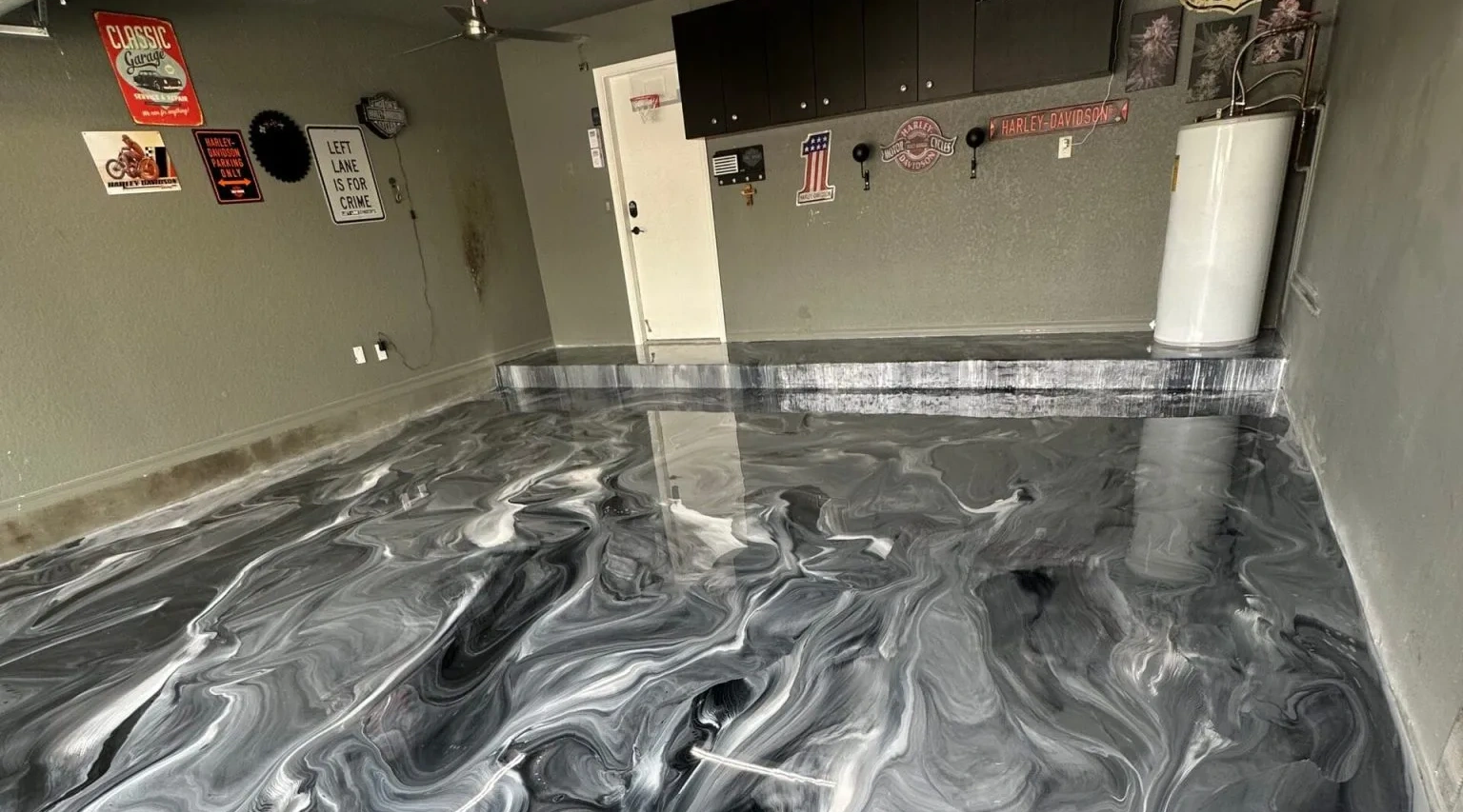
Metallic epoxy is not the floor most people choose when they want something quiet in the background. It is the option you go for when the floor is supposed to be seen.That is the main difference between a standard garage coating and a decorative metallic epoxy floor.
A flake system may be chosen because it hides dust, tire marks, and normal garage wear. A metallic finish is chosen because the owner wants the surface to have movement, depth, shine, and a custom look.
The finish is created by mixing metallic pigments into epoxy during installation. As the material is worked across the floor, the pigments move and settle into patterns that can resemble marble, polished stone, smoke, or liquid metal. The installer can guide the look, but the final movement is never exactly the same from one project to the next.
That custom appearance is the reason many homeowners and business owners are drawn to metallic epoxy. It is also the reason it needs to be chosen carefully. In the right space, it can become one of the strongest design features in the room. In the wrong space, a simpler coating may be easier to live with.
Metallic Epoxy Works Best When the Floor Is Part of the Room
A lot of floor coatings are judged by how well they protect the concrete. Metallic epoxy has to do that too, but the visual result matters more than it would with a basic coating.
People usually consider metallic epoxy when the garage, showroom, studio, or interior space is meant to feel finished. The floor is not just there to cover old concrete. It becomes part of the way the room looks.
That is why this system makes the most sense in areas where appearance, lighting, and presentation matter.
Where Decorative Metallic Epoxy Floors Make Sense
Not every room needs a floor with that much movement. Metallic epoxy usually works best in spaces where the surface can stand out without fighting the rest of the design.
Collector Garages
A collector garage is different from a regular parking garage. The lighting, cabinets, wall finishes, and vehicle displays are usually planned with more attention.
In that type of space, a plain floor can feel unfinished. A metallic garage floor coating can help the room feel more complete, especially when it reflects light around classic cars, motorcycles, or custom builds.
This is not usually the best choice for a garage that sees constant dirty work, dragged tools, or heavy storage. It fits better when the garage is part workspace, part display area.
Showrooms
Showrooms rely on first impressions. Whether the business displays cars, furniture, equipment, or retail products, the floor affects how the space feels.
Metallic epoxy can add visual depth without grout lines, seams, or separate flooring transitions. That makes it useful in spaces where the owner wants a clean surface with a more custom appearance than plain polished concrete or standard tile.
Lighting matters here. A metallic floor can look very different under bright showroom lights than it does in a small sample.
Offices and Reception Areas
Some offices want a more modern look than carpet or standard commercial flooring can provide. A metallic floor can work in reception areas, conference rooms, lobbies, and client-facing spaces where the floor is part of the design.
This type of finish is usually better for selected areas than for every square foot of an office. Used in the right place, it can make the entrance or meeting area feel more intentional without overwhelming the whole building.
Salons, Studios, and Creative Spaces
Salons, tattoo studios, photography spaces, beauty clinics, and creative offices often want finishes that feel different from standard commercial interiors.
A designer epoxy floor can support that look because each installation has its own movement and color variation. The surface can feel polished and custom without using materials that have grout lines, seams, or complicated maintenance.
For these spaces, the best results usually come from matching the floor color to lighting, wall color, mirrors, furniture, and branding.
Entertainment Rooms
Home theaters, bars, game rooms, wine rooms, and entertainment spaces can also work well with metallic epoxy.
These rooms often use lower lighting, accent lighting, or stronger design choices. A high-gloss metallic floor can reflect that lighting and make the room feel more finished.
It may not be the right surface for every living area, but in a space designed for presentation, it can make sense.
Metallic Epoxy Is Different From Flake Epoxy
Metallic epoxy and flake epoxy are both decorative systems, but they solve different problems.
A flake floor is usually more forgiving. The pattern helps hide dust, small debris, tire marks, and normal garage dirt. That is why flake systems are so common in residential garages.
A metallic epoxy flooring system is more visual. The surface is smoother, glossier, and more reflective. Instead of hiding everything, it draws attention to color movement, depth, and light reflection.
That does not make one system better than the other. It means the right choice depends on how the space will be used.
For a working garage, storage area, or high-traffic utility space, flake may be the more practical choice. For a collector garage, showroom, studio, or entertainment room, metallic epoxy may make more sense.
Why Every Metallic Floor Looks Different
Metallic epoxy is not like tile or vinyl, where every piece comes from a factory looking the same.
The final pattern develops during installation. Pigment movement depends on the installer’s technique, the color combination, the amount of pigment used, the application sequence, temperature, working time, and the way the material settles.
That gives the installer control, but not full duplication. Two floors can use the same colors and still look different.
For many property owners, that is part of the appeal. The floor does not look like a product pulled from a shelf. It looks like a custom finish made for that room.
Color Selection Changes the Entire Room
Color choice affects more than the floor itself. It changes how large the room feels, how bright the space appears, and how much dust or foot traffic shows between cleanings.
Common metallic epoxy color directions include:
- Charcoal with silver highlights
- Bronze and copper blends
- Pearl white
- Black and graphite
- Deep blue
- Emerald green
- Smoky gray
- Multi-tone metallic blends
Lighter colors can help a smaller room feel more open. Darker colors can create a heavier, more dramatic look, but they may show dust more quickly.
This is where many owners make the mistake of choosing only from a sample. The floor has to work with the rest of the room. Cabinets, lighting, walls, furniture, vehicles, counters, and branding can all change how the final color feels.
High Gloss Is Not Always the Best Fit
High gloss is part of what makes metallic epoxy attractive. It reflects light, adds depth, and makes the surface feel more polished.
It also shows more.
Dust, footprints, smudges, and small surface marks can be easier to notice on a glossy floor than on a textured flake system. That does not make high gloss a bad choice. It just means the owner should understand what comes with it.
For a showroom, reception area, salon, or collector garage, the shine can be part of the appeal. For a garage used for grinding, repairs, heavy storage, or constant dirty work, another coating system may be easier to maintain day to day.
Surface Preparation Matters Even More With Metallic Epoxy
Metallic epoxy is reflective, so the slab underneath matters. Small defects that might be less noticeable under a textured coating can become more visible once a glossy finish is installed.
That is why preparation is not just about adhesion. It also affects how clean and consistent the finished floor looks.
Professional installation may include:
- Mechanical grinding
- Crack repair
- Removal of previous coatings
- Surface cleaning
- Moisture evaluation
- Concrete profiling
The goal is to give the coating a sound surface to bond to while reducing imperfections that could show through the finished system.
Can Existing Concrete Be Used?
In many cases, yes. Metallic epoxy is often installed over existing concrete as long as the slab is structurally sound and properly prepared.
Before installation, the concrete should be checked for:
- Cracks
- Surface damage
- Moisture movement
- Previous sealers
- Paint or old coatings
- Areas that need repair
Older concrete does not automatically rule out metallic epoxy. The real question is whether the slab can be prepared correctly. If the surface has serious moisture issues, weak concrete, or failed coatings, those problems need to be addressed before a decorative system is installed.
What Maintenance Can Owners Expect?
Decorative epoxy flooring is usually simple to clean, but metallic floors are often watched more closely because appearance is the reason people choose them.
Most owners maintain the surface by:
- Sweeping or dust mopping regularly
- Cleaning spills promptly
- Using mild cleaners when needed
- Avoiding abrasive pads
- Following resealing recommendations when applicable
The seamless surface helps because there are no grout lines or joints where dirt can collect. The main difference is visual. On a dramatic, glossy floor, dust and footprints may stand out sooner than they would on a more textured system.
When Metallic Epoxy Is the Right Choice
Metallic epoxy makes the most sense when the floor is meant to add visual impact. It is a strong option for collector garages, showrooms, studios, salons, offices, and entertainment spaces where the surface is part of the design.
It may not be the best choice for every garage or work area. If the priority is hiding dirt, reducing visible wear, and keeping the floor forgiving between cleanings, a decorative flake system may be more practical.
For properties in Las Vegas, Henderson, Summerlin, and nearby areas, the right choice depends on the room, the slab condition, the lighting, and how much attention the owner wants the floor to receive. A decorative metallic epoxy floor can be an excellent option when the goal is not just to cover concrete, but to make the floor one of the main features of the space.