

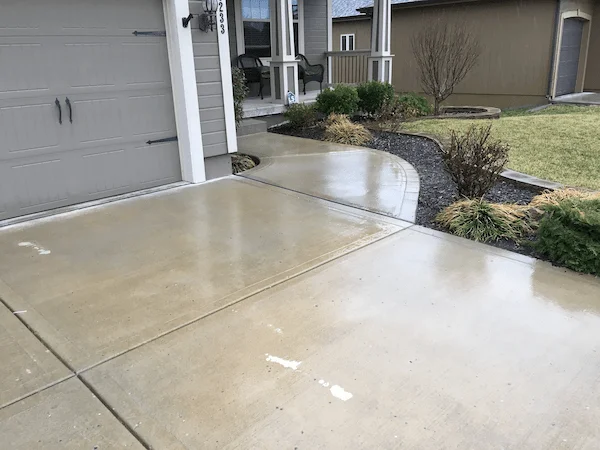
A clear resealing timeline based on sun, traffic, and moisture—so you don’t reseal too early or wait until the slab is stained and worn.
Concrete in Las Vegas doesn’t get punished by snow and freeze-thaw cycles as much as other regions. Instead, it gets hit by UV exposure, extreme surface heat, wind-blown grit, and fast wet/dry swings (especially near sprinklers and pools). Those conditions directly affect how long a sealer lasts.
That’s why you’ll hear wildly different advice like “reseal every year” or “reseal every ten years.” Both can be true—depending on what type of sealer was used, where the slab sits, and how it’s used. The goal is a reseal schedule that matches real conditions on your property.
What “resealing” means: penetrating vs. topical sealers
Resealing usually means one of two things:
- Penetrating sealers soak into the concrete and help reduce water intrusion and staining. They typically do not form a visible film on top.
- Topical sealers sit on the surface and can add sheen and color depth (common on decorative concrete). They act more like a wear layer, so they can show traffic patterns sooner.
Because they fail differently, the warning signs differ:
- Topical sealers often show dull spots, patchy sheen, whitening, or peeling.
- Penetrating sealers may “fade” quietly, showing up as faster darkening when wet or stains that set more easily.
Typical reseal timelines in Las Vegas by surface type
These are realistic planning ranges assuming the slab was cleaned and prepped correctly before sealing.
Driveways and vehicle areas
Driveways take the most abuse from hot tires, turning wheels, and grit.
- Topical sealers (often acrylic on decorative finishes): typically 1–3 years
- Higher-wear clear topcoats (varies by system): often 3–5+ years
- Penetrating sealers: commonly 5–10 years
If vehicles turn sharply in the same area (top of the driveway, parking spot), plan toward the shorter end for topical products.
Patios, walkways, and courtyards
These usually see foot traffic and cleaning, plus possible exposure to BBQ grease, irrigation overspray, and full sun.
- Topical sealers on decorative concrete: often 2–4 years
- Penetrating sealers: often 5–10 years
Covered or shaded patios often hold up much longer than slabs in direct sun.
Pool decks and wet zones
Pool areas deal with chlorinated water, sunscreen oils, and constant wet/dry cycling. Traction also matters—some glossy films can be slick when wet.
- Penetrating sealers (often preferred for a more natural texture): commonly 3–7 years
- Topical sealers: can vary widely and may show issues sooner if moisture gets trapped beneath a film
If a deck is rinsed frequently or stays damp in shaded areas, reseal intervals often shorten.
Interior slabs (including garages that are sealed, not coated)
No UV indoors, but garages still see hot tires, abrasion, and chemical exposure.
- Penetrating sealers in light-use interiors: often 5–10+ years
- Topical sealers: often 2–5 years, depending on traffic and cleaning habits
Why heat and sun shorten reseal intervals (especially for topical sealers)
In hot climates, concrete goes through daily temperature swings—very hot afternoons and cooler nights. Add intense sun, and topical sealers can break down faster.
Common outcomes include:
- Loss of sheen and dull “lanes” where people walk or cars drive
- Brittleness that makes surface wear happen sooner
- Faster visible aging in full sun vs. shaded areas
A shaded walkway can last years longer than the same material in full exposure.
Moisture still matters in the desert
Moisture problems don’t disappear in a dry climate—they often show up as localized trouble spots caused by:
- Sprinklers hitting the slab daily
- Planter beds holding moisture against concrete edges
- Pool splash-out and routine rinsing
- Heavy seasonal rain events
With topical sealers, moisture can lead to:
- Whitening/haze
- Peeling or flaking, especially near edges and joints
- Patchy appearance where some areas stay damp longer than others
With penetrating sealers, you may not see peeling, but you may notice faster darkening when wet and stains that become harder to remove.
How to tell it’s time to reseal
Rather than relying only on a date, look for condition signals.
Signs a topical sealer is wearing out
- Dull traffic paths compared to edges
- Patchy sheen (some areas still sealed, others worn through)
- Tire marks that don’t rinse away
- Whitening/hazing after water exposure
- Any peeling, especially where water sits
Signs a penetrating sealer is fading
- Water soaks in and darkens the concrete quickly
- Water no longer beads the way it used to
- Stains set faster (oil, leaves, rust, pool-related marks)
A simple check is to pour clean water in a consistent spot and watch how the surface reacts over time. A noticeable change year-to-year is a useful clue.
Common timing mistakes that lead to problems
- Waiting until stains are permanent. Sealing helps buy time; it won’t reverse deep-set staining.
- Recoating without correcting uneven wear. If some areas are bare and others still have film, a quick recoat can look blotchy and bond inconsistently.
- Ignoring sprinklers and drainage. Repeated wetting in one strip can drive early failure in that zone and shorten the life of the overall finish.
- Choosing sheen over function in wet areas. Around pools, traction and moisture behavior should guide product choice and reseal timing.
For Las Vegas conditions, reseal frequency is shaped mostly by sun exposure, abrasion from grit and traffic, and moisture swings from sprinklers, pools, and drainage patterns. As a planning baseline, many topical sealers on exterior concrete land around 1–4 years, while penetrating sealers often land around 5–10 years—with shorter intervals in constantly wet or heavily used areas.
The best schedule comes from watching how the slab behaves: changes in water absorption, visible wear paths, and stain resistance. Those signals usually tell you more than a fixed calendar date.