

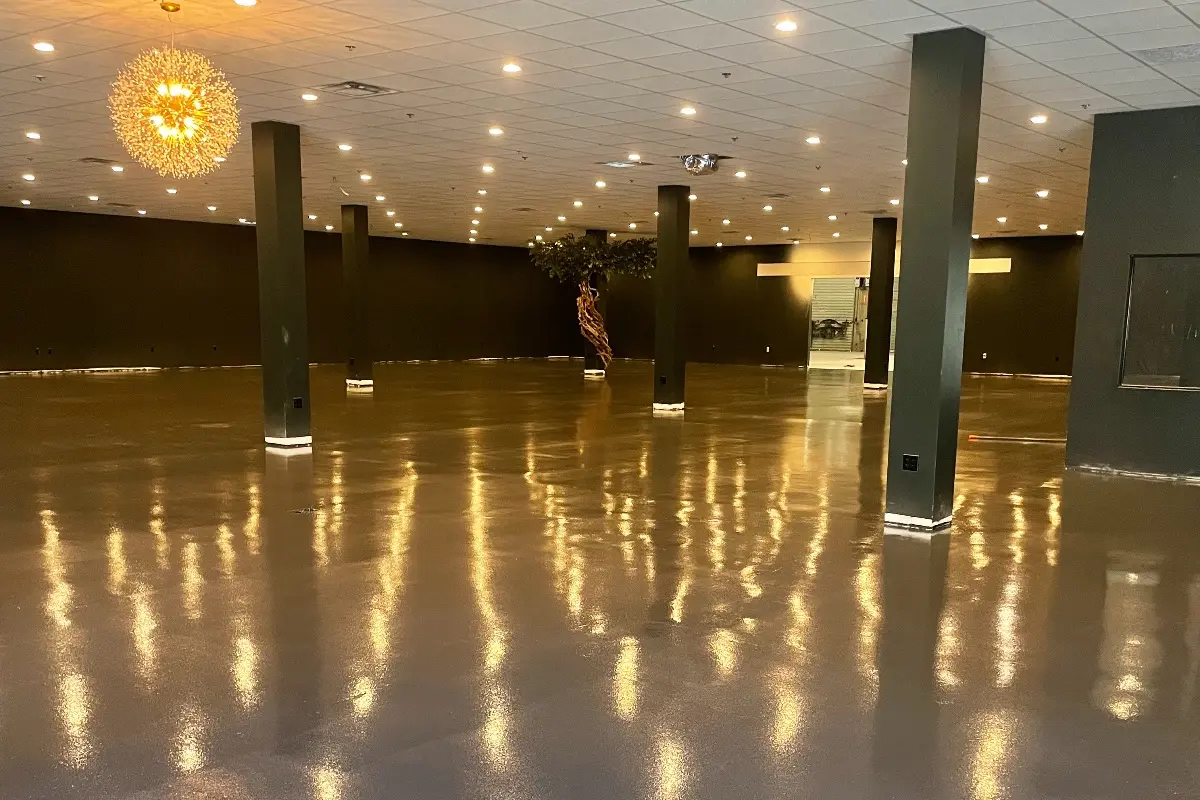
Concrete floors take a beating in a commercial building. Forklifts, foot traffic, spilled chemicals, grease, dropped equipment, and constant cleaning cycles wear through bare concrete fast. Epoxy flooring solves that problem by turning a porous, dust-shedding slab into a sealed, chemical-resistant surface built to handle whatever your business throws at it.
For Las Vegas business owners, epoxy is also a climate answer. Concrete here expands and contracts with triple-digit summer heat and cool desert nights, and dust from the surrounding valley works its way into every building. A properly installed epoxy system locks down the surface, cuts dust, and holds up under that swing in temperature better than sealed or bare concrete ever will.
Why Commercial Spaces Need Epoxy Flooring
Bare concrete is a liability in a working building. It absorbs oil and chemicals, cracks under point loads from racking and equipment, and generates fine dust that gets into HVAC systems and inventory. Epoxy addresses each of those issues directly.
Durability Under Heavy Use
A commercial-grade epoxy system spreads load stress across a hard, seamless membrane instead of letting it concentrate on bare concrete. That matters in warehouses running forklifts and pallet jacks eight or more hours a day, and in retail spaces with constant cart and foot traffic. Thicker build systems (broadcast or mortar epoxy) resist impact and abrasion far longer than a standard garage-grade coating.
Chemical and Stain Resistance
Commercial kitchens deal with grease, oil, and cleaning chemicals daily. Auto shops deal with motor oil, brake fluid, and solvents. Standard epoxy resists most of these on contact, and a urethane or polyaspartic topcoat adds another layer of chemical resistance for facilities that handle harsher substances. Spills wipe up instead of soaking in and staining. See our polyaspartic vs. epoxy comparison for how the two topcoat chemistries perform under heavy use.
Easy Cleaning and Sanitation
A seamless epoxy floor has no grout lines, no seams, and no pores for bacteria or grime to hide in. That’s a real advantage for restaurants, commercial kitchens, gyms, and medical or veterinary facilities where sanitation standards matter. Mopping or pressure washing an epoxy floor takes a fraction of the time bare or painted concrete requires.
Slip Resistance and Safety Compliance
Slip-and-fall incidents are one of the most common liability issues in commercial buildings. Epoxy systems can be finished with an aggregate or aluminum oxide broadcast to add slip resistance in wet or greasy areas, which matters for kitchens, gyms, and loading docks. This kind of textured, non-slip finish supports ADA and OSHA-related safety expectations for walkway surfaces without sacrificing the ease of cleaning that makes epoxy attractive in the first place.
Minimal Downtime During Installation
This is where a lot of business owners get nervous, and it’s a fair concern. Every day a floor is out of service is a day of lost revenue. Traditional epoxy systems need extended cure windows, but polyaspartic and fast-cure hybrid systems have changed that math. These systems can often go from bare slab to walkable, and even fully cured, in a fraction of the time standard epoxy needs. That means a retail store, restaurant, or gym can schedule installation over a weekend or during an off-season slowdown and reopen with minimal disruption.
Industries We Serve
Retail stores need a floor that looks clean under bright lighting and holds up to shopping carts and daily foot traffic. Epoxy gives retail spaces a polished, professional look that’s easy to maintain between business hours.
Warehouses and distribution centers put more stress on flooring than almost any other commercial use. Forklift traffic, racking loads, and dropped pallets demand a thicker, more durable epoxy or polyaspartic system, often with line striping for safety zones and traffic flow.
Restaurants and commercial kitchens deal with grease, heat, and constant washdown. Slip-resistant, chemical-resistant epoxy systems are practically standard in commercial kitchen design for good reason, they meet the sanitation and safety demands health inspectors look for.
Gyms and fitness studios need flooring that can take dropped weights, foot traffic, and sweat without staining or degrading. Epoxy handles impact well and can be finished with color flake or matte textures that hide scuffs.
Auto shops need chemical resistance above almost anything else. Motor oil, brake fluid, coolant, and degreasers will destroy bare concrete over time. A quality epoxy or epoxy/polyaspartic combination system stands up to daily exposure.
Offices and showrooms benefit from epoxy’s appearance options. Metallic and flake systems can give a lobby or showroom floor a high-end look that’s still practical to maintain.
Cost Considerations for Larger Square Footage
Commercial epoxy pricing runs in the same general range as residential work, roughly $3 to $12 per square foot depending on the system, but the math changes at scale. Larger square footage often brings the per-square-foot cost down since prep and mobilization costs get spread across more area. On the other hand, commercial floors frequently need a higher-build system to handle heavier traffic, which pushes cost up. See our full epoxy flooring cost guide for a breakdown by system type.
Several factors drive commercial pricing:
- Substrate condition. Older concrete with cracks, spalling, or previous coatings needs more prep work (grinding, patching, crack repair) before epoxy goes down.
- System type. A basic single-coat epoxy costs less than a broadcast flake system or a polyaspartic/urethane hybrid built for heavy industrial use.
- Square footage and layout. Open warehouse floors install faster per square foot than spaces broken up with equipment, fixtures, or tight corners.
- Downtime requirements. Fast-cure polyaspartic systems cost more per square foot than standard epoxy but reduce the number of days your business is out of operation, which is often worth the premium.
- Line striping, logos, or safety markings. Adding traffic lines, ADA markings, or branded logos adds to labor and material costs.
Any legitimate commercial estimate should walk through these variables with you rather than quote a flat number sight unseen.
Maintenance for Commercial Epoxy Floors
Commercial epoxy floors are low-maintenance, not no-maintenance. Daily sweeping or dust mopping keeps grit from scratching the topcoat. Spills should be wiped up promptly, especially in kitchens and auto shops where chemicals sit longer than they should. Periodic wet mopping with a pH-neutral cleaner keeps the surface looking new without breaking down the coating.
Avoid harsh solvents, ammonia-based cleaners, or abrasive scrub pads, which can dull the topcoat over time. In high-traffic zones, a recoat every several years extends the life of the system significantly and costs far less than a full floor replacement.
FAQ
How long does commercial epoxy flooring take to install?
It depends on square footage and the system used. A standard epoxy system in a mid-size retail space might take two to four days including prep, while a fast-cure polyaspartic system can sometimes be walkable within 24 hours. Large warehouses naturally take longer due to square footage, even though the process per square foot is efficient.
Can epoxy flooring be installed without shutting down my business completely?
In many cases, yes. Fast-cure polyaspartic and hybrid systems are specifically chosen by businesses that can’t afford extended downtime. Phasing the work section by section, or scheduling installation overnight or over a weekend, is common for restaurants, retail stores, and offices that need to stay operational.
Is epoxy flooring slip-resistant enough for a commercial kitchen?
Standard smooth epoxy is not enough on its own for a wet or greasy kitchen floor. A slip-resistant additive, like aluminum oxide or a fine aggregate broadcast, gets mixed into the topcoat to add traction while still keeping the surface easy to clean and sanitize.
How does Las Vegas heat affect commercial epoxy floors?
Extreme summer heat can cause hot tire pickup and increased UV exposure in areas near loading dock doors or skylights. A urethane or polyaspartic topcoat adds UV stability and heat resistance that standard epoxy alone doesn’t have, which matters for any commercial space with sun exposure through glass doors or bays.
What’s the difference between epoxy and polyaspartic for a commercial floor?
Epoxy is a strong, cost-effective base coat but cures relatively slowly and can be more sensitive to UV exposure and temperature during application. Polyaspartic cures much faster, handles temperature swings better, and resists UV yellowing, making it a common choice for businesses that need quick turnaround or have sun-exposed floor areas.
Do I need a permit to install epoxy flooring in a commercial building in Las Vegas?
Typically, resurfacing an existing floor with a coating system does not require a building permit since it’s a surface treatment, not a structural change. That said, requirements can vary by jurisdiction and use type, so it’s worth confirming with your local building department if you have any doubt, particularly for large-scale commercial builds.
Get a Free Estimate
If your warehouse, restaurant, gym, retail space, or auto shop needs a floor that can handle daily wear without shutting you down for weeks, Reveles Concrete can walk your space and put together a plan that fits your budget and your timeline. Not sure who to hire? See our guide on how to choose an epoxy flooring company in Las Vegas before comparing bids. Request a free estimate today and find out what a commercial epoxy floor system would look like for your business.