

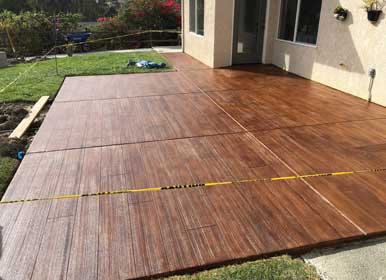
Decorative concrete can be a practical upgrade for patios and pool decks in Las Vegas because it improves appearance and traction, but long-term results depend on choosing a finish that matches UV exposure, wet conditions, and how the surface will be cleaned.
Outdoor concrete around the Las Vegas metro is under constant pressure from the environment. Sun exposure is intense, surface temperatures climb quickly, and wind-blown dust and grit create steady abrasion. Pool decks add another layer of stress: repeated wet/dry cycling, sunscreen oils, and water chemistry that can leave mineral marks over time.
In that environment, “decorative concrete” is not one product. It is a category of finishes that can range from subtle texture and stain to patterned surfaces that mimic stone. Each finish behaves differently in sun and water. Some hold color better. Some show wear faster in traffic lanes. Some are easier to reseal without cosmetic surprises.
This guide breaks down decorative concrete finish options that are commonly used on patios and pool decks, with a focus on how they hold up in Las Vegas conditions.
What patios and pool decks in Las Vegas demand from a finish
Before selecting a look, it helps to define what the surface has to do in real use.
Key demands in Las Vegas include:
- UV exposure that can fade dyes and stress some surface films
- High surface temperatures that accelerate wear and affect comfort underfoot
- Wet traction needs around pools, steps, and transitions
- Wind-blown grit that abrades sealers and dulls surface sheen
- Water behavior from irrigation overspray, splash-out, and seasonal heavy rains
- Maintenance practicality—the finish should be cleanable without constant scrubbing or harsh chemicals
A good decorative surface is not only attractive on day one. It stays consistent-looking and safe to walk on when wet, and it can be maintained without guesswork.
Decorative concrete finish options that work well outdoors
Below are common decorative concrete approaches for patios and pool decks, along with how they typically perform in sun and water.
Concrete staining (acid stain or water-based stain)
Staining changes the appearance by adding color that becomes part of the surface rather than sitting as a thick paint film.
Why people choose it
- Natural, variegated color that looks less “manufactured”
- Works well for patios where a subtle upgrade is preferred
- Can be paired with slip-resistant sealing strategies
How it handles sun and water
- Stain itself can hold up well, but the sealer on top often determines how long the surface keeps its “finished” look.
- High-UV patios may show sealer wear first in traffic paths and edges.
Where it tends to work best
- Covered or partially shaded patios
- Low-to-moderate traffic areas
- Owners who prefer a natural look rather than a patterned stamp
Common wear pattern
- Dulling in walk lanes and door paths as the sealer gradually wears.
Decorative overlays (thin resurfacing layers)
Overlays add a new surface layer on top of existing concrete, often used when the existing slab is stained, patched, or uneven in color.
Why people choose it
- Can refresh older concrete without full replacement
- Offers more design flexibility than stain alone
- Can incorporate texture for slip resistance
How it handles sun and water
- Performance depends heavily on surface prep, bonding, and sealing.
- Wet zones (pool decks) benefit from finishes designed for traction and water exposure.
Where it tends to work best
- Patios with cosmetic issues (patchwork, stains, discoloration)
- Pool decks that need a cleaner, more uniform look
- Areas where texture is desired for grip
Common wear pattern
- Traffic lanes may show sealer wear first; poorly prepped surfaces may show chipping at edges or stress points.
Stamped decorative finishes (stone or tile-like patterns)
Stamped looks are used when the goal is a patterned surface that mimics stone, slate, tile, or brick.
Why people choose it
- Strong curb appeal
- Can create a more “designed” backyard feel
- Pattern can disguise small imperfections
How it handles sun and water
- The pattern is durable, but the color and sealer are the parts that require upkeep.
- In full sun, sealers can dull over time; around pools, water exposure can accelerate cosmetic wear if the sealer is not maintained.
Where it tends to work best
- Large patios where pattern adds interest
- Outdoor entertaining areas where aesthetics matter
- Decks where texture is built into the pattern (with careful attention to traction)
Common wear pattern
- High-traffic zones lose sheen first; some surfaces can develop uneven gloss if resealed inconsistently.
Broom finish with decorative enhancements (subtle texture + color)
Not every project needs a dramatic pattern. Some owners want traction and a cleaner look, with modest design detail.
Why people choose it
- Built-in traction from the broom texture
- Lower visual maintenance compared to glossy finishes
- Often feels practical around pools and steps
How it handles sun and water
- Texture holds traction well, even with water exposure.
- Because it is less dependent on a glossy film look, it can age more gracefully in harsh sun.
Where it tends to work best
- Pool decks where slip resistance is a priority
- Homes with kids and frequent wet use
- Patios that are used heavily and cleaned often
Common wear pattern
- Less visually dramatic wear; dirt can settle into texture if not rinsed or swept regularly.
What “handles sun and water” really comes down to: sealer choice and traction strategy
With most decorative concrete, the finish is only part of the equation. The long-term outdoor performance depends on:
- Sealer type (penetrating vs topical)
- Slip resistance approach (texture level and additives)
- Maintenance compatibility (what cleaners are used, how often the surface is washed)
Penetrating sealers
Penetrating sealers are often chosen when you want protection without adding a heavy surface film. They can be a practical fit for pool decks because they do not usually create the same “gloss layer” that can feel slick when wet.
Typical strengths:
- Maintains a more natural look
- Can support traction by not creating a thick film
- Often ages more subtly
Typical limitations:
- You may not get a dramatic “wet look”
- Stain resistance varies by product and slab porosity
Topical sealers
Topical sealers can enhance color and give decorative concrete a richer look. They can also make cleaning easier by adding a more defined wear layer.
Typical strengths:
- Enhances color and contrast
- Can make a surface easier to wipe and rinse
- Provides a visible finish layer that can be refreshed
Typical limitations:
- UV and abrasion can dull it faster in traffic paths
- Wet traction needs to be addressed intentionally (especially around pools)
- If moisture gets trapped, haze or whitening can occur in certain conditions
In Las Vegas, topical sealers often look great but require realistic reseal planning because sun and grit wear them faster than many owners expect.
Pool deck specifics: what matters most for comfort and safety
Pool decks have unique “use-case” demands that influence finish choice.
Traction when wet
A pool deck finish should maintain grip when:
- Water is tracked across the surface
- Sunscreen oils are present
- The deck is rinsed frequently
Finishes that can support traction more reliably tend to be:
- Textured finishes (like broom textures or traction-friendly overlays)
- Systems designed to avoid overly glossy films in wet zones
Barefoot comfort
Highly aggressive textures can feel uncomfortable barefoot. For pool decks, the best results often come from moderate, consistent texture rather than harsh grit.
Water chemistry and mineral marks
Pool splash-out and hard water can leave mineral deposits. A finish that is easier to rinse and that does not trap residue tends to look better over time.
Patio specifics: what matters most for appearance over time
Patios usually prioritize:
- Consistent appearance across sun-exposed and shaded zones
- Resistance to food and drink staining in entertaining areas
- A surface that cleans well without frequent deep scrubbing
If a patio is partially shaded, it may hold a “finished” look longer because the sealer is not being stressed by constant UV. Fully exposed patios should plan for more visible wear in walk lanes and entries.
Common decorative concrete mistakes outdoors
Decorative concrete failures and disappointments tend to come from predictable issues.
Choosing appearance first and ignoring traction
A glossy finish can look premium but feel slippery when wet, especially around pools. Traction should be decided at the start, not after installation.
Underestimating how fast traffic lanes show wear
Outdoor traffic patterns are consistent: entries, paths to the pool, grill area, and seating zones. These lanes wear first, and the finish should be selected with that reality in mind.
Relying on harsh cleaners that leave residue
Residue can change sheen, attract dirt, and reduce traction. Outdoor surfaces often do better with simple cleaning routines that remove grit and rinse thoroughly.
Not planning resealing as part of long-term upkeep
Most decorative concrete looks its best when sealing is treated as routine maintenance, not an emergency fix after the surface is already stained or worn.
Decorative concrete can be an excellent option for patios and pool decks in Las Vegas, but the finish choice should be driven by real conditions: full sun exposure, wet traction needs, and how the surface will be cleaned and resealed over time.
Stains and overlays can provide a refreshed look with flexible texture options, while stamped finishes can deliver strong curb appeal with realistic expectations for sealing upkeep. For pool decks in particular, the best outcomes usually come from finishes that balance wet traction and barefoot comfort while still supporting straightforward cleaning.