

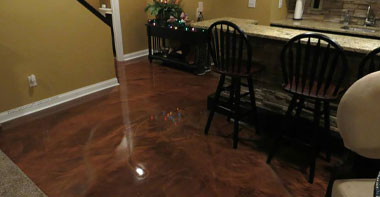
Residential epoxy flooring is not a single “look.” In homes, the two most common finish directions are flake systems and solid color floors—and the right choice depends on how you want the space to look, how you plan to clean it, and what kind of wear you expect over time.
Most homeowners start by picking a color. In day-to-day use, the finish matters more than the color. The finish controls how the floor handles grit, whether traffic lanes show up, how slick it feels when wet, and how noticeable chips or scuffs will be after months of real use.
Two finishes dominate residential projects:
- Flake systems (decorative vinyl flakes broadcast into the coating and sealed under a clear top layer)
- Solid color systems (a uniform color coat, usually with a clear protective topcoat)
Both can be durable. Both can look clean and modern. The difference is how they behave in daily life—especially in garages, basements, laundry rooms, and multi-use spaces where a “home floor” gets treated like a light commercial floor.
What flake systems are and why homeowners choose them
Flake systems use a base coat, then flakes are broadcast across the floor, and finally a clear topcoat seals everything in. The flakes are not only decorative; they change the visual behavior of the surface.
Practical advantages of flake systems
1) They hide imperfections and daily mess well
Flakes break up the visual field. That helps conceal:
- Minor slab discoloration
- Light dust and grit
- Small scuffs that would be obvious on a solid color
2) Wear is less obvious in traffic lanes
Because the look is “patterned,” slight dulling in a walkway or tire lane often blends in better than it would on a uniform surface.
3) They can support traction choices more easily
Traction can be built into the system through texture strategies and topcoat selection. Many homeowners want a floor that feels secure when wet without looking “rough,” and flake systems make that balance easier to achieve visually.
Trade-offs of flake systems
1) The clear topcoat does the real work
The flakes are sealed under a clear layer. That clear layer takes the abrasion. Over time, if you see dulling, it’s usually the topcoat wearing—not the flakes failing.
2) Touch-ups are less “invisible”
If a section is damaged deeply enough to reach the flake layer, patching can be done, but a perfect visual match may be harder than with a solid color floor depending on the flake blend.
3) Some homeowners prefer a simpler look
Flake has visual movement. If the space is an interior room where you want a minimalist aesthetic, solid color may fit better.
What solid color systems are and why they appeal
Solid color epoxy floors aim for a clean, uniform look. Done well, they can feel more “architectural” and calm—especially in basements, home gyms, studios, and modern garages.
Practical advantages of solid color systems
1) Clean, consistent appearance
A uniform floor can make a space look bigger and more finished. It also pairs well with modern interiors and simple design schemes.
2) Touch-ups can be simpler to blend
If a solid floor gets a chip or scratch, repair can sometimes be less visually complex because you are matching a single color rather than a patterned broadcast. (It still depends on sheen and lighting.)
3) Easier visual inspection of cleanliness
In some home workshops and gyms, people like being able to see dust and debris so they can keep the space consistently clean.
Trade-offs of solid color systems
1) Dirt and wear can show sooner
On a uniform surface, common realities become more visible:
- Dusting and grit
- Scuff marks
- Dull “traffic lanes” from repeated walking or tire movement
2) Gloss variations are more noticeable
If one area is cleaned differently, scrubbed harder, or exposed to more abrasion, sheen differences can stand out.
3) Prep and slab condition matter more visually
Because the surface is uniform, slab imperfections, patching, and unevenness can be easier to spot if the prep and leveling are not handled well.
How each finish wears over time in real homes
Epoxy floor “wear” is usually a story about the top surface: the clear layer (if present), the sheen, and the abrasion patterns.
Flake systems: how wear typically shows up
- Traffic lane dulling may occur, but it often blends in because the pattern is already varied.
- Edge wear near garage doors or entries can appear first if grit is tracked in daily.
- Chemical spots (oil, cleaners) usually show less than on solids, but residue can still create sheen differences.
In practice, flakes are forgiving for households that use the space heavily or do not want to notice every mark.
Solid color systems: how wear typically shows up
- Dull paths develop where people walk or where tires roll repeatedly.
- Scuffs and chair marks can stand out, especially on darker colors.
- Small debris scratches become more visible because the floor is uniform.
Solid color floors can look excellent long-term, but they reward consistent cleaning habits and careful use.
Cleaning differences: what’s easier day to day
A key decision point is not “which one is easier to clean,” but “which one looks clean longer with normal life.”
Flake systems and cleaning
Flake floors tend to:
- Hide dust and small debris better
- Look “presentable” longer between cleanings
- Still benefit from regular grit removal because grit is what drives surface abrasion
Solid color systems and cleaning
Solid floors tend to:
- Show dust sooner, prompting more frequent light cleaning
- Make sheen changes more visible if cleaners leave residue
- Look best when grit is removed often and cleaning is consistent
If you want a floor that looks clean even when it is not freshly mopped, flakes usually win that category.
Traction and feel underfoot: what homeowners notice
Both finishes can be built for traction, but texture decisions are more obvious on solid color floors.
- A very smooth finish can feel slick when wet, especially in garages, laundry rooms, and entries.
- A textured finish improves grip but can collect grime if it is overly aggressive.
Flake systems often deliver “practical traction without looking industrial” because the pattern visually softens the texture. Solid color floors can do the same, but any texture and any inconsistencies are easier to see.
Where each finish tends to be the better fit
Below are common residential spaces and the finish that often aligns with real usage patterns.
Garages
- Often best fit: flake systems
Why: tire lanes, grit abrasion, oil drips, and daily traffic make the forgiving look of flake practical.
Basements
- Often best fit: depends on the purpose
Flake works well for storage and utility use. Solid color can look more “living-space ready” for a gym, studio, or finished basement zone—assuming moisture is controlled.
Laundry rooms and mudrooms
- Often best fit: flake or lightly textured solid
Why: wet conditions and residue risk from detergents make traction and cleanup behavior more important than pure aesthetics.
Home gyms and hobby rooms
- Often best fit: solid color
Why: cleaner look, calmer visuals, and easy inspection of dust and debris for equipment maintenance.
The decision that matters most: appearance tolerance vs maintenance tolerance
A simple way to choose between flake and solid color is to decide which trade-off you prefer:
- If you want a floor that hides daily life and keeps a consistent look between cleanings, flake systems are typically the practical choice.
- If you want a floor that looks minimal and uniform and you do not mind seeing dust and traffic patterns sooner, solid color often fits better.
Neither is “better” universally. The right choice is the one that matches how the space is actually used.
Residential epoxy flooring finishes behave differently over time. Flake systems are visually forgiving, tend to hide dust and traffic lanes better, and often make the most sense in high-use areas like garages and busy utility spaces. Solid color systems deliver a clean, modern look that can feel more “interior-ready,” but they show scuffs, dust, and sheen differences more easily if cleaning and wear are uneven.
Choosing between them is less about which finish looks best on day one and more about which finish will still look good after months of real use—walking paths, wet shoes, tire lanes, and routine cleaning included.