

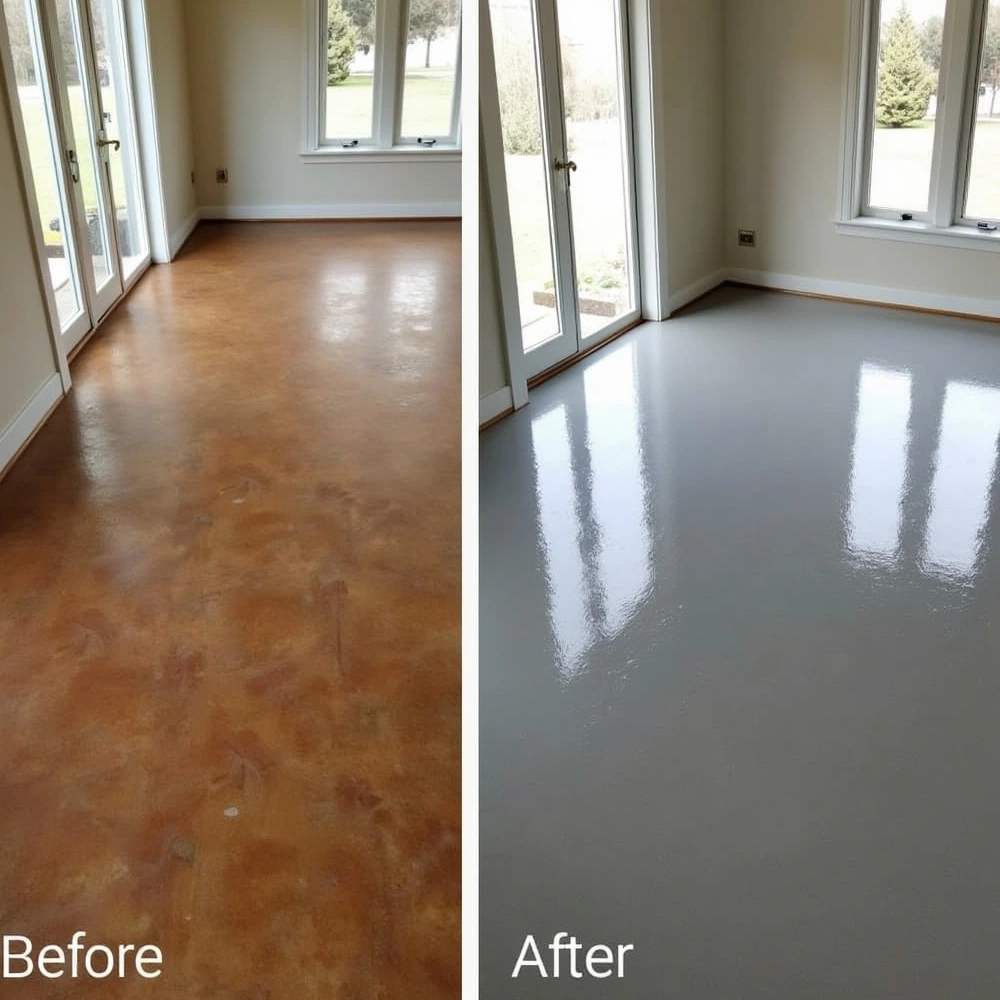
It is easy to compare epoxy and concrete stain by looking at finished photos. Both can turn plain gray concrete into something that looks cleaner, more finished, and better suited to the space.
The problem is that appearance only tells part of the story.
These two systems are built for different situations. A stained concrete floor still relies on the slab underneath to create its character. An epoxy floor creates a new surface over the concrete. That difference affects everything from how the floor looks to how it handles traffic, cleaning, and long-term wear.
For most projects, the better choice is not determined by the product. It is determined by the concrete you already have and what you expect that floor to do every day.
Start With the Concrete, Not the Finish
Many homeowners begin by choosing colors or looking at project photos. Contractors usually start somewhere else.
They want to see the slab.
Some concrete has attractive natural variation, very few repairs, and only minor wear. Other slabs have oil stains, patched cracks, old paint, scaling, or years of heavy use. Those conditions change the conversation before anyone starts talking about stain colors or epoxy flakes.
A concrete stain works with the slab that’s already there. Whatever gives the concrete its character—good or bad—will usually remain part of the finished floor.
Epoxy works differently. Because it creates a new wearing surface, it gives installers more freedom to repair minor imperfections and leave the floor looking much different than the concrete underneath.
That is why two homeowners can ask for the same finish and receive completely different recommendations.
Stain Preserves the Concrete. Epoxy Covers It.
This is probably the simplest way to understand the difference.
Concrete stain is designed to keep the concrete visible. The color becomes part of the slab instead of sitting on top of it. Saw cuts, aggregate, subtle color changes, and even certain imperfections often remain visible after the project is finished.
For many homeowners, that is exactly the appeal. They want the floor to look like concrete, just with more depth and character.
Epoxy takes a different approach.
Instead of highlighting the slab, it creates a finished surface over it. Depending on the system, that surface might include decorative flakes, solid colors, or metallic pigments, but the concrete itself is no longer the main design feature.
Neither approach is right for every project. They simply produce very different results.
Think About Daily Use Before Choosing Either One
The same finish does not make sense for every space.
A garage that sees two vehicles every day has different needs than a living room, restaurant, patio, or office lobby.
For example, most residential garages deal with hot tires, oil drips, bicycles, storage bins, lawn equipment, tools, and regular cleaning. In that environment, epoxy usually makes more sense because it creates a protective surface that is easier to clean and better suited for everyday wear.
A decorative patio is a different situation. If the slab already looks good and the owner likes the natural appearance of concrete, stain may be all that’s needed.
Commercial spaces often fall somewhere in between.
Some businesses want customers to see the character of exposed concrete. Others want a cleaner, more finished appearance that hides repairs and creates a more uniform look.
The product is only part of the decision. How the space functions is usually what points you toward one system or the other.
Appearance Goes Beyond Picking a Color
When homeowners compare samples, they often focus on color first.
The overall look of the floor usually matters more.
A stained floor keeps the natural movement of the concrete. Every slab has different aggregate, finishing marks, saw cuts, and subtle variations, so no two stained floors look exactly alike.
Epoxy offers much more control over the finished appearance.
A decorative flake system creates texture and color variation that helps disguise normal garage use. A solid-color floor creates a cleaner, simpler look. Metallic epoxy produces movement that resembles polished stone or marble.
The question is not which one looks better.
It is whether you want the concrete itself to remain part of the design or disappear beneath a completely finished surface.
Maintenance Is Different for Each System
Both finishes need maintenance. The difference is what you’re maintaining.
With stained concrete, the concrete itself remains exposed. Routine sweeping, appropriate cleaning products, and periodic resealing help preserve the appearance over time. As the floor ages, the wear usually becomes part of its character rather than something hidden beneath another surface.
Epoxy creates a sealed coating over the slab. Oil, dirt, and most household spills stay on the surface instead of soaking into the concrete, which usually makes routine cleaning easier.
Decorative flake systems also hide everyday dust and small marks better than bare concrete or many solid-color finishes.
Neither system is maintenance free. They simply age in different ways.
Price Should Not Be the Only Comparison
Most homeowners ask about cost early in the process, and that makes sense.
The better question is whether the finish matches the space.
A stained floor may cost less in some situations, but that does not automatically make it the better choice for a garage with daily vehicle traffic. The opposite can also be true. Installing epoxy over a decorative interior slab with beautiful natural variation may not provide much additional value if the owner actually wants to showcase the concrete.
Instead of comparing estimates alone, it helps to ask questions like:
- Will the floor support vehicles every day?
- Does the existing slab already look good?
- Am I trying to preserve the concrete or completely change its appearance?
- How much routine maintenance am I comfortable with?
Those answers usually narrow the decision faster than price alone.
Preparation Matters for Both Systems
Surface preparation is important whether the final finish is stain or epoxy.
The difference is why it matters.
Concrete stain depends on an even, open surface so the color can penetrate consistently. Old coatings, oil contamination, or surface damage can interfere with how the stain develops.
Epoxy also depends on preparation, but for a different reason. The coating needs a properly profiled surface so it can bond securely to the concrete.
In either case, problems such as moisture, weak concrete, previous coatings, and damaged areas should be addressed before the finish is installed.
Skipping preparation may save time at the beginning of the project, but it often creates larger problems later.
Which One Makes More Sense?
Concrete stain is often a good fit when:
- The slab already has attractive natural character.
- You want the concrete to remain visible.
- The space has moderate foot traffic.
- A more natural architectural look fits the design.
Epoxy is often the better choice when:
- The slab is worn, stained, or heavily repaired.
- You want a cleaner, more uniform appearance.
- The floor sees regular vehicle or equipment traffic.
- Protection matters just as much as appearance.
- Decorative flake or metallic finishes are part of the design.
In many Las Vegas, Henderson, and Summerlin projects, the decision becomes much clearer once the concrete is inspected. A well-finished interior slab may already have the character needed for stain. A garage, workshop, or heavily used commercial floor often benefits more from the protection and design flexibility that an epoxy system provides.
The goal is not to choose the product with the better reputation. It is to choose the finish that makes sense for the concrete you have and the way the space will be used long after the installation is complete.