

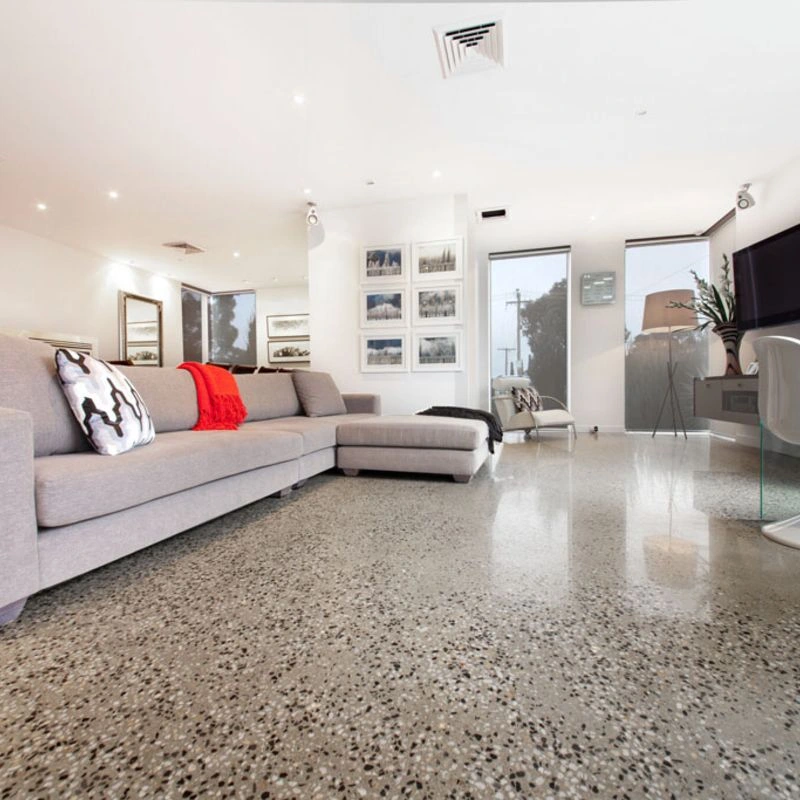
Epoxy floors are often associated with garages, but that is only one place where they make sense. The same type of surface can also work inside showrooms, medical offices, breweries, studios, finished basements, workshops, retail spaces, and other interiors where the floor has to look finished while still being easy to maintain.
In many buildings, the flooring problems are practical. Bare concrete creates dust. Tile grout can become difficult to keep clean. Vinyl can wear down in traffic lanes. Some polished surfaces need more upkeep than expected once the space is being used every day.
Interior epoxy flooring gives property owners another option. Instead of adding a separate flooring material over the concrete, it turns the existing slab into a sealed, finished surface. The final look can be simple, decorative, glossy, textured, or more understated depending on the room.
Indoors, epoxy works best in spaces where cleanliness, durability, and appearance all matter.
Start With the Existing Concrete
Many homes and commercial buildings already have a concrete slab under the finished flooring. It may be hidden below carpet, tile, vinyl, laminate, or old adhesive.
When that surface is exposed during renovation, it can sometimes become the base for an epoxy floor. That can be useful in older buildings where the owner wants a cleaner finish without adding another layer of flooring.
The slab still needs to be inspected before coating. Cracks, moisture, adhesive residue, old coatings, surface damage, and uneven areas can all affect the final result. Transitions to nearby rooms may also need to be considered, especially when epoxy is installed in only part of a building.
If the concrete is structurally sound and can be prepared correctly, an epoxy system can change the look and function of the room without replacing the slab.
Different Interior Spaces Need Different Floors
Interior epoxy concrete floors can look very different from one project to another. A workshop does not need the same finish as a boutique. A home gym has different needs than a medical office. A showroom floor is judged differently than a storage room.
The best finish usually depends on what the floor will deal with every day. That may include dust, foot traffic, rolling chairs, carts, cleaning products, furniture movement, moisture exposure, or customers walking through the space.
Appearance matters, but the finish should still make sense for the way the room is used.
Garages and Workshops
For many homeowners, the garage is still the first place they see the value of epoxy.
Bare concrete absorbs oil, creates dust, and develops stains that are hard to remove. A sealed epoxy coating makes the floor easier to clean and gives the garage a more finished look.
Garages and workshops may use:
- Solid color coatings
- Decorative flake systems
- Satin or gloss finishes
- Slip-resistant texture where appropriate
The right choice depends on how the space is used. A clean parking garage may need a different finish than a workshop with tools, storage bins, bikes, and equipment moving across the floor.
Finished Basements
Finished basements often need flooring that can handle real use without feeling like an unfinished utility space.
A basement may become a recreation room, exercise area, home theater, hobby room, or storage space. In those rooms, epoxy can create a seamless surface that is easier to clean than carpet and does not have grout lines like tile.
The design does not have to look industrial. Neutral colors, decorative flakes, or lower-sheen finishes can make the space feel more complete while keeping maintenance simple.
Moisture conditions should always be reviewed before installing any coating in a basement. If the slab has moisture problems, those issues need to be addressed before the floor is finished.
Retail, Office, and Showroom Spaces
In a business, the floor takes abuse from more than foot traffic. Chairs scrape, carts roll through, deliveries come in, cleaning happens often, and customers still expect the space to look professional.
Commercial interior epoxy flooring is often used in spaces such as:
- Retail stores
- Office buildings
- Showrooms
- Salons
- Medical facilities
- Restaurants
- Warehouses
- Studios
The benefit is not only appearance. A seamless coated floor can reduce grout-line cleaning, make sweeping and mopping easier, and hold up better in areas where traditional flooring wears quickly.
For customer-facing spaces, the finish also affects how the business feels when someone walks in. A showroom may use a glossier finish to reflect light. A clinic or office may need something cleaner and more subtle.
Choosing the Right Finish
The finish can change how the room looks, how often dirt shows, and how much upkeep the floor needs.
A high-gloss finish can brighten a showroom or modern office, but it may show dust, footprints, or glare more than a lower-sheen option.
A satin finish can feel cleaner and less reflective in daily-use spaces.
Decorative flake systems are often more forgiving because the pattern helps hide dust, small debris, and minor marks.
Metallic finishes create a stronger design effect and work best in spaces where the floor is meant to stand out.
This is where the room itself should guide the choice. Lighting, wall color, furniture, traffic, and cleaning routines all affect which finish will make the most sense.
A Cleaner Feel After Installation
One benefit many property owners notice after installation is the reduction in concrete dust.
Bare concrete slowly releases fine dust as the surface wears. In garages, storage rooms, workshops, and hobby areas, that dust can keep returning even after sweeping.
An epoxy floor coating indoors seals the porous concrete surface. Dust and dirt remain on top of the coating instead of settling into the slab. That makes the room easier to sweep, mop, and keep presentable.
This can be especially useful in home gyms, hobby rooms, workshops, and commercial spaces where cleanliness affects how the room is used.
Preparation Still Decides the Result
The finished floor depends heavily on the concrete underneath it.
Interior projects often come with extra preparation challenges. Old flooring may leave adhesive behind. Previous coatings may need to be removed. Cracks may be hidden until carpet, tile, or vinyl is pulled up. Moisture may also be present under older flooring.
Professional preparation may include:
- Mechanical grinding
- Removing old coatings or adhesive
- Crack repair
- Cleaning contaminants
- Moisture evaluation
- Surface profiling
These steps help the coating bond correctly and help create a cleaner finished appearance. Skipping preparation may make the project faster at first, but it can shorten the life of the floor.
What Maintenance Looks Like
Epoxy is low-maintenance compared to many unfinished or porous surfaces, but it is not maintenance-free.
Routine care usually includes:
- Sweeping loose debris
- Damp mopping with appropriate cleaners
- Cleaning spills promptly
- Avoiding abrasive pads or harsh chemicals
- Following resealing or topcoat recommendations when needed
The main advantage is that dirt and liquids are less likely to soak into the floor. There are also no grout joints to scrub, which can be helpful in commercial spaces with regular cleaning schedules.
Where Interior Epoxy Makes the Most Sense
Interior epoxy works best in spaces where the floor needs to be durable, cleanable, and finished without adding carpet, tile, vinyl, or wood.
It can be a strong fit for garages, workshops, finished basements, home gyms, retail stores, offices, showrooms, studios, salons, and light commercial facilities.
It is not the right answer for every room. If the goal is softness underfoot, natural warmth, or the feel of traditional hardwood, another material may be better. Epoxy is strongest when the owner wants a sealed concrete surface that can handle regular use and still look intentional.
For homes and businesses in Las Vegas, Henderson, Summerlin, and nearby areas, the best choice starts with the slab and the room itself. Reveles Concrete evaluates the existing concrete, how the space will be used, and the preferred appearance before recommending an interior epoxy flooring system.