

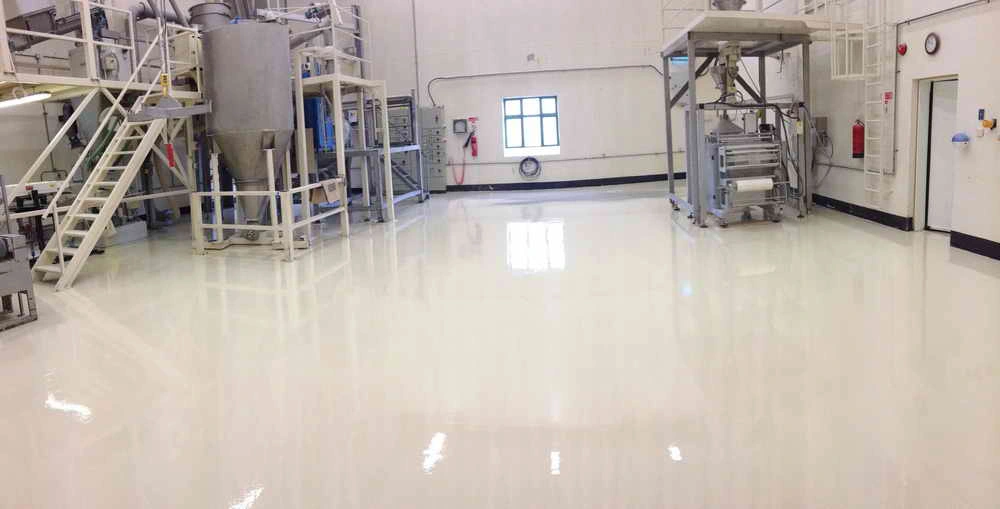
A manufacturing facility rarely gets to stop because the floor needs attention.
Production schedules continue, forklifts keep moving, materials are unloaded, finished products leave the building, and employees cross the same aisles hundreds of times every shift. In that kind of environment, flooring is not just part of the building. It is part of the operation.
Many facilities still rely on aging concrete that has gradually become cracked, dusty, stained, or difficult to maintain. At first, those issues may seem cosmetic. Over time, they can begin affecting cleaning routines, equipment movement, workplace safety, and the overall appearance of the facility.
That is why manufacturing plant epoxy flooring is often evaluated as an operational improvement, not just a decorative upgrade. The goal is not simply to make concrete look better. It is to create a surface that can support daily production demands while requiring less ongoing attention.
Every Manufacturing Facility Places Different Demands on Its Floor
It is easy to think of industrial flooring as one category, but manufacturing environments vary considerably.
A food production facility has different flooring needs than a metal fabrication shop. An electronics manufacturer does not expose its floors to the same materials as a warehouse with constant forklift traffic.
Before discussing coating systems, experienced contractors usually start with questions about operations rather than finishes.
For example:
- What types of equipment move through the facility?
- Are forklifts operating throughout the day?
- Are chemicals used during production?
- Is the floor exposed to oils or lubricants?
- Are employees working in wet conditions?
- How often is the floor cleaned?
The answers help determine whether a particular flooring system is appropriate for the environment.
Concrete Is Strong, but Constant Industrial Use Takes Its Toll
Concrete is used in manufacturing facilities because it can support heavy loads, but strength alone does not prevent surface wear.
Over years of operation, the floor begins to show how the building is used. Forklift routes become visible. Loading areas develop wear patterns. Concrete dust starts collecting around production equipment. Chemical spills leave stains or damage. Repair patches create an uneven appearance across the floor.
None of these issues automatically mean the slab has failed structurally, but they often increase maintenance and make the building harder to keep clean.
An industrial epoxy flooring system is designed to protect the concrete from much of that daily wear instead of allowing the slab itself to absorb the abuse.
Dust Is Not Just a Cleaning Problem
One issue many facilities underestimate is concrete dust.
As unfinished concrete wears, it slowly releases fine particles that settle across equipment, shelving, products, and work surfaces.
For some facilities, that is mostly an inconvenience. For others, especially manufacturing environments where cleanliness affects production or product quality, concrete dust becomes a larger operational concern.
A properly installed manufacturing facility floor coating helps seal the surface and reduce the dust generated by exposed concrete.
The result is not only a cleaner-looking floor. It can also contribute to a cleaner working environment overall.
Forklift Traffic Creates Different Challenges Than Foot Traffic
Many commercial flooring systems perform well under pedestrian traffic. Manufacturing plants require more from their floors.
Forklifts concentrate thousands of pounds of weight onto relatively small contact points. When they travel the same routes every day, that repeated movement creates wear patterns that eventually become visible on unprotected concrete.
Production carts, pallet jacks, machinery, and constant material handling also contribute to surface deterioration over time.
That does not mean every industrial floor needs the same coating thickness or system. It does mean traffic patterns should be part of the flooring conversation long before colors or finishes are discussed.
Chemical Resistance Depends on What the Facility Uses
One advantage often associated with industrial floor coating systems is chemical resistance.
However, not every epoxy system resists every chemical the same way.
A facility using mild cleaning products has different requirements than one working with oils, solvents, acids, or industrial chemicals. Instead of assuming one coating can handle everything, facility managers should identify the substances the floor is most likely to encounter during normal operations.
Matching the flooring system to the actual production environment is usually more effective than choosing the strongest product available without considering how the building is used.
Safety Is About More Than Slip Resistance
Industrial flooring discussions often focus on traction, and for good reason.
Production environments may involve water, lubricants, cleaning solutions, and other materials that affect footing. Slip-resistant finishes can be incorporated where appropriate, but safety extends beyond surface texture.
Clearly defined walkways, production zones, loading areas, and storage locations can improve organization and make the facility easier to navigate. A consistent, well-maintained floor also makes damaged areas easier to identify before they turn into larger maintenance issues.
In that way, the flooring becomes part of the facility’s operational planning, not just the surface employees walk across.
Cleaning Efficiency Affects Operating Costs
Cleaning a manufacturing facility is not only about appearance.
Every hour spent maintaining the building is an operational cost. Bare concrete tends to trap dirt within its porous surface, making routine cleaning more time-consuming than many managers expect.
An industrial concrete floor coating creates a sealed surface where dust and many common contaminants stay on top of the floor instead of penetrating into it.
That can simplify routine maintenance because crews spend less time trying to remove embedded dirt and more time performing standard cleaning procedures.
Over the life of a facility, those small efficiencies can become significant.
Can Older Manufacturing Floors Be Upgraded?
Many industrial buildings have concrete floors that are decades old. Age alone does not determine whether replacement is necessary.
Before recommending any flooring system, contractors typically evaluate:
- Structural integrity
- Surface wear
- Existing repairs
- Cracking
- Moisture conditions
- Previous coatings
- Areas exposed to heavy traffic
If the slab is still structurally sound, preparation may include grinding, repairs, and surface profiling before a new coating system is installed.
In many facilities, restoring the existing concrete is far more practical than complete replacement.
Planning Around Production Is Just as Important as Choosing the Coating
One of the biggest differences between residential and industrial flooring projects is downtime.
Manufacturing facilities usually cannot stop operations for longer than necessary. Production schedules, shipping deadlines, staffing, and equipment access all affect when flooring work can be completed.
For many facilities, the installation plan is just as important as the coating system itself.
Projects may need to be completed in phases, coordinated around shutdown periods, or scheduled to reduce disruption to ongoing operations.
Evaluating the installation process early helps facility managers balance daily production needs with long-term flooring improvements.
Manufacturing Plant Epoxy Flooring in Las Vegas
Manufacturing plants throughout Las Vegas, Henderson, North Las Vegas, and surrounding industrial areas often require flooring systems tailored to the specific demands of their operations.
Reveles Concrete evaluates the condition of the existing concrete, expected traffic, and production requirements before recommending coating systems designed to support durability, maintenance, and day-to-day facility performance.