

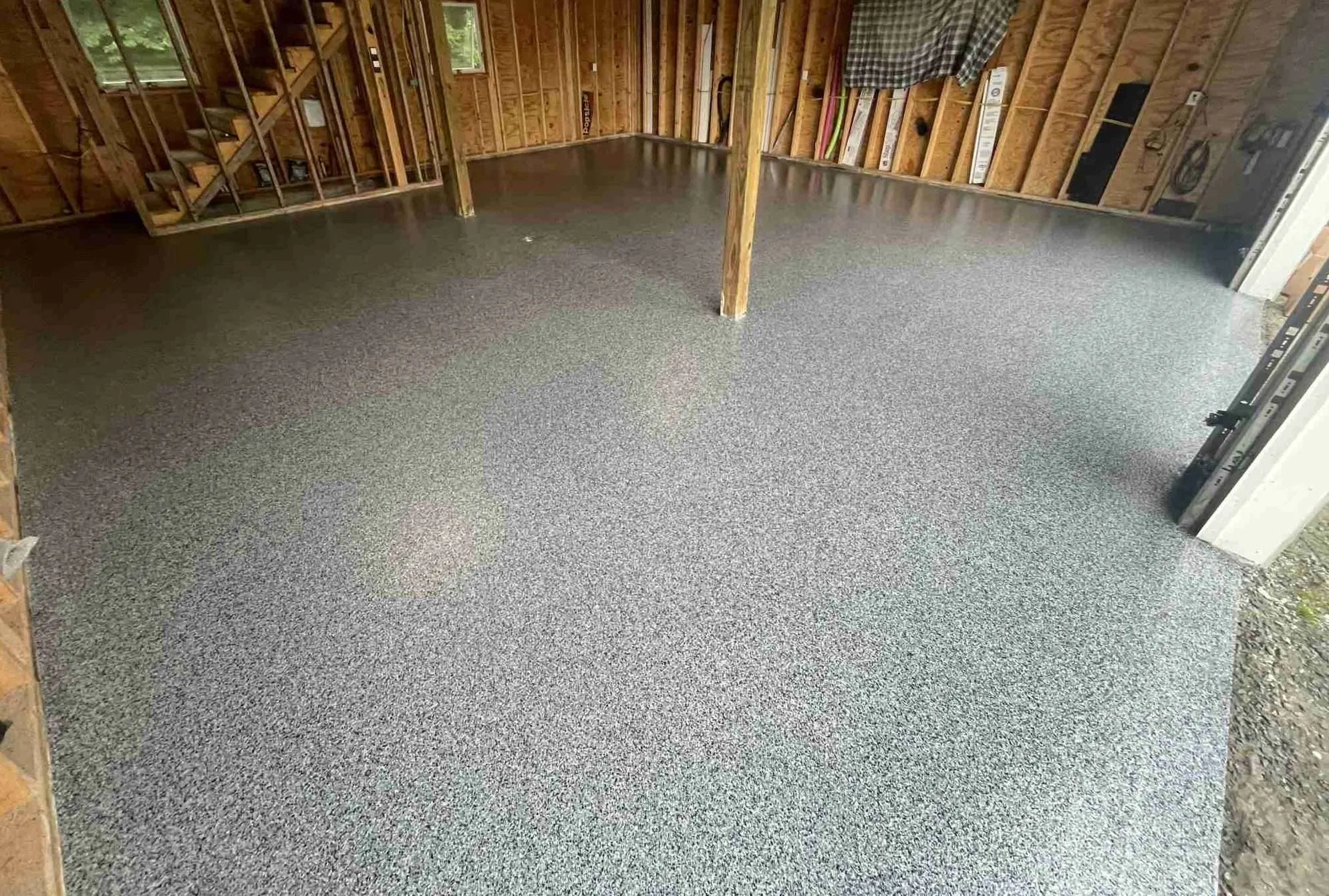
Many people hear “low maintenance epoxy flooring” and assume the floor will take care of itself. That is not how it works.
Epoxy still needs basic care. Dirt has to be swept, spills should be cleaned, and heavy objects should not be dragged across the surface without caution. The difference is that the cleaning routine is usually much easier than it is with bare concrete.
Instead of fighting stains that have soaked into the slab or sweeping concrete dust that keeps coming back, property owners are maintaining a sealed surface that is easier to clean and easier to keep looking finished.
That is the real appeal. Epoxy does not remove maintenance completely. It makes the floor less frustrating to maintain.
Why Bare Concrete Becomes Hard to Keep Clean
Concrete is strong, but unfinished concrete is not always easy to live with.
In garages, workshops, storage rooms, and commercial spaces, bare concrete absorbs more than many property owners expect. Oil, dirty water, grease, chemicals, and everyday grime can settle into the slab. Once that happens, cleaning becomes harder because the stain is no longer just sitting on the surface.
Dust is another common problem. As concrete wears, it can release fine particles that collect on shelves, tools, vehicles, boxes, and nearby surfaces. A garage can be swept in the morning and still feel dusty again a few days later.
This is why some concrete floors never feel fully clean, even when they are cleaned regularly. The issue is not always the amount of effort. Sometimes, the problem is the unfinished slab itself.
What Changes After Epoxy Is Installed
An epoxy coating creates a sealed layer over the concrete. That changes how the floor responds to normal use.
Dirt and spills stay closer to the surface. Dust is easier to remove. Oil and automotive fluids are less likely to soak deeply into the concrete if they are cleaned within a reasonable amount of time.
For homeowners, this can make the garage feel easier to manage. For business owners, it can mean faster cleaning and a more professional-looking floor during daily operations.
An easy to clean epoxy floor is not valuable because it never gets dirty. It is valuable because normal dirt, dust, and spills are easier to remove.
Concrete Dust Is Often the Biggest Surprise
Many homeowners first think about epoxy because of oil stains, tire marks, or an unfinished garage appearance. After installation, one of the changes they often notice most is the reduction in dust.
Bare concrete can keep releasing fine particles as vehicles, shoes, tools, and storage items move across it. Those particles do not stay on the floor. They settle on cabinets, stored belongings, workbenches, and anything else kept in the garage.
A properly installed epoxy coating helps seal that dusty surface. The garage will still need sweeping, especially in a dry and dusty climate like Southern Nevada, but the floor usually stays cleaner longer than unfinished concrete.
That difference can make a garage, workshop, or storage area feel easier to use day to day.
Why Commercial Spaces Care About Maintenance
In a commercial building, cleaning time matters.
A floor that takes longer to sweep, scrub, or mop creates more work every day. Dirt can collect in worn areas. Dust can move into nearby rooms. Stains in customer-facing spaces can make the building look older or less cared for.
This is one reason commercial epoxy flooring is often used in warehouses, retail stores, medical facilities, showrooms, workshops, manufacturing spaces, and storage facilities.
The floor may look better on the first day, but the longer-term value is in the daily routine. A sealed surface gives staff fewer stains to fight, fewer porous areas to scrub, and fewer places for grime to settle into the concrete.
Low Maintenance Still Requires Basic Care
Epoxy is easier to maintain than bare concrete, but it should not be ignored.
Routine care usually includes sweeping away loose debris, cleaning spills before they sit too long, damp mopping when needed, avoiding harsh or abrasive cleaning tools, and using products that are safe for coated floors.
This kind of maintenance is simple, but it matters.
A durable epoxy floor coating lasts longer when the owner treats it like a finished surface, not an indestructible slab. The goal is to preserve the clean appearance instead of waiting until the floor looks neglected and then trying to correct years of buildup.
Seamless Floors Are Easier to Clean
One reason epoxy is easier to maintain is that it does not create grout joints or seams where dirt collects.
Tile can look good, but grout lines often become a cleaning problem. Some vinyl floors have seams or edges that collect grime over time. Bare concrete has pores and surface texture that hold dirt.
Epoxy creates a more continuous surface across the slab. That does not make it self-cleaning, but it does reduce many of the small places where dust, debris, and moisture tend to settle.
For garages, storage rooms, workshops, and commercial spaces, that can make routine cleaning noticeably simpler.
Some Finishes Hide Daily Use Better Than Others
The finish matters too.
A solid-color epoxy floor can look clean and modern, but it may show dust, footprints, or small marks faster because the surface is uniform.
Decorative flake systems are usually more forgiving. The blend of colors helps hide fine dust, light dirt, minor tire marks, small scuffs, and everyday wear patterns.
This is one reason flake systems are popular in garages and workspaces. They still need cleaning, but they do not always look dirty as quickly as a plain solid surface.
Choosing a finish is not only about style. It also affects how the floor looks between cleanings.
Where Low Maintenance Matters Most
Easy maintenance is useful anywhere, but it matters more in spaces that get dirty quickly.
Garages deal with vehicles, tires, tools, bicycles, storage bins, and dust from outside. Workshops collect sawdust, debris, and equipment marks. Storage rooms benefit when boxes and belongings are not constantly covered in concrete dust.
Commercial buildings have their own concerns. Employees and customers track in dirt. Carts, deliveries, equipment, and cleaning routines all affect the floor throughout the week.
Finished basements, hobby rooms, and interior concrete spaces can also benefit from a sealed floor because they feel cleaner and easier to use throughout the year.
In each case, epoxy helps by making the floor less of a maintenance problem.
Installation Affects Long-Term Maintenance
A low-maintenance floor starts before the coating is applied.
If epoxy is installed over poorly prepared concrete, the floor can become harder to maintain later. Peeling areas, weak edges, trapped dirt, or coating failure can turn a simple cleaning routine into a repair issue.
Preparation matters because the coating needs a clean, profiled surface to bond correctly. A proper installation may include mechanical grinding, crack repair, moisture evaluation, cleaning, and surface profiling before the coating system is applied.
A floor that bonds correctly is easier to keep clean and more likely to perform the way the owner expected.
Why Property Owners Choose Epoxy Over Bare Concrete
Low maintenance epoxy flooring makes sense when the owner wants a floor that is easier to clean, less dusty, and more forgiving than unfinished concrete.
It is not maintenance-free. No finished floor is. But compared to bare concrete, the day-to-day care is usually simpler and less frustrating.
For homes and businesses in Las Vegas, Henderson, Summerlin, and nearby communities, that matters. Dust, heat, vehicles, tools, storage, foot traffic, and regular use can make bare concrete difficult to keep presentable.
Reveles Concrete installs epoxy flooring systems based on how each space will actually be used. Whether the project involves a residential garage, commercial workspace, workshop, or interior concrete floor, the goal is to create a durable surface that looks finished and stays easier to maintain over time.