

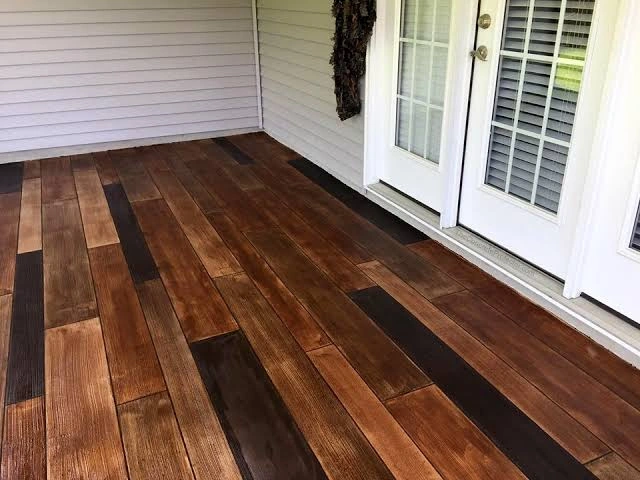
One common misconception is that decorative concrete installers simply stain a slab brown and call it wood. A believable wood finish needs more detail than that.
The most realistic results usually come down to layout, texture, and color variation.
Plank Layout
In a real plank floor, boards rarely line up perfectly or repeat in an obvious pattern. Lengths vary, joints shift, and the layout has small irregularities.
A well-designed wood plank concrete flooring layout should reflect that. If the pattern repeats too clearly across the slab, the surface can look artificial instead of rustic.
Wood Grain Texture
Texture is what keeps the finish from looking painted. Stamping tools can create grain patterns, knots, saw marks, and small imperfections that help the surface resemble weathered lumber.
Texture also affects how the floor catches light, how it feels underfoot, and how it performs in outdoor areas. Around patios and pool decks, the surface should look good while still being practical for daily use.
Layered Color
Reclaimed wood is not one flat color. It usually has darker grain lines, faded edges, worn areas, and color shifts from board to board.
Decorative stains are often layered to create that same depth. Instead of using one brown tone, installers may blend grays, tans, warm browns, cedar tones, or darker accents to make the finish feel more natural.
In Southern Nevada, color selection also matters because very dark outdoor surfaces can absorb more heat. Lighter rustic tones may be a better fit for areas with heavy sun exposure.
Where Rustic Concrete Flooring Makes the Biggest Difference
Not every space needs a wood-inspired finish. Rustic concrete flooring works best when the floor contributes to the overall design and also needs to handle real use.
Outdoor Patios
Many patios begin as plain concrete slabs. They may be functional, but they often do not add much to the look of the outdoor area.
A rustic wood finish can make the patio feel more connected to the home, especially when the space includes seating, a fire pit, outdoor kitchen, or covered lounge area. It gives the slab more character without replacing it with traditional decking.
For Las Vegas and Henderson patios, this matters because outdoor flooring has to deal with sun, dust, furniture movement, and regular cleaning.
Pool Decks
Wood and swimming pools can be a difficult combination. Constant moisture, splashing water, wet feet, and direct sunlight can shorten the life of outdoor wood surfaces if they are not maintained carefully.
A decorative concrete finish can create the appearance of weathered wood while using a material that is generally better suited for pool environments.
For pool decks, the finish should not be chosen by appearance alone. Texture, traction, heat exposure, and cleaning should all be considered before selecting the final surface.
Courtyards and Walkways
Walkways and courtyards are often overlooked during renovations, but they affect the way the property feels from one area to another.
Replacing plain gray concrete with a rustic finish can help connect landscaping, patios, outdoor kitchens, entryways, and seating areas. This approach works especially well with desert landscaping, stucco homes, stone borders, and Southwest-style details common throughout Southern Nevada.
Restaurants and Retail Spaces
Commercial spaces often use flooring to support the atmosphere of the business. Restaurants may want the warmth of reclaimed wood, but natural wood can be difficult in areas with heavy foot traffic, chair movement, spills, and frequent cleaning.
Decorative concrete allows businesses to create a similar rustic look while using a surface designed for regular commercial use. It can work well in dining areas, showrooms, retail spaces, tasting rooms, and other customer-facing environments where appearance and durability both matter.
Rustic Does Not Mean Every Floor Looks the Same
One advantage of decorative wood grain concrete is the ability to customize the appearance. Some property owners want a cleaner wood look, while others prefer a heavily aged surface that appears decades old.
Popular design directions include:
- Weathered gray planks
- Reclaimed barn wood
- Driftwood finishes
- Walnut-inspired tones
- Rustic oak textures
- Wide plank layouts
- Narrow traditional boards
- Distressed saw-cut effects
The right choice usually depends less on what looks good in a small sample and more on how the finish works with the property. Architecture, landscaping, furniture, lighting, and sun exposure can all influence the best color and plank style.
Farmhouse homes may suit heavier weathering. Contemporary homes often pair better with cleaner plank layouts and more subtle grain. Commercial spaces may need a finish that looks distinctive without becoming too busy once furniture, signage, and lighting are added.
Rustic Concrete vs. Real Reclaimed Wood
Real reclaimed wood still wins on authenticity. It has natural movement, age, and material history that decorative concrete cannot fully duplicate.
Concrete wins when the floor has to handle water, traffic, cleaning, insects, outdoor exposure, or heavy use.
Compared to reclaimed wood, rustic wood look concrete floors typically offer:
- Better resistance to moisture
- No termite damage
- No rotting boards
- No splinters
- Greater durability in outdoor settings
- Easier routine cleaning
- More consistent long-term appearance
The trade-off is simple. Concrete can closely resemble reclaimed wood, but it still behaves like concrete. It is a hard surface, not a wood floor.
That difference matters. If the owner wants the feel, sound, and authenticity of real reclaimed lumber, wood may still be the better material. If the goal is a rustic appearance on a stronger, lower-maintenance surface, decorative concrete is often the more practical choice.
Can Older Concrete Be Given a Rustic Finish?
Many rustic concrete projects start with an existing slab rather than new construction.
If the concrete is structurally sound, resurfacing may be possible. The slab still needs to be evaluated before any decorative finish is recommended.
Contractors generally look at:
- Structural integrity
- Existing cracks
- Previous coatings
- Surface wear
- Moisture conditions
- Areas requiring repair
Preparation may involve grinding, crack repair, cleaning, and resurfacing before decorative stamping or coloring begins. Skipping those steps can affect both the appearance and durability of the finished floor.
The rustic finish is only as reliable as the surface beneath it.
What Maintenance Can Property Owners Expect?
Rustic concrete flooring is usually easier to maintain than natural wood, but the sealer still needs to be protected.
Routine care is generally simple:
- Sweep away dirt regularly
- Wash occasionally with mild cleaners
- Clean spills promptly
- Avoid harsh chemicals that may damage the sealer
- Reseal periodically depending on traffic and weather exposure
Unlike reclaimed wood, there are no loose boards, exposed nails, splintering edges, or refinishing schedules to manage.
For outdoor spaces that receive constant sunlight, pool moisture, patio furniture movement, and regular foot traffic, that difference can be a major reason to choose concrete over wood.
Choosing the Right Rustic Style for Your Property
Before selecting a finish, it helps to think beyond the flooring itself. The best rustic concrete wood flooring projects are planned around the space, not just the color.
Useful questions include:
- Will the floor receive direct sunlight most of the day?
- Should the finish match existing stone, stucco, or landscaping?
- Does the property lean farmhouse, Southwest, modern, or commercial?
- Should the floor stand out or blend into the surroundings?
- Would lighter colors perform better in exposed outdoor areas?
- Does the surface need extra texture for pool or outdoor use?
- Is the existing concrete in good condition?
Those answers influence plank width, color selection, texture, sealer choice, and preparation needs.
For rustic concrete wood flooring, the best result usually starts with the slab. Reveles Concrete evaluates the existing surface first, then helps property owners choose a plank pattern, color, and texture that fit the space and expected use. For homes and businesses in Las Vegas, Henderson, Summerlin, and surrounding communities, that planning helps create a rustic wood-inspired surface built around both appearance and long-term function.