

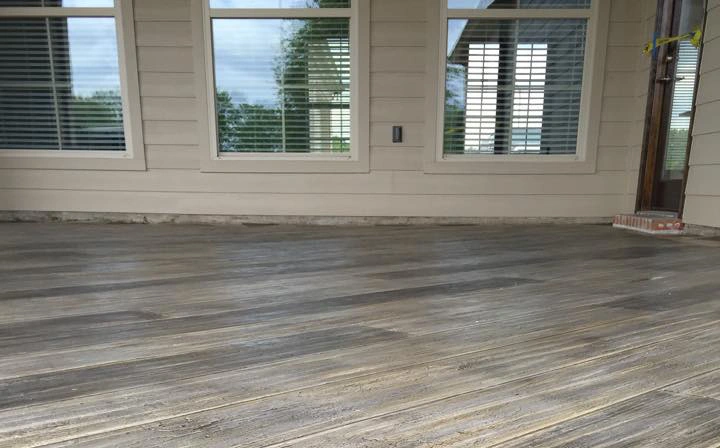
Hardwood has a look people rarely get tired of. It adds warmth, texture, and a finished feel that plain concrete usually does not provide. The problem is that many Las Vegas spaces where homeowners want that wood look are also the places where real wood has the hardest time holding up.
Patios sit under intense sun. Pool decks deal with water, foot traffic, and cleaning. Garages collect dust, oil, tire marks, and storage clutter. Walkways take heat, dirt, and daily use. Even some interior spaces need a floor that can handle pets, furniture, spills, and regular cleaning without becoming a maintenance project.
That is where wood look concrete floors can make sense. They keep the strength of concrete, then use color, grain, plank lines, and texture to create a wood-inspired surface. The goal is not to copy hardwood perfectly. The goal is to get the warmth of wood on a surface that is better suited for heat, moisture, traffic, and everyday use.
When Concrete That Looks Like Wood Makes Sense
Concrete can be finished to look like wood, but the real decision is whether that finish fits the space.
A decorative concrete wood finish works best when the owner wants the appearance of wood without the common problems that come with real wood outdoors. That usually means avoiding boards that can warp, rot, splinter, attract termites, or need repeated staining and refinishing.
Inside, it can be a good option when the owner wants something warmer than plain concrete but easier to clean than many traditional flooring materials.
Wood look concrete is not supposed to make someone believe they are standing on actual hardwood. Its value comes from combining a wood-style appearance with a stronger concrete base.
Where Wood Look Concrete Works Best
A wood finish does not belong everywhere. It usually works best in spaces that already need more warmth, character, or connection to the rest of the property.
Patios That Feel Too Plain
Many Las Vegas patios are basic poured concrete slabs. They function well, but they can make an outdoor living area feel unfinished.
A wood look concrete patio can give that slab more character without replacing it with real wood decking. Plank patterns and warm brown, tan, cedar, or weathered gray tones can make the patio feel more intentional.
For patios connected to a pool, outdoor kitchen, fire pit, or seating area, the floor becomes part of the design instead of just the surface underneath it.
Pool Decks That Need Warmth Without Wood Problems
Pool areas are one of the clearest examples of why real wood is not always the right choice.
Wood near water needs constant attention. It can become slick, fade, crack, or deteriorate faster if it is not maintained correctly. Concrete is usually better suited for the water exposure, cleaning, and foot traffic around a pool.
For pool decks, texture matters as much as appearance. A decorative concrete wood finish can add visual warmth while still allowing the surface to be planned around traction, maintenance, and heat exposure.
Walkways and Courtyards
Walkways, courtyards, and entry paths do not have to stay plain gray. Wood plank stamped concrete can help those areas feel more designed.
This can work well with desert landscaping, stucco homes, stone borders, and modern outdoor spaces. The wood pattern adds contrast without introducing a fragile outdoor material.
Garages Used as Finished Spaces
Not every garage needs a wood-style finish. For many homeowners, a standard flake epoxy floor may be the better choice if the main goal is a clean, durable surface for cars, tools, and storage.
However, garages used as showrooms, hobby rooms, home gyms, or entertainment spaces may benefit from a warmer finish. Wood grain concrete flooring can make the garage feel less industrial while still keeping the strength of concrete.
The finish should match the way the garage is actually used.
What Makes One Wood Look Floor More Realistic Than Another?
The realism of wood textured concrete floors depends on more than choosing a brown stain.
A weak wood look finish can appear flat, repetitive, or painted. A stronger finish usually has variation in pattern, texture, and color.
Pattern
The plank layout should feel natural. If every board looks identical or the pattern repeats too clearly, the surface can lose the character that makes wood appealing.
Wider planks often create a rustic or modern look. Narrower planks can feel more traditional.
Texture
Wood grain texture gives the surface dimension. Without texture, the finish may look more like colored concrete than wood.
Texture also affects how the floor feels underfoot, how it reflects light, and how it performs outdoors.
Color
Natural wood is rarely one flat color. It has darker grain lines, lighter worn areas, knots, and small shifts from board to board.
A strong decorative concrete wood finish often uses layered color to create depth. Weathered gray, warm walnut, tan, cedar, and reclaimed wood tones can all work, but the best choice depends on the setting.
In Las Vegas, lighter tones are often worth considering for sun-exposed areas because very dark surfaces can absorb more heat.
Wood Look Concrete vs. Real Hardwood
Hardwood is still a premium material in the right interior setting. A formal living room, bedroom, or controlled indoor space may benefit from the natural warmth and feel of real wood.
Outside, near water, in garages, or in high-use areas, concrete usually has the advantage.
Wood look concrete can offer:
- Better resistance to outdoor exposure
- No termite concerns
- No rotting boards
- No warping from moisture
- Easier cleaning
- Stronger performance in high-use areas
- More design flexibility on existing concrete
The trade-off is feel. Concrete remains hard underfoot, even when it has a wood-style finish. It can look warm, but it will not feel exactly like natural planks.
That difference matters when choosing the right surface.
Can Existing Concrete Be Turned Into a Wood Look Floor?
Sometimes, yes.
Many homeowners ask about wood look concrete because they already have an aging slab they do not want to remove. If the concrete is structurally sound, it may be possible to resurface or refinish it instead of replacing it.
The condition of the slab matters.
Cracks, old paint, previous coatings, oil stains, moisture issues, scaling, and uneven areas can all affect the final result. Surface preparation is not a small detail. It is what helps the decorative finish bond correctly and last longer.
A professional process may include inspection, cleaning, grinding, crack repair, surface preparation, decorative application, sealing, and curing.
Project pricing usually depends on the square footage, slab condition, selected finish, design complexity, and amount of prep work required.
Maintenance Is Easier Than Wood, But Not Zero
Wood look concrete is lower maintenance than natural wood, but it still needs basic care.
For most homeowners, that means sweeping away dirt, rinsing outdoor areas, cleaning spills, and avoiding harsh chemicals that can damage the sealer. Depending on sun exposure, water exposure, and traffic, the surface may need resealing over time.
The bigger difference is what the owner is not maintaining.
There are no boards to replace. No termites to treat. No sanding schedule. No routine outdoor wood staining. No warped planks to deal with after moisture exposure.
For busy homeowners, that is often the reason this surface makes sense.
When Wood Look Concrete Is Not the Best Choice
A wood-style finish should not be chosen only because it looks decorative.
If the space needs maximum traction, a heavier textured coating system may perform better. If the owner wants the soft feel, natural aging, and material value of real wood inside a controlled interior space, hardwood may still be the better choice.
Wood look concrete is strongest when it solves a specific problem: the property owner wants the appearance of wood in a space where real wood would be harder to maintain.
That is why it often fits patios, pool decks, walkways, courtyards, garage feature areas, and some commercial spaces better than every room of a home.
What Las Vegas Property Owners Should Think About First
Before choosing wood look concrete floors, the most useful questions are practical:
- Will the surface be indoors or outdoors?
- How much direct sun will it receive?
- Will it be near a pool or water source?
- Is the existing concrete in good condition?
- Should the finish look rustic, modern, or natural?
- Is traction more important than a smoother appearance?
- How much maintenance is realistic for the owner?
Those answers shape the system, color, texture, and finish.
In Las Vegas, this finish works best when it is chosen for the actual conditions: heat, water exposure, traffic, cleaning needs, and the condition of the slab underneath. When those details are considered from the start, wood look concrete can provide the warmth of a wood-inspired design without many of the maintenance concerns that come with real wood in demanding spaces.