

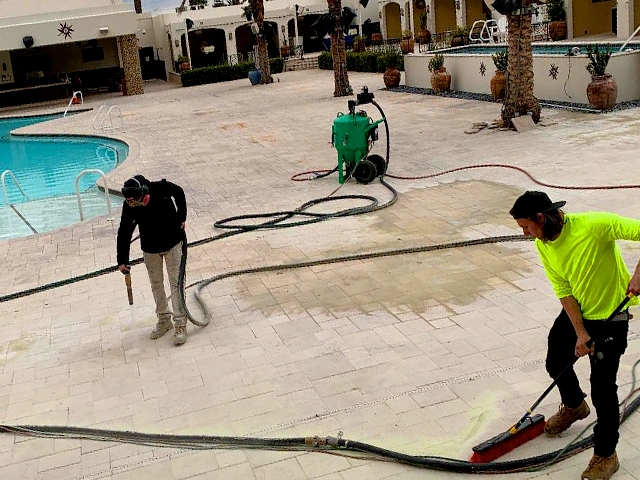
A pool deck usually gets the most use when the surface is also most likely to become slippery.
People are walking with wet feet, kids are moving quickly around the water, guests may be carrying drinks, and sunscreen residue can end up on the concrete throughout the day. Add dirt, dust, and smooth concrete to that mix, and the surface can lose traction quickly.
Many homeowners do not notice the problem until someone slips or nearly loses their footing. The good news is that improving traction does not always mean replacing the concrete. In many cases, the better solution is changing the surface.
A slip resistant pool deck coating is designed to improve traction while giving aging concrete a cleaner, more finished appearance. Instead of treating safety and appearance as separate projects, property owners can often address both at the same time.
The key is understanding what makes a pool deck slippery and why some coatings perform better than others.
A Pool Deck Does Not Have to Be Damaged to Become Unsafe
One common misconception is that slippery concrete must be old, worn out, or visibly damaged.
Even a newer pool deck can become slick under the right conditions. Concrete naturally becomes smoother as foot traffic wears down the surface. Once water, sunscreen, spilled drinks, and fine dust are added, traction can decrease even when the slab itself is still in good condition.
That is why pressure washing alone rarely solves the problem for long. Cleaning removes surface dirt, but it does not change how the concrete performs when it gets wet.
Texture Is What Creates Traction
When homeowners start researching a non slip pool deck coating, they often focus first on the coating material. In many cases, the more important factor is texture.
Slip resistance comes from creating enough surface profile for shoes and bare feet to maintain contact, even when water is present. A good finish should add grip without feeling harsh or uncomfortable under bare feet.
The right amount of texture depends on how the pool area is used. A residential backyard used mostly by adults may need a different finish than a hotel pool deck, HOA pool, or community recreation area where children are constantly moving across wet concrete.
Safety Should Not Come at the Expense of Appearance
Years ago, textured concrete often meant sacrificing appearance. Modern decorative coatings offer much more flexibility.
Today’s decorative pool deck coating systems can combine traction with finishes that complement the home, patio, outdoor kitchen, walkways, and seating areas. Natural stone-inspired finishes, light earth tones, modern gray palettes, decorative textures, and custom color combinations can all be used to create a surface that feels intentional instead of simply repaired.
Many homeowners use a pool deck renovation as an opportunity to make the entire outdoor area feel more connected.
Southern Nevada Creates Unique Challenges for Pool Decks
Pool decks in Las Vegas deal with conditions that many other climates do not.
Intense sun, high summer temperatures, wind-blown dust, and frequent outdoor use all affect how concrete ages. Over time, an older pool deck may start to look faded, stained, rough in some areas, or too smooth in others. Small surface cracks can also develop as the concrete expands and contracts through seasonal temperature changes.
Barefoot comfort matters too. A pool deck that looks good but feels harsh, slick, or uncomfortable underfoot can still be frustrating to use.
When evaluating a pool deck coating Las Vegas homeowners often look beyond slip resistance alone. They are usually trying to improve safety, restore appearance, and make the pool area easier to enjoy during the warmer months.
A properly selected coating system can address these concerns by improving traction while giving the concrete a renewed finish.
When Is Resurfacing a Better Option Than Replacement?
Many homeowners assume that a worn pool deck needs to be demolished. That is not always the case.
If the existing slab is still structurally sound, pool deck resurfacing may provide a practical alternative. Before recommending any coating system, contractors typically evaluate:
- Surface wear
- Cracking
- Drainage
- Existing coatings
- Concrete condition
- Areas that need repair
If the slab is suitable, preparation and resurfacing can often restore both appearance and function without the disruption of replacing the entire deck.
The condition of the concrete, not just its age, usually determines which approach makes the most sense.
Residential and Commercial Pools Have Different Priorities
Every pool deck benefits from improved traction, but the way the space is used often changes the coating recommendation.
A homeowner may care most about barefoot comfort, decorative finishes, and creating a backyard that feels clean and inviting. Hotels, apartment communities, HOAs, and recreation facilities often focus more on durability, consistent appearance, ease of maintenance, and heavy daily foot traffic.
Residential and commercial pool decks may use similar coating systems, but the texture, finish selection, and maintenance expectations should match the environment.
Maintenance Still Matters
Installing a pool deck safety coating does not eliminate maintenance. It makes the deck easier to manage when it is cared for properly.
Leaves, dirt, sunscreen residue, food and drink spills, and standing water should still be cleaned regularly. Any outdoor surface can become less safe when buildup is allowed to sit for too long.
Routine maintenance usually includes sweeping debris, rinsing dirt from the surface, cleaning spills promptly, removing organic buildup, and inspecting high-traffic areas from time to time.
A properly maintained coating continues looking better and helps preserve the traction it was designed to provide.
Choosing the Right Texture Is a Balance
Many homeowners assume more texture automatically means a safer surface. The reality is more balanced.
A finish that is too smooth may not provide enough grip when wet. A finish that is too aggressive can feel uncomfortable under bare feet, collect dirt more easily, and make routine cleaning harder.
Finding the right textured pool deck coating depends on several practical questions:
- Who will be using the pool?
- Is the pool residential or commercial?
- How much direct sun reaches the deck?
- Is barefoot comfort a priority?
- Will the area experience heavy foot traffic?
- How often will the surface need to be cleaned?
These details help determine which finish is appropriate instead of relying on a one-size-fits-all surface.
A Pool Deck Should Support the Way the Backyard Is Used
Many homeowners eventually stop thinking of the pool deck as only the concrete surrounding the water. It becomes part of the outdoor living area.
People walk across it barefoot, move between the pool and patio, set up chairs, clean up after guests, and use the same surface throughout much of the year. The deck connects the pool to the patio, outdoor kitchen, seating area, and landscaping.
For that reason, a coating should do more than improve traction. It should also support how the entire backyard functions, feels, and looks over time.
Slip Resistant Pool Deck Coating in Las Vegas
Throughout Las Vegas, Henderson, Summerlin, and surrounding communities, Reveles Concrete installs decorative concrete coating systems that improve both the appearance and usability of residential and commercial pool decks.