

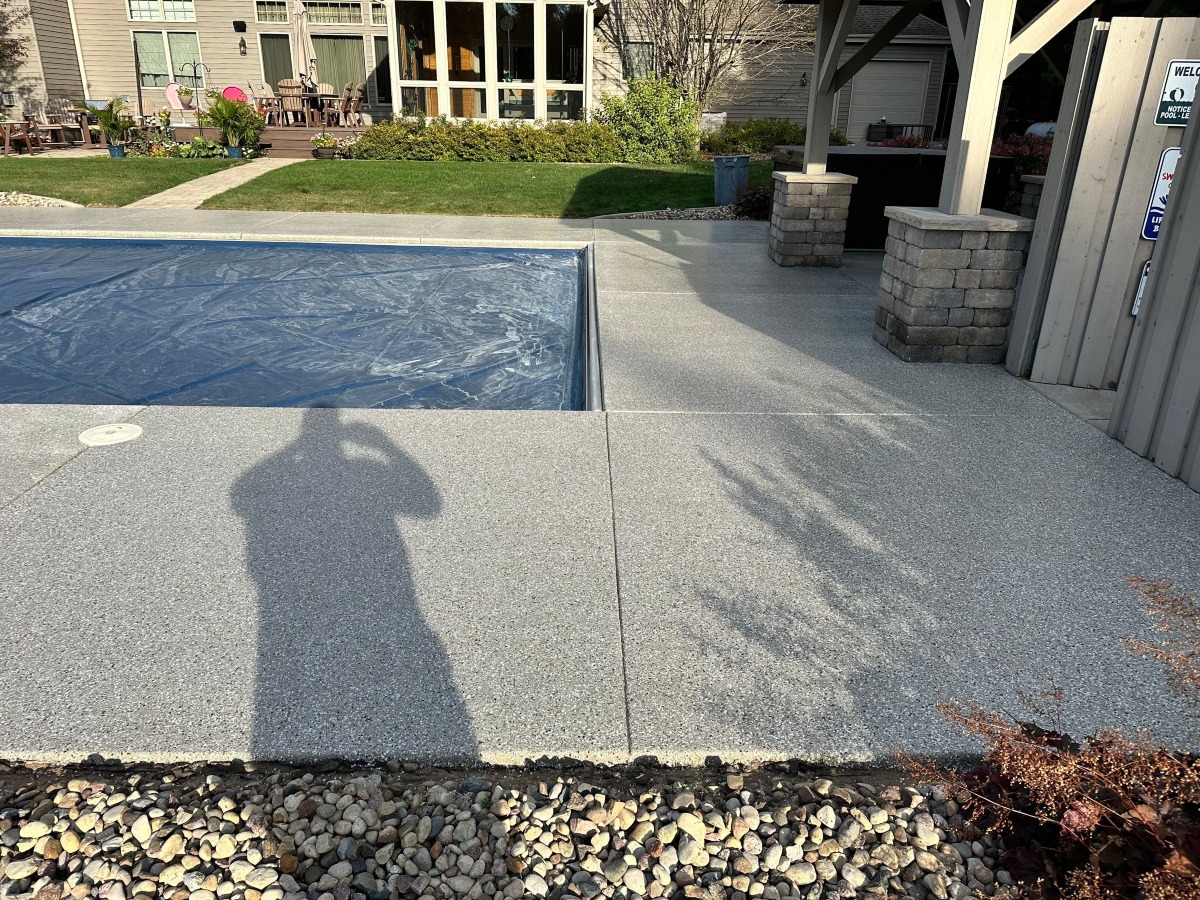
Why stamped concrete can feel slick when wet, and how coatings and surface texture choices affect traction over time
Stamped concrete is popular because it delivers a decorative look that fits patios, walkways, and pool areas. But stamped surfaces also come with a practical question that matters more than style: how the surface feels when it’s wet.
Wet traction isn’t just about rain. Around pools and outdoor living areas, water shows up constantly—splash-out, wet feet, rinsing, hose downs, irrigation overspray, and occasional storms. Add sunscreen residue, dust film, and the smooth high points of a stamped pattern, and some stamped surfaces can start to feel less predictable underfoot.
Stamped concrete coatings are often used to protect the surface and improve long-term consistency, but traction depends on more than “having a coating.” It depends on surface texture, finish behavior, and maintenance habits. This guide explains how slip resistance works on stamped concrete, what changes traction in real use, and how coated stamped surfaces can be kept safer and more consistent in wet areas like pool decks and patios.
Why stamped concrete sometimes feels slick in wet zones
Stamped concrete isn’t naturally slick in every case, but there are a few reasons it can feel that way in the wrong conditions.
Smooth high points and contact zones
Stamped patterns have high points (ridges) and low points (grooves). When you walk on stamped concrete, your foot tends to contact the high points most. If those high points are:
- Smooth
- Sealed with a glossy finish
- Worn down over time
…they can become the “contact surface” that determines traction, especially when wet.
Water acts like a lubricant on smooth finishes
When a smooth surface is wet, the water layer reduces friction. Traction drops further if the water is mixed with:
- Sunscreen overspray
- Body oils
- Dust film
- Soap residue from cleaning
This is why a surface that feels fine when dry can feel noticeably different when wet.
Residue buildup changes traction more than people expect
In Las Vegas, a stamped patio or pool deck can develop a thin film from:
- Windblown dust
- Hard water spotting and mineral deposits
- Cleaner residue from mopping or hose-downs
- Organic buildup in shaded areas
That film can create a slippery “glaze” effect in splash zones if it isn’t managed consistently.
What stamped concrete coatings do and don’t do for slip resistance
Stamped concrete coatings are commonly used to protect color, reduce wear, and make cleaning easier. They can also support traction goals—but only if the finish is designed with wet behavior in mind.
What coatings can help with
- Protecting the surface from wear that polishes high points over time
- Sealing porous areas so grime doesn’t embed as easily
- Supporting a consistent finish that’s easier to maintain evenly
- Allowing a traction strategy (texture/finish choices) to be built into the surface
What coatings don’t automatically solve
- A smooth surface that stays smooth
- Residue buildup from sunscreen, dust, and hard water
- Poor drainage that leaves standing water
- A glossy finish placed in a high-splash area with no traction plan
In short: coatings are part of the solution, but traction comes from the complete surface system, not just the presence of a sealer.
Traction is influenced by texture, not just “grippiness”
Slip resistance often gets discussed as if it’s one simple property. In real use, traction is shaped by:
- Microtexture (fine surface character you can feel lightly)
- Macrotexture (larger texture patterns and surface profile)
- Contaminants (water, oil, sunscreen, dust)
- Footwear and barefoot use (pool decks behave differently than walkways)
- Maintenance film (soap residue, mineral deposits)
Stamped concrete already has macrotexture because of the stamped pattern, but if the walking surface (high points) is smooth and sealed, the macrotexture alone may not provide stable traction when wet.
How finish sheen affects wet traction
One of the biggest traction levers is the surface sheen.
Higher-sheen finishes
High sheen can look clean and sharp, especially on decorative stamped patterns. But in wet zones, higher sheen can:
- Highlight water film
- Make smooth high points feel more slippery
- Show residue and mineral film more visibly
More muted finishes
A less reflective finish can reduce the “slick feel” that comes from a highly polished surface. It also tends to make small scuffs and cleaning streaks less visible.
The goal isn’t “never use shine.” The goal is matching the finish behavior to the location—especially around pools where wet traction is a daily requirement.
How stamped pattern depth relates to traction
Stamped patterns vary widely in how deep and defined they are.
- Deeper patterns often have more groove definition and can help channel water.
- Shallow patterns can look refined but may rely more heavily on the surface finish for traction.
That said, pattern depth doesn’t automatically equal safety. If the high points are slick and coated smooth, the grooves don’t matter as much because your foot isn’t using them for traction.
The role of cleaning habits in slip resistance
Even a well-designed surface can become slippery if maintenance creates film.
Sunscreen and body oils
Around pools, sunscreen residue is one of the most common “mystery slick” causes. It can create an invisible film that changes traction, especially when mixed with water.
Soap residue
Some cleaning routines leave behind a thin soap layer. When that layer gets wet again, it can feel slick.
Hard water deposits
Mineral deposits from irrigation overspray or splash-out can create a smooth, glassy feel in certain zones over time. These deposits also make dirt stick more easily, creating a cycle of buildup.
A practical approach is to clean often enough that film never becomes “baked in,” and to avoid products that leave residue.
Pressure washing and stamped concrete coatings: traction benefits and risks
Pressure washing can help remove film from stamp grooves, which can improve traction. But it can also create uneven results if done inconsistently.
Helpful uses
- Removing built-up grime in grooves
- Cleaning large areas evenly when done with consistent passes
- Resetting the surface after dusty or windy periods
Common mistakes
- Focusing too long on one section, creating visible “clean patches”
- Using a narrow jet that stripes the surface
- Leaving detergent residue that dries unevenly
- Not rinsing thoroughly, which can leave a slick film behind
Uniform cleaning is the goal—especially on decorative surfaces where uneven cleaning becomes very visible.
Drainage: the traction issue that coatings can’t fix alone
Slip resistance drops when water is sitting on the surface. If a patio or pool deck has low spots that hold water, the area will:
- Stay wet longer
- Collect more residue
- Become a higher-risk zone over time
Coatings can protect the surface, but they don’t change slope. If there are consistent puddling areas, those spots need special attention in both surface planning and maintenance.
How to keep stamped concrete coatings feeling consistent over time
If your goal is safer wet behavior, the most important long-term habits are the ones that prevent film buildup and uneven polishing.
1) Keep dust from turning into a slick film
Regular blowing or sweeping is more important than many people realize. Dust + moisture is what creates the thin film that changes traction.
2) Clean sunscreen zones more often
Pool paths and hangout areas often need more frequent attention than the rest of the patio. Cleaning the whole surface lightly and evenly is better than aggressive spot cleaning.
3) Avoid leaving cleaning product residue
If a cleaner leaves a film, traction changes when the surface gets wet again. Rinsing thoroughly and letting the slab dry evenly helps avoid that.
4) Pay attention to shaded corners
Shaded areas are where moisture lingers and buildup forms. Keeping these zones clean prevents them from becoming noticeably different underfoot than sun-exposed areas.
5) Use consistent technique if pressure washing
If pressure washing is part of maintenance, consistency matters: consistent passes, consistent distance, thorough rinse.
What “good slip resistance” looks like in real outdoor use
In practical terms, a stamped surface with good traction in wet areas tends to feel:
- Predictable when wet
- Less “glassy” underfoot
- Consistent across sun and shade zones
- Not noticeably different in pool entry areas compared to the rest of the patio
That consistency usually comes from a combination of surface design and consistent maintenance.
A closing note for pool decks and patios
Stamped concrete coatings can support slip resistance in wet areas like pool decks and patios, but traction depends on the full picture: surface texture on the walking zones, finish behavior, drainage realities, and how residue is managed over time. In Las Vegas, fine dust and hard water spotting add another layer, because they can create a thin film that changes wet feel if it’s allowed to build up.
When stamped surfaces are maintained with uniform cleaning and residue control—and when the finish approach is chosen with wet zones in mind—the result is a decorative outdoor surface that stays both good-looking and more predictable underfoot through daily pool season use.