

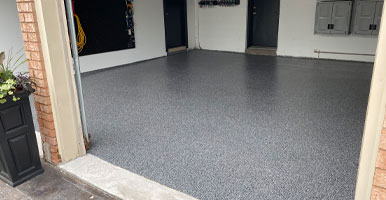
Same city, different surfaces: why the “right” coating depends on where it’s going and what it has to handle
Concrete coatings are often talked about as if they’re one universal solution: coat the concrete and you’re done. In reality, concrete coatings in Las Vegas are used in very different environments—and the environment decides what matters most.
A garage floor has to handle hot tires, turning forces, oil drips, and grit. A patio has to handle UV exposure, dust film, furniture movement, and water runoff. A pool deck has to handle constant wet-foot traffic, sunscreen residue, splash zones, and traction needs—all while sitting in intense sun.
That’s why choosing between coatings is less about finding a single “best” product and more about matching the coating approach to the surface’s real job. This guide breaks down what changes between garages, patios, and pool decks in Las Vegas and what performance factors typically matter most in each area.
What all concrete coatings have in common
Even though each surface has different priorities, most coating projects share a few basics:
- The coating needs a properly prepared surface to bond well
- The slab’s condition (cracks, contamination, old sealers) influences outcomes
- The top layer is the wear surface and drives traction and appearance
- Sun, water, dirt, and traffic patterns determine how the finish changes over time
If those fundamentals are handled correctly, coatings can perform well across multiple outdoor and indoor applications. The differences come down to what kind of abuse the surface sees most often.
Garages in Las Vegas: built for hot tires, grit, and turning stress
Garage floors are a unique category because they’re both a parking surface and a work surface. In Las Vegas, garages also deal with a constant supply of fine dust that gets tracked in and ground into the floor.
What garages put a coating through
- Hot tire contact in parking zones
- Turning and pivoting near the door and around vehicles
- Grit abrasion from dirt, sand, and small stones
- Chemical drips (oil, coolant, cleaners)
- Point loads from jacks, toolboxes, and equipment
The highest-wear area is often predictable: the first few feet inside the garage door and the turning paths where vehicles rotate.
What matters most for garage coatings
- Strong bond to the concrete (prep matters more than people expect)
- Abrasion resistance in turning zones
- Chemical resistance for typical garage fluids
- A finish that stays clean-looking even with dust and tire marks
In many garages, appearance priorities also include hiding daily dust and minor scuffs, since garages rarely stay pristine.
Common garage finish goals
- A consistent, finished look that upgrades the space
- A surface that’s easier to sweep and clean
- A coating that doesn’t show every footprint and tire mark immediately
- A finish that works for storage, home gyms, or workshop use
Patios in Las Vegas: UV exposure, dust film, and daily living traffic
Patios behave differently than garages because they don’t deal with hot tires and heavy rolling loads, but they take a nonstop beating from the environment.
What patios put a coating through
- UV exposure that can fade or change appearance over time
- Windblown dust that creates a dull film if not cleaned
- Furniture movement (chair legs, tables, grills)
- Outdoor spills (food, drinks, grease)
- Water runoff from irrigation and rain events
- Temperature swings that expand and contract the slab
Patio wear is often more about appearance drift than physical failure: dulling, uneven film buildup, water spotting, and traffic sheen changes.
What matters most for patio coatings
- UV stability and appearance retention
- Texture and comfort for bare feet (depending on how the space is used)
- A finish that cleans evenly without leaving patchy “clean spots”
- Resistance to common outdoor stains like grill grease and planter runoff
Common patio finish goals
- A clean, consistent look that matches the backyard design
- A surface that doesn’t look dusty five minutes after cleaning
- A finish that works with outdoor furniture and foot traffic
- A surface that holds up to irrigation and hard water spotting
Pool decks in Las Vegas: traction, wet zones, and splash-out realities
Pool decks are often the most demanding outdoor surface—not because they carry the heaviest loads, but because they combine water + bare feet + chemical splash-out + constant sun.
What pool decks put a coating through
- Wet-foot traffic multiple times a day in summer
- Splash zones where water and pool chemicals contact the surface repeatedly
- Sunscreen and body oils that can leave residue
- Dust film that can become slick when mixed with water
- Barefoot comfort expectations
- UV exposure across large open areas
A pool deck can look perfect and still be the wrong choice if it becomes unpredictable when wet.
What matters most for pool deck coatings
- Traction strategy that stays stable in wet conditions
- A finish that cleans without becoming slippery
- Resistance to splash-out and cleaning routines
- Comfort and usability for barefoot movement
- Color behavior in sun (since darker decks can feel harsh in summer)
Common pool deck finish goals
- Safer movement in wet areas
- A finish that stays consistent instead of turning patchy from overspray and splash-out
- A surface that feels usable during hot months
- A look that complements coping, stonework, and landscaping
How the same coating decision changes by location
A helpful way to choose between concrete coatings in Las Vegas is to think in priorities by surface type.
Priority ladder: garages
- Bond strength and prep quality
- Abrasion resistance in turning and parking zones
- Chemical resistance for common garage fluids
- Appearance that stays clean-looking with dust and tire contact
Priority ladder: patios
- UV stability and appearance retention
- Cleanability and even maintenance (avoiding patchy cleaning results)
- Comfort and texture for daily use
- Stain resistance for outdoor living spills and runoff
Priority ladder: pool decks
- Traction and wet safety behavior
- Cleanability without slick residue buildup
- Splash-out and chemical exposure tolerance
- Comfort underfoot and sun-driven surface feel
These priorities explain why “one coating” isn’t automatically the right answer for every slab around the same home.
Texture is not a one-size decision
Texture tends to be the biggest difference between a garage finish and a pool deck finish, and patios can go either direction depending on the household.
Garages
Many garage floors lean toward a finish that’s easy to sweep and mop, while still offering enough surface character to hide day-to-day dust and minor scuffs.
Patios
Patios often need a balance: enough texture to avoid feeling slick when wet, but not so aggressive that it becomes uncomfortable for barefoot use or difficult to clean.
Pool decks
Pool decks typically need the most intentional traction plan. The surface has to stay predictable when wet and when sunscreen residue shows up.
The mistake is choosing texture based purely on appearance. Texture changes the daily use experience and cleaning behavior.
Color choices should match the surface’s daily reality
Color matters everywhere, but the “best” color logic changes by location.
Garages
- Mid-tone blends often hide dust and tire marks well
- Very dark colors can show dust quickly
- Very light colors can show tracking and garage grime faster
Patios
- Lighter tones can help the space feel brighter and often look cleaner in sun
- Medium neutrals tend to hide dust film better than extremes
- Water spotting and irrigation patterns can show more on darker fields
Pool decks
- Lighter and mid-light tones can feel more comfortable during peak sun
- Busy patterns can hide minor marks and residue patterns
- The finish should support both appearance and wet traction goals
Color isn’t just style—it’s part of how the surface looks between cleanings.
How prep and slab condition influence “which coating” makes sense
Even though this post is focused on choosing by location, slab condition still shapes what’s realistic.
A garage with old paint or a failing DIY coating may require more removal work before any coating choice even matters.
A patio with spalling edges and pitting may need patching and leveling to avoid a finish that looks inconsistent.
A pool deck with drainage issues may need attention to low spots so water doesn’t pool and leave mineral rings.
In other words: the best coating approach is the one matched to both the location and the actual slab you’re working with.
How to think about long-term appearance in Las Vegas
Outdoor slabs in Las Vegas are constantly interacting with dust, water, and sun. Over time, appearance changes are usually driven by:
- Dust film buildup (especially in texture valleys)
- Hard water spotting from irrigation
- Uneven sun exposure that changes wear patterns
- Furniture movement and repeated walking paths
- Cleaning habits that create “clean patches” instead of uniform results
Choosing a coating with the right finish behavior for that location makes maintenance easier and helps the surface stay consistent.
The most useful way to decide between surfaces
If you’re choosing between concrete coatings in Las Vegas, a practical approach is to answer three questions for each slab:
- What kind of traffic is dominant here? (vehicles, foot traffic, wet-foot traffic)
- What exposures are guaranteed? (sun, irrigation, splash-out, chemicals, dust)
- What matters more day-to-day: traction, easy cleaning, or wear resistance?
Those answers usually make the right direction clear: garage priorities rarely match pool deck priorities, and patio priorities sit somewhere in between.
A closing note that fits real Las Vegas use
Concrete coatings in Las Vegas perform best when they’re chosen by where they’re going and what they have to handle. Garages are dominated by hot tires, grit, and turning stress. Patios are dominated by UV, dust film, and outdoor living use. Pool decks are dominated by wet traction needs, splash zones, and daily summer activity.
When the coating approach matches the real job of the surface, the finish tends to look more consistent, feel more usable, and stay easier to live with across the seasons.