

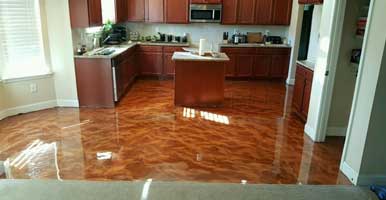
Kitchen epoxy flooring can be a practical solution for spill-heavy spaces because it creates a sealed, seamless surface—but performance depends on prep, texture choices, and how the kitchen is actually used.
Kitchens punish floors in ways that are easy to overlook until the surface starts looking worn. Water is constant. Oils and acids show up daily. Dropped utensils, dragged chairs, and frequent cleaning all add up. That combination is why many people look at kitchen epoxy flooring when they want a surface that is easier to clean than porous concrete or grout-lined tile.
Epoxy is not just “a shiny coat.” Done correctly, it creates a bonded system that helps block moisture and staining from soaking into the slab. It also eliminates grout joints, which are one of the most common places for discoloration and buildup. At the same time, kitchens come with unique challenges—especially grease contamination, moisture vapor in concrete, and slip risk when wet—so epoxy performance is highly dependent on correct surface preparation and the right finish.
This guide explains what makes kitchen epoxy flooring work well in high-mess, high-moisture environments, and what conditions can shorten its service life.
Why kitchens are harder on floors than most rooms
A kitchen floor experiences a repeating cycle of conditions that many other areas do not:
- Frequent liquid spills (water, coffee, sauces, oils)
- Grease and fats that can create stubborn films
- Acids and pigments (tomatoes, wine, vinegar, turmeric) that can stain porous surfaces
- Repeated cleaning and mopping, sometimes with strong cleaners
- Impact and abrasion from dropped items, dragged chairs, and foot traffic
- Temperature changes near ovens, dishwashers, and sunny windows
For porous concrete, those conditions often lead to darkening, spot staining, and dusting. For tile, grout becomes the weak link because it can discolor and hold grime. Epoxy is often considered because it is non-porous, seamless, and chemically resistant when built correctly.
What kitchen epoxy flooring does well
When the slab is properly prepared and the system is chosen for the environment, kitchen epoxy flooring has several practical advantages.
1) Seamless surface that resists absorption
Epoxy bonds to concrete and forms a continuous layer without grout lines. That matters in kitchens because most ugly staining is not just “on the surface”—it is liquid and oils soaking into pores or into grout.
A sealed epoxy surface helps:
- Reduce absorption of liquids and pigments
- Make wipe-ups faster and more complete
- Limit long-term discoloration from routine spills
2) Easier cleaning because there are no grout joints
Grout lines are magnets for:
- Grease buildup
- Dark “traffic lane” discoloration
- Embedded dust and debris
A continuous coated surface is easier to keep consistent looking because you are not fighting dozens of tiny porous joints.
3) Chemical resistance for common kitchen exposures
While no floor is immune to everything, epoxy systems generally handle many kitchen-related exposures better than bare concrete, such as:
- Mild household cleaners
- Cooking oils and grease films
- Food acids and dyes (to a point—timing still matters)
The practical takeaway: epoxy gives you more margin for error when spills happen, especially if they are wiped up in a reasonable timeframe.
4) Better control of sheen, texture, and appearance
Kitchen epoxy flooring is not just one look. Systems can range from matte to high sheen, and texture can be adjusted for slip resistance.
This matters because kitchens need a balance between:
- A surface that cleans easily (smoother finishes)
- A surface that is less slippery when wet (more texture)
The finish should match how the space is used, not just the photo you want.
What can cause problems in kitchen epoxy flooring
Kitchens also come with conditions that can create failure if they are not addressed in prep and product selection.
1) Grease contamination in the concrete
Even if a kitchen looks clean, kitchens can leave invisible contamination:
- Cooking oil aerosols settle
- Past spills soak into pores
- Old waxes or cleaners leave residues
Epoxy requires clean, properly profiled concrete to bond well. If grease and residues remain, the coating may:
- Bond inconsistently
- Wear faster in patches
- Show peeling in high-use zones
This is one reason kitchen prep often needs more attention than a bedroom slab.
2) Moisture vapor coming up through the slab
Concrete can transmit moisture vapor. If vapor pressure is high and the system is not designed for it, issues can include:
- Bubbles or blisters
- Cloudiness in some finishes
- Adhesion loss in worst cases
Moisture issues are not always obvious. A slab can look dry but still have high vapor transmission. Kitchens can also have localized moisture sources (dishwasher leaks, sink plumbing issues) that add complexity.
3) Slip risk when wet if the surface is too smooth
A very smooth epoxy surface can be slick when water or grease is present. Kitchens are a predictable wet zone: dishwashing, mopping, ice drops, pet water bowls, and spills.
This does not mean epoxy is “unsafe.” It means the finish must be chosen responsibly:
- Light texture can meaningfully improve grip
- Overly aggressive texture can trap dirt and make cleaning harder
The goal is practical traction without turning the floor into a dirt trap.
4) Thermal and impact stress in specific zones
Kitchens see repeated micro-impacts and abrasion from:
- Chair legs
- Sliding stools
- Dropped pans and utensils
- Concentrated traffic in front of sink and stove
Epoxy systems can be very durable, but high-use kitchens should consider the wear points so the system is built to handle them, particularly in “traffic lane” areas.
Where kitchen epoxy flooring tends to be a strong fit
Kitchen epoxy flooring often performs well in situations like:
- Homes with pets and kids where spills and quick cleanups are routine
- Open-concept spaces where the kitchen flows into a living area and a seamless look is preferred
- Concrete-slab homes where the owner wants to improve the look without adding grout lines
- Secondary kitchens (casitas, basements, rental units) where durability and easy cleaning matter more than traditional finishes
Epoxy can also make sense when owners want to reduce porous-surface staining without constant sealing cycles.
Finish choices that matter in real kitchens
Not every epoxy finish behaves the same in daily use.
Smooth finishes
Pros:
- Fastest to sweep and mop
- Less likely to hold grime
Cons:
- Can be more slippery when wet, depending on sheen and surface condition
Light texture finishes
Pros:
- Adds meaningful traction for wet zones
- Still cleans well when texture is controlled
Cons:
- Requires slightly more attentive cleaning to keep the texture from filling with grime
The finish should match how “wet” the kitchen runs. If the kitchen is frequently mopped, has kids, or sees constant cooking, light texture is often the more practical choice.
Cleaning realities: what keeps epoxy looking good
Epoxy is easier to maintain than porous concrete, but it still benefits from the right habits.
What helps:
- Sweep or vacuum grit regularly (grit acts like sandpaper)
- Wipe spills promptly, especially oils and pigmented liquids
- Use gentle cleaners that do not leave residue
- Avoid leaving standing water for long periods, especially around appliances
What can shorten the “like-new” look:
- Using harsh degreasers repeatedly without rinsing
- Abrasive scrub pads that dull the finish
- Letting fine grit build up in traffic lanes
Most of the long-term appearance issues people blame on “epoxy failing” are actually abrasion and residue patterns that can be managed.
Kitchen epoxy flooring works well in high-mess, high-moisture spaces because it creates a sealed, seamless surface that resists absorption and simplifies cleaning. The performance advantage comes from the right combination of surface preparation, moisture awareness, and finish selection—especially traction decisions for a room where wet floors are inevitable.
When those variables are handled correctly, epoxy can be a practical kitchen surface that stays cleaner-looking with less effort than porous concrete or grout-based finishes, while standing up to the daily reality of spills, cleaning, and constant use.