

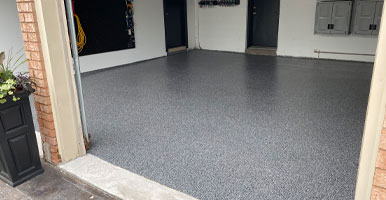
If you’re asking “how long does epoxy garage floor last,” the honest answer is: it depends on the coating system and how the garage is used—but there are realistic lifespan ranges you can plan around in Las Vegas.
Epoxy garage floors have a reputation for durability, but not all “epoxy floors” are the same. Some are thin, paint-like coatings that look good for a short time. Others are multi-layer systems built to handle hot tires, abrasion, and daily use for years. Las Vegas adds its own variables—high heat, dust and grit, and strong UV exposure near the door line—that can shorten the life of weaker systems and reveal installation shortcuts faster.
This guide explains real-world lifespan ranges for garage epoxy floors in Las Vegas based on system type, plus the conditions that push a floor toward the shorter or longer end of those ranges.
What actually determines how long an epoxy garage floor lasts
Before getting into timelines, it helps to define what “lasting” means. A garage floor can still be bonded and functional while looking worn, or it can look fine but be losing adhesion in spots.
In practice, longevity comes down to five main factors:
- Surface preparation quality (bond strength starts here)
- System build (number of coats, thickness, and topcoat type)
- Traffic patterns (daily parking, turning wheels, workshop use)
- Moisture conditions in the slab (vapor pressure can undermine adhesion)
- Cleaning and abrasion (dust, grit, and harsh cleaning can dull and wear surfaces)
In Las Vegas, grit abrasion and temperature-related stress are major drivers, especially in the tire lanes and the apron near the garage door.
Real lifespan ranges by system type (what you can expect in Las Vegas)
These are practical ranges for typical residential garages. They assume the slab is properly profiled and cleaned, and that products are applied at appropriate thickness.
1) Thin epoxy or “paint-like” coatings: often 1–3 years
Some products sold as “garage epoxy” behave more like heavy-duty paint than a true flooring system. They are commonly rolled on in a single thin coat and may skip the surface profiling needed for strong mechanical bond.
In Las Vegas garages, these systems often fail early because:
- Hot tires soften and stress thin films
- Turning wheels abrade the surface quickly
- Dust and grit act like sandpaper
- Adhesion is limited if prep was minimal
You might still have a floor that “looks coated,” but it can show early peeling at edges, hot-tire pickup, or bald spots in parking lanes.
2) Multi-coat epoxy with broadcast flakes and a clear topcoat: often 5–10 years
This is a common “full garage system” approach: epoxy base coat, decorative flake broadcast, then a clear protective topcoat. The flake layer can help hide wear and minor imperfections, while the clear topcoat takes most of the abrasion.
In Las Vegas, these systems often land in the mid-range because they can handle:
- Daily parking and foot traffic
- Moderate workshop use
- Routine cleaning
Performance depends heavily on topcoat selection and thickness. The clear coat is the wear surface, so its chemistry and application quality matter.
3) Epoxy base with a higher-performance clear topcoat: often 7–12+ years
Some garage systems use epoxy for build and bond, then protect it with a tougher clear coat designed for better abrasion resistance and chemical resistance.
In practical terms, this kind of system can last longer because:
- The wear layer holds up better in tire lanes
- The coating resists dulling and staining longer
- The surface is more resilient to frequent cleaning
In Las Vegas, this type of build tends to perform well for households with daily parking and regular washdowns, provided moisture conditions in the slab are controlled.
4) Garage systems that include a UV-stable topcoat: longer-lasting appearance near the door line
Garages have a unique exposure zone: the first few feet near the door often get direct sunlight. If a system is not UV-stable at the top layer, you can see yellowing or appearance shift in that zone over time.
Even if the floor is still bonded, the visible contrast can make it feel “worn out” sooner than it actually is. A UV-stable top layer helps maintain consistent appearance where sunlight hits.
Why Las Vegas conditions change the timeline
Two garages with the same system can age differently in Las Vegas depending on dust, sun exposure, and heat.
Heat and hot tires
Vehicles bring heat into the garage. Tire contact areas see:
- Softening stress on some coatings
- Abrasion from turning and braking
- Concentrated wear in the same zones day after day
If you park in the same spot, the tire lanes become the “test area” for the whole system.
Dust and grit abrasion
Las Vegas dust is not just cosmetic. Grit behaves like fine abrasive media:
- It dulls clear coats over time
- It increases wear where people walk and where tires roll
- It can reduce traction if it builds up as a film
Frequent sweeping is one of the simplest ways to extend how long the surface stays looking sharp.
Sun exposure at the apron
UV exposure typically affects the appearance faster than the bond. In many garages, the apron area is where color shift, yellowing, or gloss change shows first.
Wear patterns that tell you what’s happening
If you want a realistic sense of how long the floor will last, look at where wear will show up first:
- Tire lanes and turning zones: loss of sheen, scuffing, and thinning of the topcoat
- Entry path from house to garage: dull “traffic lane” where shoes and grit concentrate
- Edges and expansion joints: early peeling if prep was weak or moisture is present
- Parking spot drips: staining from oil or chemicals if spills sit too long
These patterns are normal. The question is whether they stay superficial (appearance wear) or become functional (loss of adhesion).
The biggest reasons epoxy garage floors fail early
Most early failures are traceable to a small set of issues.
Poor surface preparation
Epoxy needs a properly profiled, clean substrate. If the surface is too smooth, dusty, or contaminated (oil, old sealers, curing compounds), adhesion is compromised.
Early symptoms:
- Peeling at edges
- Random delamination patches
- Chips that lift wider areas
Moisture vapor in the slab
Moisture coming up through concrete can disrupt adhesion over time. This can happen even in dry climates, especially with irrigation near the slab edge or slabs that were never properly evaluated.
Symptoms:
- Blistering
- Bubbles
- Cloudy patches beneath clear coats
- Delamination that appears without obvious impact damage
Too thin of a system for how the garage is used
If the coating is thin and the garage is used like a workshop, it can wear through quickly in high-contact areas.
Aggressive cleaning methods
Harsh degreasers, abrasive pads, and constant pressure washing can dull and shorten the life of the wear layer. Most garage floors do better with consistent dust removal and gentle cleaning rather than occasional extreme scrubbing.
How to extend the lifespan without overcomplicating maintenance
If your goal is to get the most years out of the coating, the basics matter:
- Sweep or blow out grit regularly (abrasion control)
- Wipe oil and chemical drips sooner rather than letting them sit
- Use neutral cleaners that do not leave slick residue
- Protect heavy work zones with mats under jack stands or sharp metal edges
- Avoid dragging metal across the surface when possible
These steps do not change the chemistry of the coating, but they reduce the wear drivers that shorten life in the real world.
If you’re asking “how long does epoxy garage floor last” in Las Vegas, realistic planning ranges depend on the system:
- Thin, paint-like coatings: often 1–3 years
- Multi-coat epoxy with flake and clear topcoat: often 5–10 years
- Epoxy build with a higher-performance clear topcoat: often 7–12+ years, depending on use and conditions
Las Vegas heat, dust abrasion, and UV exposure near the door line can shorten the life of weaker systems and make appearance wear show up sooner. The longest-lasting outcomes usually come from strong surface prep, a properly built multi-layer system, and simple habits that control grit and spills.