

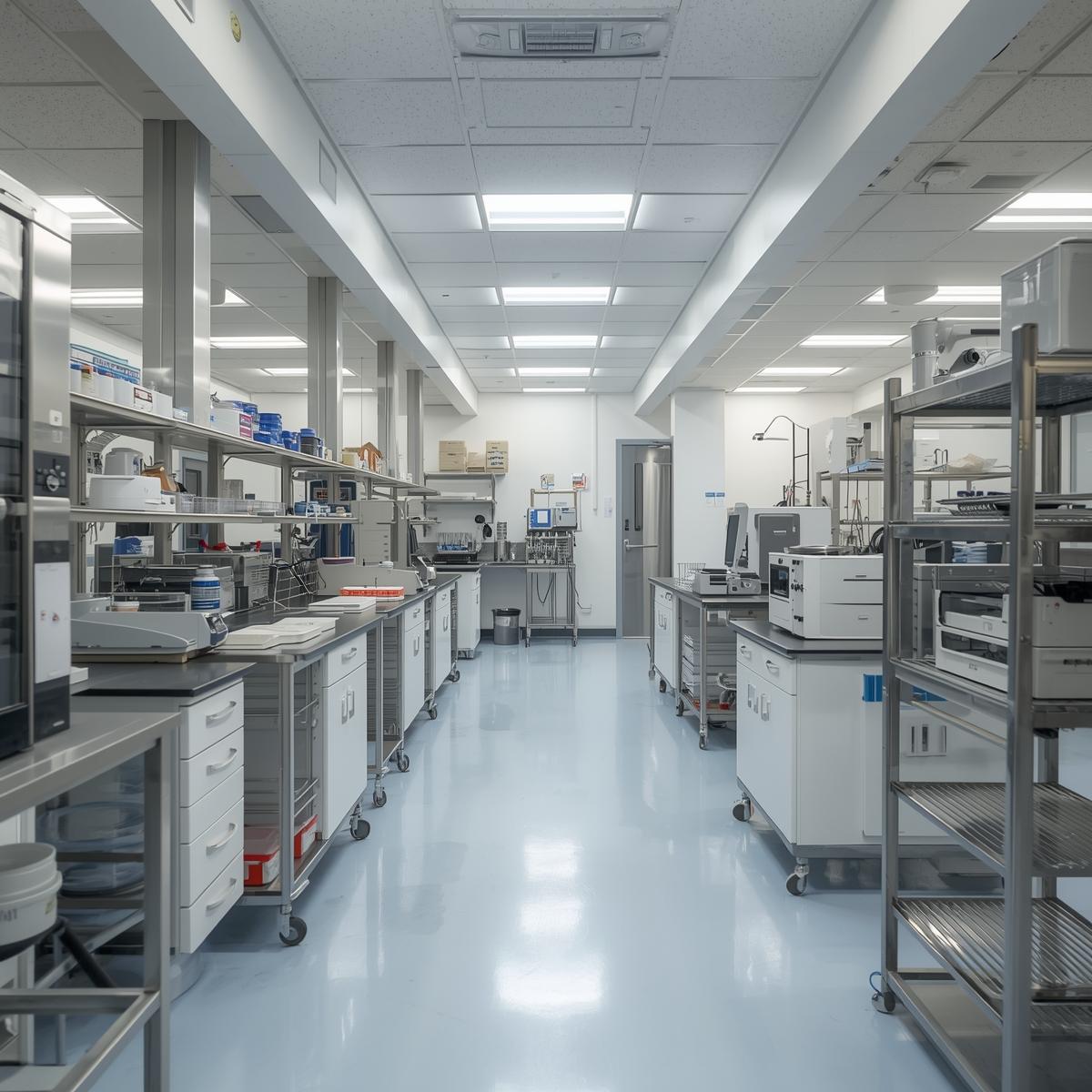
How cleaning routines, disinfectants, and repeated washdowns affect epoxy floors, and what helps the surface stay stable over time
Chemical resistant epoxy flooring is often selected for facilities that clean aggressively—spaces where floors are routinely exposed to disinfectants, degreasers, detergents, and frequent wet mopping or washdowns. In these environments, the question isn’t whether a floor can handle a one-time spill. It’s whether the surface can maintain appearance, traction, and serviceability when chemical exposure is part of normal operations.
Janitorial closets, back-of-house corridors, clinics, light industrial rooms, service areas, and many commercial spaces use stronger chemicals than people realize. Even when those products are “safe for surfaces,” repeated contact can slowly affect coatings—especially if exposure is frequent, dwell times are long, or rinsing practices vary.
This guide explains how washdowns and disinfectants interact with epoxy flooring systems, what performance factors matter most, and how facilities typically plan for long-term durability in chemical-heavy cleaning environments.
Where chemical resistant epoxy flooring is commonly used for routine cleaning
“Washdown and disinfectant environments” aren’t limited to food plants or heavy industrial buildings. Many everyday commercial and light-industrial spaces rely on frequent cleaning and stronger products, including:
- Janitorial and maintenance rooms where concentrated cleaners are mixed and stored
- Clinics and medical office back areas where disinfectants are used daily
- Restroom corridors and common-area service zones with wet mopping and chemical cleaning
- Commercial kitchens and prep-adjacent spaces (not the cooking line itself, but nearby floors that get cleaned often)
- Auto-detail bays and wash areas that see detergents and rinse cycles
- Warehouse break rooms and utility corridors where cleaning schedules are strict
- Light manufacturing rooms where parts are cleaned and floors are degreased regularly
These spaces have two things in common: repeated chemical contact and repeated wet cleaning. That combination is what makes chemical resistant epoxy flooring especially relevant.
How disinfectants and washdowns challenge floor coatings over time
Most people think of chemical damage as dramatic—bubbling, peeling, or immediate discoloration. In many facilities, the more common issue is gradual and subtle:
- Gloss changes in traffic paths or cleaning zones
- Surface haze from repeated chemical exposure or residue
- Micro-scratching that becomes more visible under overhead lighting
- Loss of consistent traction when residues build up or when the surface becomes too smooth in high-cleaning areas
These are not “failures” in the catastrophic sense, but they do affect how the floor performs and how professional it looks. Chemical resistant epoxy flooring is chosen to reduce these kinds of long-term changes when cleaning routines are demanding.
The difference between occasional spills and routine chemical exposure
A one-time spill is usually localized and can be cleaned quickly. Routine exposure is different, because it’s tied to habits:
- Daily disinfectant mopping across the same corridors
- Repeated degreaser use near sinks, drains, or equipment
- Long dwell times when a product is left on the floor before rinsing
- Concentrations that vary depending on who mixes the solution
- Rinse practices that aren’t consistent across shifts
With repeated exposure, small variables add up. A coating might handle a product well in theory, but real-world performance depends heavily on how that product is used.
Common chemical categories in cleaning routines and why they matter
It helps to think in categories rather than brand names, because the category tends to predict how it interacts with coatings.
Detergents and general-purpose cleaners
These are commonly used in daily mopping and routine washdowns. They can still influence floor appearance if:
- They leave residue that dulls gloss
- They’re not fully rinsed
- They’re used at higher-than-needed concentration
Over time, residue can attract soil and make a floor look dirty faster, even when it’s being cleaned often.
Degreasers
Degreasers are common in maintenance and service areas. They’re effective because they break down oils, but that same action can be tough on surfaces if:
- The product sits too long
- The concentration is very strong
- Scrubbing is aggressive with abrasive pads
In these zones, the floor is not only facing chemical exposure, but also higher mechanical abrasion from cleaning.
Disinfectants
Disinfectants are often used daily in clinics, restrooms, and high-touch environments. Their effect on floors depends on:
- Chemistry type (varies widely)
- Frequency
- Whether the product is allowed to dry on the surface
- Whether there’s a rinse step (sometimes there isn’t)
Even when a disinfectant is “surface-safe,” repeated drying cycles can leave a film that changes the way the floor reflects light and how it feels underfoot.
Acidic or alkaline cleaners
Some products are designed to remove mineral deposits or heavy buildup. Strong acids or strong alkalines can be more challenging than routine detergents. These chemicals are often used periodically rather than daily, but when they are used, it’s typically in:
- Restrooms and shower areas
- Utility rooms
- Deep-clean schedules
In these cases, chemical resistance is about surviving periodic deep cleaning without long-term appearance or surface changes.
What “chemical resistant” means in practical facility terms
In facility operations, “chemical resistant” usually translates into a few real-world outcomes:
- The floor doesn’t soften or become tacky under routine cleaning agents
- The surface stays stable without widespread discoloration, hazing, or peeling
- The clear coat maintains its integrity under repeated contact
- Cleaning remains predictable, without the coating reacting in strange ways to normal products
It’s also important to recognize what chemical resistance does not mean. It doesn’t mean the floor is immune to every chemical at every concentration for unlimited dwell time. Real performance comes from a good system paired with sensible cleaning controls.
Why the topcoat matters as much as the epoxy base
In most epoxy systems used in commercial spaces, the topcoat is the wear surface. It’s what:
- Takes the brunt of cleaning and scrubbing
- Receives disinfectant contact
- Controls sheen and texture
- Acts as the first barrier to chemicals
Facilities that prioritize chemical resistance in washdown environments are usually focused on a surface that holds up under both chemicals and cleaning abrasion. That’s why the top layer selection and application quality play a major role in long-term results.
Traction and washdowns: staying safe when floors are routinely wet
Washdowns and wet mopping introduce a safety variable: traction changes when a surface is wet, and it can change further when soap films or disinfectant residues are present.
A practical approach to traction in washdown-heavy spaces often includes:
- Considering the surface texture needed for the area
- Matching that texture to the kind of cleaning performed (mopping vs hose washdown)
- Avoiding surfaces that become unpredictable when residue builds up
This is not just about slip resistance on day one. It’s about how the floor behaves after months of cleaning cycles, when residues and wear patterns start to show.
The role of surface prep in chemical-heavy cleaning environments
In routine chemical exposure areas, the weakest points often show first:
- Poorly prepped concrete that limits adhesion
- Contamination left in the slab (oils, old residues)
- Cracks or joints that weren’t handled properly
- Edges and transitions where coatings are thinner or interrupted
Even the best chemical resistant epoxy flooring system can be undermined if the concrete isn’t properly prepared. Prep is what creates the bond that keeps the system stable when it’s repeatedly exposed to wet cleaning and chemicals.
How washdowns interact with joints, cracks, and transitions
Facilities often focus on the open floor area and forget the details that see the most stress:
- Control joints and expansion joints can collect moisture and chemicals
- Cracks can act as pathways for contamination beneath the coating
- Cove bases and wall transitions are frequent splash zones in washdown areas
- Door thresholds can see repeated wet traffic and chemical tracking
When these areas aren’t planned correctly, issues tend to appear there first—often as edge wear, localized discoloration, or early breakdown at transitions.
Cleaning routines that help chemical resistant epoxy flooring stay consistent
Because this is an informative post, the goal isn’t to tell facilities what to buy—it’s to explain the operational habits that typically keep coated floors looking and performing consistently.
Keep dilution and dwell time consistent
Two common causes of surface haze and uneven appearance are:
- Over-concentrated solutions
- Products left to sit longer than intended
Even small variations between shifts can create different results across the same floor.
Rinse when the product is designed for rinse
Some cleaners and degreasers are meant to be rinsed. If rinsing is skipped, residue can build up and alter sheen and traction. In washdown environments, rinse practices often matter as much as the chemical choice.
Use cleaning tools that match the coating surface
Aggressive pads and abrasive brushing can wear the topcoat faster, especially in repetitive cleaning zones. The goal is a cleaning method that removes soils without turning maintenance into sanding over time.
Watch for film buildup in corners and edges
Film buildup often appears first where water and product collect:
- Around drains
- At wall edges
- Under equipment overhangs
- In low spots
These areas can look “dirty” even when cleaned frequently, because residue collects there.
How facilities think about appearance over time in high-cleaning spaces
Facilities that clean aggressively often want a floor that looks professional without requiring constant special treatment. Over time, the most noticeable appearance changes typically relate to:
- Gloss variation between high-traffic paths and low-traffic areas
- Haze from residue or repeated chemical contact
- Visible cleaning patterns where scrubbers turn or overlap
A realistic way to evaluate the floor is to think in zones:
- High-clean corridors
- Splash zones
- Entry points where dirt is tracked in
- Areas where chemicals are mixed or stored
Chemical resistant epoxy flooring is often chosen specifically because it can help these zones stay visually consistent for longer under demanding cleaning routines.
Planning return to service after deep cleaning cycles
Some facilities do periodic deep cleans that go beyond routine mopping. Deep cleans can include:
- Stronger solutions
- Longer dwell times
- More aggressive scrubbing
- Hot water washdowns
After deep cleaning, facilities often plan for:
- Adequate drying time before heavy rolling loads
- Controlled access until the surface is fully safe and dry
- Post-clean inspection of high-stress zones like corners and thresholds
This kind of planning helps avoid unnecessary surface scuffing or tracking while the floor is still wet and vulnerable.
A practical closing thought for washdown-heavy spaces
Chemical resistant epoxy flooring is most valuable in facilities where cleaning is not occasional—it’s routine, documented, and tied to safety and compliance. In these environments, the floor isn’t just resisting the occasional spill. It’s dealing with repeated disinfectant contact, frequent wet cleaning, and the mechanical wear of scrubbing and traffic.
The best long-term results usually come from treating the floor as part of the cleaning system: selecting a coating approach suited for routine chemical exposure, preparing the concrete correctly, and keeping cleaning practices consistent so the surface stays stable, safe, and visually uniform.