

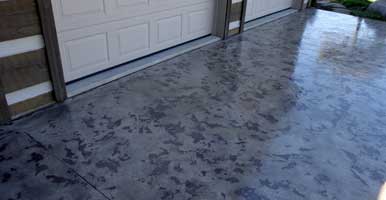
What you see day to day matters more than “perfect on install day,” especially in Las Vegas garages
A garage can be freshly cleaned in the morning and look dusty again by the afternoon—especially in Las Vegas, where fine grit and windblown dust are part of daily life. Add vehicle traffic, turning tires, and normal garage use, and most homeowners quickly learn that the “best-looking” garage floor isn’t the one that looks perfect for one photo. It’s the one that still looks clean and intentional between cleanings.
That’s one reason garage floor flake epoxy has become so common. Beyond being a durable coating approach, a flake finish changes how the floor reads visually. Instead of a flat, single-color surface that shows every smudge, a flake pattern breaks up contrast and reduces the visibility of everyday marks—especially dust film, footprints, and light tire tracking.
This article explains why garage floor flake epoxy tends to look cleaner more often, what aspects of the flake system make the difference, and how to choose a flake look that stays visually consistent in real garage conditions.
Why garages show marks faster than most rooms in the house
Garages behave differently than interior rooms because they combine outdoor contamination with indoor use.
Common reasons garage floors look “dirty” quickly include:
- Fine dust and grit tracked in from driveways and sidewalks
- Tire rubber and road film from daily driving
- Turning zones where tires scuff the surface repeatedly
- Door threshold areas where wind pushes debris inside
- Foot traffic patterns from the door to the house, storage, or fridge
- Minor drips (water, cleaners, light oil residue)
Even if the garage isn’t used as a workshop, vehicle traffic and dust alone create visible patterns on many floor finishes.
How garage floor flake epoxy changes the way marks show up
A flake system is essentially a patterned surface made by broadcasting colored flakes into a base coat, then sealing everything with a clear topcoat. The “magic” of flake isn’t that it repels dirt. It’s that it changes how your eye perceives contrast.
Instead of one uniform color, you get:
- Multiple tones and specks that break up visual uniformity
- A pattern that camouflages small changes in sheen and color
- A surface that makes dust look like part of the texture rather than a new layer sitting on top
This is the same reason patterned fabrics hide lint better than solid black clothing. The pattern doesn’t stop lint—it just makes it less noticeable.
Dust visibility: why solid colors often look worse between cleanings
In Las Vegas garages, dust is inevitable. The question is what it looks like when it’s there.
On many solid-color floors, dust creates a visible layer because it changes the surface’s reflectivity. A clean solid floor reflects light evenly. Add dust, and that reflection becomes patchy—so you see:
- Dull film in traffic paths
- Clear “footprint” marks
- Tracks where tires rolled in
- Dust halos near the garage door
With garage floor flake epoxy, dust still lands, but the flake pattern reduces that obvious “layer on top” look because the surface already has visual variation.
Tire marks and rubber tracking: why flake can be more forgiving
Tire contact does two things that affect appearance:
- It can leave rubber transfer (especially when turning)
- It can change the surface’s sheen slightly in high-contact areas
Flake helps with both because:
- Rubber transfer tends to show most on high-contrast solid colors
- Slight sheen changes are harder to spot on a patterned surface than on a uniform field
This doesn’t mean flake floors never show tire tracking—turning zones are still turning zones. It means the day-to-day look usually stays more consistent, and marks often blend into the overall pattern instead of screaming for attention.
Flake density is a major reason some floors look cleaner than others
Not all flake systems look the same because flake coverage changes the visual effect.
Light-to-medium broadcast (more base color visible)
This finish can look clean and modern, but it also means there’s more “solid field” showing through. In some garages, that can make dust film more visible, because the eye sees larger uninterrupted areas.
Heavier broadcast (flake dominates the look)
A heavier broadcast tends to be more forgiving because:
- The pattern is stronger and more uniform
- Small marks get visually lost in the blend
- Minor changes in sheen are less obvious
If the goal is “looks clean most days,” higher pattern density usually helps.
Color blend matters more than people expect
The flake blend is not just style. It directly affects how much dirt, dust, and rubber marks stand out.
Mid-tone blends are usually the easiest to live with
Blends built around medium grays, soft tans, and mixed neutrals tend to hide:
- Dust film
- Light scuffing
- Small debris
- Tire tracking
They don’t demand perfect cleaning to look good.
High-contrast blends look sharp, but show more contrast shifts
A blend with strong black-and-white contrast can look very crisp, especially in clean garages with bright lighting. But higher contrast can also make:
- Heavy dirt in corners more noticeable
- Dark rubber transfer stand out more in some cases
- Uneven dust film more visible under certain lighting
High-contrast can still be a great choice—just understand that it has a more “defined” look that can make some kinds of change easier to see.
Very light blends can look bright and open
Light blends can make a garage feel larger and cleaner. They can also show:
- Dark debris in corners
- Heavy tire film near the door
- Drip marks if they’re not cleaned
Again, this isn’t a downside so much as a reality: brighter surfaces reflect more, so they reveal more.
Sheen and topcoat finish influence what you notice
Even with the same flake blend, the topcoat’s sheen changes how visible marks look.
- Higher sheen can look polished and bright, but it can highlight smudges and scuffs in direct light.
- A more muted sheen can reduce reflections, which can make minor marks less noticeable, especially under strong overhead LEDs.
In garages with bright lighting, reflections can make a uniform surface look “streaky” after cleaning. Flake helps, and a sensible sheen choice can help even more.
Lighting can make any garage floor look better or worse
Las Vegas garages often have strong LED fixtures, and lighting affects how you perceive dust and streaking.
- Overhead LEDs can create reflected “bands” across smooth floors, making cleaning streaks more noticeable.
- Flake patterns reduce how visible those bands look because there’s already visual texture.
If your garage has bright lights, the flake system’s ability to break up reflections is a real day-to-day advantage.
Where garage floor flake epoxy still shows wear
Flake hides a lot, but it doesn’t erase reality. There are still predictable areas where marks show first:
- Turning zones near the garage door
- Parking tire paths where heat and weight concentrate
- The threshold edge where debris is constantly introduced
- Under workbenches where dropped tools and dragging happens
The benefit is that these areas tend to look less “beat up” visually on a patterned floor compared to a solid color, even when the floor is getting the same use.
Cleaning habits that keep flake floors looking consistent
Garage floor flake epoxy tends to look good between cleanings, but basic habits still matter.
Dry cleaning first
Sweeping or blowing out dust prevents it from turning into film when it mixes with moisture.
Avoid leaving cleaner residue
Many “dull floor” complaints come from leftover soap. A flake floor can still look hazy if cleaner film dries unevenly.
Rinse and dry evenly when possible
Puddles that evaporate in place can leave rings—especially if the water has minerals. If you rinse, push water out and let the surface dry evenly.
Choosing the right flake look for a “clean most days” garage
If the main goal is visual consistency, here’s the practical decision logic:
- Choose a mid-tone blend if you want the most forgiving day-to-day appearance.
- Choose a dense pattern if you want dust and minor marks to visually disappear faster.
- Choose a sensible sheen if your lighting tends to show streaks and reflections.
- Think about how your garage is used: parking-only, workshop, gym, or storage.
The most livable flake floors are usually the ones chosen based on real use patterns, not just a sample card.
A closing note for real garage life in Las Vegas
Garage floor flake epoxy hides dust and tire marks better than many finishes because the surface isn’t a single, uniform field. The pattern reduces contrast, breaks up reflections, and makes small day-to-day changes less noticeable. In a place like Las Vegas—where dust is constant and garages see regular vehicle traffic—this translates into something homeowners actually value: a floor that looks clean more often, even when life is happening.