

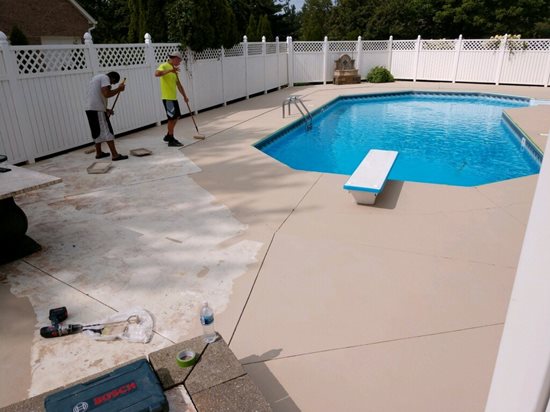
A practical guide to keeping resurfaced concrete looking consistent in a desert climate with dust, sun, wind, and irrigation overspray
Concrete resurfacing can dramatically improve the look of patios, walkways, pool decks, and other outdoor slabs. But in Las Vegas, the finish doesn’t just “sit there” untouched. It lives in a high-exposure environment: sun, wind, fine dust, hard water, landscaping runoff, and heavy temperature swings. Over time, these conditions can make a resurfaced surface look uneven—not because the resurfacing failed, but because the surface is collecting residue and wearing in predictable patterns.
The goal of maintenance after concrete resurfacing in Las Vegas is simple: keep the finish looking even, clean, and consistent, without using harsh methods that can roughen the surface or cause patchy discoloration. This guide covers what typically affects appearance in Las Vegas yards and how to clean and care for resurfaced concrete so it keeps its intended look.
Why Las Vegas makes outdoor concrete look “dirty” faster
Las Vegas outdoor surfaces deal with a few unique realities that influence how resurfaced concrete looks over time.
Fine dust and wind-driven grit
Even when a yard looks clean, fine dust can settle daily. That dust can:
- Dull the surface’s appearance
- Collect in texture valleys
- Build up in corners and along walls
- Turn into a thin film when it mixes with moisture (sprinklers, hose rinse, rain)
Hard water and irrigation overspray
Hard water is one of the biggest drivers of uneven appearance
outdoors. Overspray from sprinklers or drip lines can leave:
- White mineral spotting
- Light haze or “cloudy” areas
- Distinct spray arcs that make the finish look blotchy
Sun exposure that isn’t uniform
Most yards have areas with different exposure:
- Full sun zones
- Partial shade near walls or overhangs
- Permanent shade corners
Different exposure can make dirt build up differently and can also cause uneven wear patterns if people walk the same routes repeatedly.
Landscaping runoff and debris
Mulch, soil, fertilizer, leaves, and planter runoff can stain or tint sections of concrete, especially when water carries that material across the surface.
What “even” means after concrete resurfacing
When people say they want the finish to stay even, they usually mean:
- The color doesn’t look patchy
- The sheen doesn’t vary wildly from one area to another
- The texture doesn’t become clogged with grime in some sections
- There aren’t obvious rings, arcs, or streaks from sprinklers and cleaning patterns
Achieving that look is mostly about preventing residue buildup and cleaning consistently, not cleaning aggressively.
The first weeks after resurfacing matter most
Newly resurfaced concrete looks its best when the finish is clean and uniform. In the first few weeks, the surface is still settling into normal use, and habits established early can reduce long-term issues.
Good early habits include:
- Sweeping off dust before it turns into film
- Avoiding harsh scrubbing in small spots (which can create visible “clean patches”)
- Keeping irrigation from soaking the surface daily if possible
- Rinsing off known staining sources promptly (fertilizer spill, planter overflow, pet waste)
The goal is to prevent the first layers of residue from “training” the surface into a blotchy look.
Routine cleaning that works in Las Vegas
Most resurfaced concrete does best with simple, repeatable cleaning.
Dry maintenance: sweeping and blowing
In a desert climate, dry cleaning does a lot of the heavy lifting.
- Sweep or blow dust off regularly, especially after windy days
- Focus on corners, edges, and around furniture legs where debris collects
- Remove leaves and organic debris quickly so it doesn’t stain when wet
This prevents the “dust + moisture = film” cycle that dulls the surface.
Light rinse: when water helps
A light rinse can help remove dust film before it becomes embedded. The key is to avoid turning a rinse into a hard-water staining routine.
Good rinse habits:
- Use a quick rinse, not prolonged soaking
- Push water off the surface so it doesn’t dry in puddles
- If you have hard water, avoid letting sprinkler water repeatedly dry on the slab
Mopping for smaller patios and walkways
For smaller spaces, a mop with a mild cleaner can help keep the finish consistent.
Basic approach:
- Use a pH-neutral or mild cleaner
- Avoid leaving soap residue behind
- Rinse lightly if the cleaner tends to film
- Let the surface dry evenly rather than allowing puddles to evaporate in place
Hard water spots: preventing the most common Las Vegas “blotch” problem
Hard water spotting is often the biggest reason resurfaced concrete starts looking uneven.
How to reduce spotting
- Adjust sprinklers so they don’t hit the slab
- Fix overspray that creates distinct arc patterns
- Avoid frequent “mist” cycles that dry repeatedly on the same area
- Keep drip lines from spilling onto the concrete
Why overspray creates obvious patterns
Sprinklers don’t hit the surface evenly. The edges of the spray often leave the strongest mineral ring, which is why the blotching can look like stripes or arcs.
What to do if spotting starts
If mineral spotting is mild, it’s often manageable with regular cleaning before it builds into heavier deposits. The key is addressing it early, before the surface starts looking permanently hazy in those zones.
Pressure washing: useful, but easy to overdo
Pressure washing can be effective for outdoor concrete, but it’s also one of the easiest ways to accidentally make a resurfaced finish look uneven.
What can go wrong with aggressive pressure washing
- Stripes from inconsistent wand distance
- “Clean marks” where only part of the surface was treated
- Texture damage in softer or thinner sections
- Uneven appearance if one area is blasted more than another
A safer approach
- Use a wider fan tip rather than a narrow jet
- Keep consistent distance and motion
- Avoid focusing on one spot too long
- Rinse thoroughly so cleaner residue doesn’t dry in streaks
The goal is uniform cleaning, not maximum force.
Oil, grease, and grill stains: spot cleaning without leaving a halo
Patios and drive edges often get:
- Grill grease drips
- Vehicle spots near driveway approaches
- Outdoor equipment leaks
The challenge with spot cleaning is avoiding the “halo” effect—where the cleaned spot becomes noticeably lighter than the surrounding area.
How to avoid halos
- Clean a slightly larger area than the visible stain
- Rinse thoroughly to remove cleaner residue
- Don’t use overly harsh chemicals in a small isolated patch
- Repeat gentle cleaning rather than one aggressive treatment
Consistency matters more than intensity. A single aggressive spot clean can create a permanent-looking bright patch even if the stain is gone.
Outdoor furniture, mats, and planters: hidden causes of uneven appearance
Some of the most common “mystery” discoloration patterns come from things sitting on the surface.
Furniture feet and rubber-backed items
Rubber-backed mats or certain plastic feet can trap moisture and dirt underneath. Over time, that can create a different-looking patch when moved.
Planters
Planters can cause unevenness because of:
- Mineral-laden runoff
- Soil staining
- Constant damp contact where the planter sits
- Fertilizer residue
A simple habit that helps: rotate planters occasionally and prevent runoff from repeatedly flowing across the same path.
Why shaded corners can look different than sun zones
Shaded areas often:
- Dry more slowly
- Collect more residue
- Grow more slippery buildup in damp seasons or after frequent watering
Even in Las Vegas, shaded corners near pools or walls can develop a different “feel” underfoot over time if moisture lingers.
Cleaning those areas gently but consistently keeps them from becoming a different color or texture than the rest of the slab.
Seasonal habits that keep resurfaced concrete looking uniform
Las Vegas has predictable seasonal patterns that affect cleaning needs.
Windy periods
During high-wind weeks, more dust settles and more grit gets blown into corners. Increasing dry cleaning during these periods helps prevent film buildup.
Summer irrigation
Summer watering schedules often increase. This is the season when sprinkler overspray and hard water spotting can quietly build up.
Monsoon bursts and rare rain
Rain can move dirt across the surface and leave residue lines when it dries. A light rinse and quick dry management can prevent visible “flow marks.”
What to avoid if you want the finish to stay even
Some maintenance habits tend to create uneven results:
- Harsh acidic cleaners used in isolated spots
- Repeated pressure washing in only one zone
- Letting sprinkler overspray dry daily on the slab
- Using strong degreasers without rinsing thoroughly
- Scrubbing one area aggressively while leaving the rest untouched
Uneven cleaning is one of the fastest ways to make a uniform resurfaced finish look patchy.
How to know when it’s normal wear versus a cleaning issue
Over time, outdoor slabs develop patterns. The key is identifying whether the pattern is dirt/residue or true wear.
Often a cleaning/residue pattern
- A dull film that improves after cleaning
- Mineral arcs that match sprinkler coverage
- Darkened paths where water flows during watering or rain
- Sticky or slippery feel in corners that improves after wash
Often a normal wear pattern
- Slightly different sheen in main foot paths
- More visible texture in high-traffic areas
- Subtle fading in full sun zones compared to shaded areas
The good news is that many “uneven” issues are residue-based and respond well to consistent, uniform maintenance.
Keeping the finish looking consistent long-term
Concrete resurfacing is meant to improve appearance and usability, but outdoor conditions will always leave a mark over time. The best long-term approach is usually:
- Regular dry cleaning to remove dust before it becomes film
- Smart water management so hard water doesn’t stain repeatedly
- Gentle, consistent wet cleaning when needed
- Avoiding aggressive spot treatments that create halos and stripes
- Paying attention to runoff and shaded corners before they become visibly different
A closing note that fits Las Vegas outdoor reality
Cleaning and maintenance after concrete resurfacing in Las Vegas is less about heavy-duty scrubbing and more about controlling what the desert environment naturally deposits on the surface. Fine dust, wind-driven grit, and hard water overspray are the most common reasons a resurfaced slab starts looking uneven. When those factors are managed early and consistently, the finish is far more likely to stay uniform, clean-looking, and intentional season after season.