

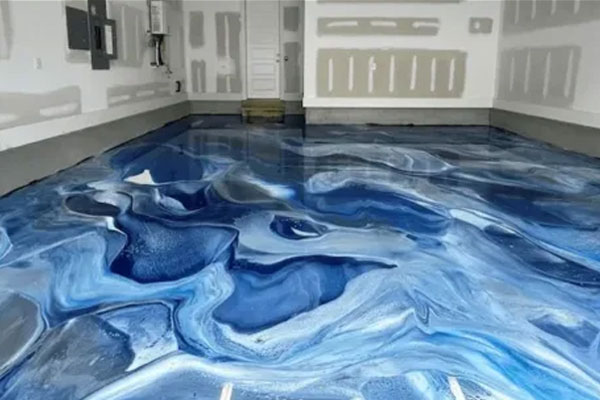
A metallic epoxy garage floor can look high-end and dramatic, but practicality depends on two things most homeowners don’t think about at first: how metallic finishes show wear and what daily parking does to any glossy surface.
Metallic epoxy is popular because it creates movement—swirls, depth, and a “liquid” look that standard flake or solid systems do not replicate. In living spaces, that effect can feel like a statement finish. In a garage, the question is different. The garage is not a controlled environment. Hot tires, grit, and repeated turning lanes are guaranteed. Cleaning tends to be more utilitarian than delicate. And garages often have direct sunlight near the door line.
So, is a metallic epoxy garage floor practical for daily parking? It can be—if you understand how it behaves, choose the right build, and have realistic expectations about what a glossy, artistic finish will look like after months of real use.
What makes metallic epoxy different from other garage finishes
A metallic epoxy finish is created by metallic pigments that move through the coating during installation. The resulting look is intentionally variable: swirls, marbling, and highlights that shift with lighting.
That difference matters because it changes how the floor “shows” these common garage realities:
- Fine scratches from grit
- Tire scuffs and hot-tire contact zones
- Gloss changes in traffic lanes
- Dust buildup between cleanings
With a flake floor, those issues often blend into the pattern. With a metallic floor, they can either blend beautifully or stand out sharply depending on color choice, lighting, and how reflective the final topcoat is.
The three biggest stressors for daily parking
If you park daily, your garage floor experiences a repeated pattern of mechanical and cosmetic stress.
1) Hot tires and contact pressure
Tires introduce heat and pressure into the same two rectangles every day. This concentrates stress in the same zones over and over, and it’s why tire lanes are usually the first place you notice change.
What you may see over time:
- Light scuffing or dulling in tire zones
- Slight texture change where abrasion is constant
- More visible wear if the system is thin or if the top layer is not built for it
2) Turning and braking at the same spots
Even if you park carefully, tires still scrub in predictable areas:
- Where you turn into the garage
- Where you straighten out
- Where you pivot to line up in the space
Turning lanes cause more wear than straight rolling because the wheel scrubs the surface. If a metallic epoxy garage floor is going to show wear, it often shows it there first.
3) Grit abrasion (the hidden cause of “premature wear”)
Dust and grit are constant in garages. When you walk or drive over grit, it scratches and dulls glossy surfaces gradually. Many owners blame epoxy when the real culprit is abrasion from fine debris.
The practical reality is simple: a glossy metallic floor needs a basic routine of grit removal to keep its finish looking crisp.
What “practical” means for a metallic epoxy garage floor
A metallic epoxy garage floor can be practical if you define success correctly. In garages, “practical” often means:
- The floor remains bonded and intact under daily use
- It stays easy to clean compared to bare concrete
- Cosmetic wear is predictable and acceptable
- The finish does not become an ongoing frustration
Metallic floors are usually chosen because the owner wants an upscale look. That’s valid. The key is deciding whether you want a finish that hides wear (flake) or a finish that highlights depth and design (metallic), accepting that the second option may require slightly more care to keep looking its best.
How metallic finishes show wear compared to flake and solid color
This is where many expectations are set—correctly or incorrectly.
Metallic vs flake
- Flake systems are visually forgiving and hide grit, dust, and small scuffs well.
- Metallic systems can show micro-scratches more depending on lighting and color contrast.
If your garage is a true “work garage” with heavy use, flake is often the more forgiving choice. If the garage is part of a finished home aesthetic and used more like a clean storage and parking space, metallic can work well.
Metallic vs solid color
- Solid color can show dust and scuffs; it also shows sheen changes clearly.
- Metallic adds visual movement, which can either camouflage or amplify marks depending on color palette and reflectivity.
Metallic is often more “interesting” and less flat than solid, but it can also be less predictable visually from one angle to another.
Color and sheen choices that make metallic floors more garage-friendly
For daily parking, the most garage-friendly metallic choices tend to reduce contrast and reduce mirror-level reflection.
Common practical preferences:
- Medium tones rather than ultra-dark (dark can show dust and scratches more)
- Blended palettes rather than high-contrast “hard lines”
- Sheen decisions that balance easy cleaning with realistic mark visibility
Highly reflective finishes can look impressive but can also make dust and light scuffs more obvious in a garage environment. A slightly more muted finish often looks cleaner between cleanings.
The build that matters: metallic is the look, the topcoat is the wear surface
A key point: the metallic layer creates the appearance, but the topcoat takes the abuse. Daily parking success depends heavily on the quality and thickness of the wear layer over the metallic effect.
In real use, most “wear” is:
- Dulling of the top surface in traffic lanes
- Light scratching from grit
- Tire scuff marks that can be cleaned but may leave faint traces over time
A floor that is beautifully metallic but underbuilt at the surface will disappoint faster than one that is properly protected.
Cleaning reality: what owners should expect with daily parking
A metallic epoxy garage floor is still easier to clean than bare concrete, but it tends to reward consistency.
What keeps it looking better:
- Frequent removal of grit (sweep, blow, or vacuum)
- Wiping up oils and chemicals sooner rather than later
- Avoiding cleaners that leave residue (residue can dull sheen and attract dirt)
What commonly causes a “dirty look” on metallic floors:
- Dust allowed to build up and get ground in
- Cleaner film left behind after mopping
- Aggressive scrubbing in the same lane, which can change sheen in a concentrated path
If a garage is cleaned like an entryway—quickly and regularly—metallic tends to stay sharp. If it’s cleaned rarely but aggressively, sheen differences and dull lanes are more likely.
When a metallic epoxy garage floor is a good choice
A metallic epoxy garage floor is usually a good fit when:
- The garage is part of a finished home aesthetic and you value appearance
- You park daily but do not run heavy equipment or constant workshop activity
- You can commit to basic grit control and reasonable cleaning habits
- You accept that tire lanes may show subtle wear before the rest of the floor does
In these conditions, metallic can stay impressive long-term while still being practical.
When it may not be the best fit
Metallic epoxy is often not the best choice when:
- The garage is used as a heavy workshop with constant dragging, grinding, or metal impacts
- The owner wants a finish that hides everything with minimal upkeep (flake typically does that better)
- The space stays dusty and is rarely cleaned
- The floor sees frequent water and mud tracking with minimal cleanup
In those conditions, the floor may still be functional, but it may not stay looking the way the owner expects from a premium metallic finish.
–
A metallic epoxy garage floor can be practical for daily parking, but it is a finish that makes more sense when appearance is a priority and basic maintenance is realistic. Daily parking stresses any coated floor through hot tires, turning lanes, and grit abrasion. Metallic finishes can show that wear more depending on color, sheen, and lighting, which is why system build and topcoat protection matter so much.
If you want a garage that looks like a designed space and you are comfortable with routine grit removal and sensible cleaning, metallic can be a strong option. If you want maximum forgiveness and minimal visible wear, flake systems typically provide the more low-maintenance look in a garage environment.