

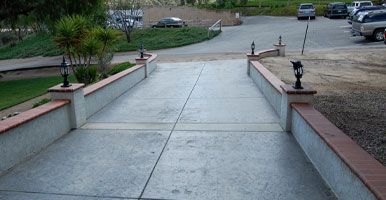
Driveway concrete resurfacing can be the practical middle option when a driveway looks worn or patched but the slab is still fundamentally sound. The key is knowing whether the problems are surface-deep or structural.
A driveway is one of the most visible concrete surfaces on a property, and it’s also one of the most abused. Tires grind grit into the surface, weather and sunlight age the top layer, and small cracks or spalled edges can make the entire driveway feel “old” even when it’s still structurally usable.
That is why many homeowners look into driveway concrete resurfacing. Resurfacing is often chosen because it can refresh the appearance and improve the surface condition without the cost and disruption of demolition and replacement. However, resurfacing is not a shortcut for a driveway that is moving, sinking, or failing structurally.
This guide explains when resurfacing makes sense, when replacement is the safer option, and how to evaluate your driveway based on the conditions you can actually see.
What driveway concrete resurfacing is (in simple terms)
Driveway concrete resurfacing is a process where the existing driveway surface is repaired and then covered with a new surface layer designed to restore:
- A more uniform appearance
- Improved texture and finish
- Reduced visibility of patchwork and surface stains
- A surface that can be sealed for easier cleaning and longer life
Resurfacing can range from thin “skim” applications to thicker overlays depending on the condition of the concrete and the finish goals. The exact approach matters, because the resurfacing layer needs a stable base to bond and perform well.
The first decision: surface problems vs structural problems
The simplest way to decide between resurfacing and replacement is to determine whether the driveway’s issues are primarily:
- Surface wear and cosmetic damage, or
- Structural movement and base failure
Resurfacing is primarily a surface solution. It can improve the look and function of the top layer, but it cannot stop a driveway from moving if the underlying base is failing.
When driveway concrete resurfacing is usually a good choice
Resurfacing often makes sense when the slab is stable, but the surface has become ugly, rough, or inconsistent.
1) The driveway is structurally sound but looks worn or aged
Common signs:
- General discoloration and weathering
- Light surface roughness
- A “tired” look even after cleaning
If the driveway is not moving and does not have major settlement, resurfacing can restore a cleaner, more uniform appearance.
2) Hairline cracking or minor cracks are present (without vertical displacement)
Most concrete develops cracks over time. What matters is the type of crack.
Resurfacing is often appropriate when:
- Cracks are narrow and stable
- Crack edges are not moving up and down relative to each other
- The cracks are not widening rapidly
In these cases, cracks can often be addressed as part of the repair and prep process, with realistic expectations that concrete movement is never “zero” over the long term.
3) The surface has spalling, flaking, or scaling in localized areas
Driveways can develop surface breakdown where:
- Water sits
- De-icing salts were used (more relevant in some regions)
- The top paste layer has weakened over time
If the spalling is mostly surface-level and the slab is still stable, resurfacing can rebuild the damaged surface and restore a consistent finish.
4) Patchwork repairs make the driveway look mismatched
Many driveways accumulate repairs that function fine but look uneven:
- Different colored patches
- Repaired corners
- Sections poured at different times
Resurfacing can unify these mismatched areas so the driveway looks like one cohesive surface again.
5) You want an improved texture or decorative look without tearing out the slab
Some homeowners want traction improvements, a cleaner finish, or a decorative upgrade. When the slab is suitable, resurfacing can be a way to change appearance and texture without full replacement.
When replacement is usually the better option
There are scenarios where resurfacing is likely to fail or look bad quickly because the problem is not just the top layer.
1) The driveway has settlement, heaving, or major unevenness
If one section has dropped or lifted, resurfacing will not correct the underlying cause. It may temporarily hide the issue, but the movement often returns and cracks telegraph back through.
Warning signs include:
- Noticeable trip edges
- Sections that slope the wrong way
- Wheels “bumping” over height changes
2) Cracks have vertical displacement (one side higher than the other)
Vertical displacement indicates movement and stress in the slab or base. Resurfacing can crack in the same line as the underlying movement, often sooner than expected.
3) The slab has widespread structural cracking or base failure
If cracking is extensive and patterns suggest base problems (not just shrinkage), resurfacing may not be a durable choice. The underlying slab needs to be stable for an overlay to last.
4) Drainage problems are severe
Driveways that consistently hold water or direct water toward the home can develop recurring surface issues. Minor drainage inconsistencies can sometimes be improved with surface work, but severe drainage problems often require more than resurfacing.
5) The concrete is crumbling or very weak at the surface
If the surface is actively deteriorating across large areas (not just isolated spots), the driveway may not have enough sound concrete to provide a reliable bonding base.
A practical driveway assessment checklist for resurfacing suitability
Homeowners can often do a first-pass assessment before calling in a contractor.
Resurfacing is more likely to make sense when:
- The driveway feels stable underfoot and does not rock or shift
- Cracks are mostly hairline or narrow and do not show vertical movement
- Spalling is limited and does not extend deep into the slab
- There are no major low spots that hold water for long periods
- The base appears stable (no widespread sinking or recurring movement at joints)
Replacement is more likely to be the better choice when:
- The driveway has multiple areas of settlement or heaving
- Cracks show height differences from one side to the other
- Water drainage is consistently poor and causing recurring damage
- The slab is severely deteriorated across a large percentage of the surface
What resurfacing changes for the homeowner in real use
When resurfacing is appropriate, homeowners usually notice improvements in three areas.
Appearance
- Cleaner, more uniform color and texture
- Reduced patchwork look
- A surface that looks “newer” without demolition
Function
- Smoother transitions and less rough surface wear
- Better traction when the finish is designed for it
- Easier cleaning when sealed properly
Maintenance expectations
Resurfacing is not a set-and-forget upgrade. Like any improved concrete finish, it often performs best with:
- Periodic cleaning to remove grit
- Sealing plans that match exposure and traffic
- Reasonable spill management for oil and vehicle fluids
The most common misconception: resurfacing is not structural repair
The biggest mistake homeowners make is using resurfacing to cover structural issues. If the driveway is actively moving, the resurfacing layer will almost always reflect that movement eventually.
A good resurfacing outcome depends on:
- A stable slab
- Proper preparation and repairs
- A resurfacing system matched to driveway traffic and climate exposure
When those are in place, resurfacing can be a cost-effective way to restore a driveway’s look and surface performance.
–
Driveway concrete resurfacing makes sense instead of replacement when the slab is stable and the issues are mainly surface-level—wear, discoloration, scaling, minor stable cracking, and patchwork repairs that make the driveway look uneven. It is often the practical option for homeowners who want a cleaner, more uniform driveway without the cost and disruption of tearing out and pouring new concrete.
Replacement becomes the better call when the driveway is moving: settlement, heaving, vertical crack displacement, severe drainage problems, or widespread structural deterioration. In those cases, resurfacing is likely to crack or fail early because the base problem is still there.