

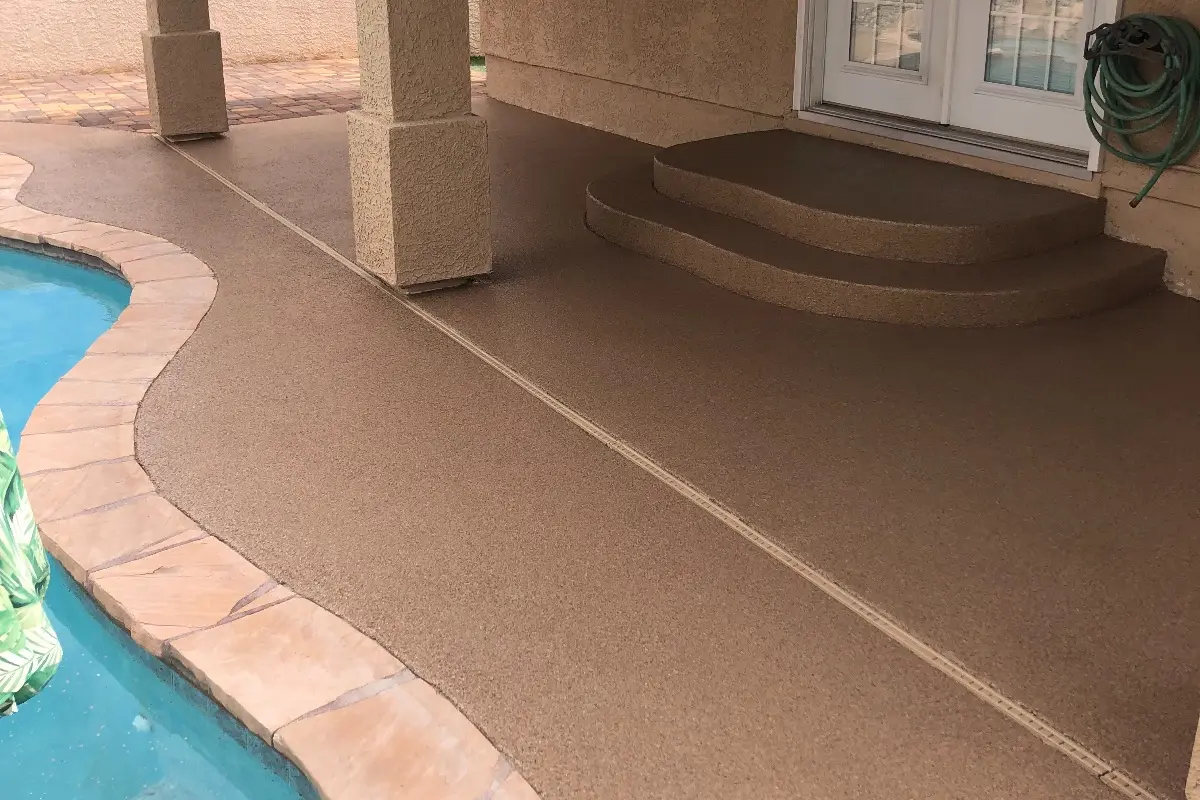
Your garage and your pool deck need completely different coatings, and this is where a lot of homeowners get bad advice. Standard epoxy, the same product that works great inside a garage, is not built for direct sun exposure. If a contractor quotes epoxy for your outdoor pool deck or patio, that’s a red flag. Here’s what actually works outdoors in Las Vegas and why it matters.
Why Standard Epoxy Fails Outdoors in Las Vegas
Epoxy resin is not UV stable. When it’s exposed to direct sunlight for extended periods, the resin breaks down at a molecular level. In practice that means:
- Yellowing – clear or light-colored epoxy topcoats turn amber, then yellow, within months of full sun exposure
- Chalking – the surface develops a powdery, faded film as the resin degrades
- Brittleness and cracking – UV-damaged epoxy loses flexibility and can crack or delaminate, especially with the temperature swings Las Vegas sees between summer days and cooler nights
- Loss of gloss and adhesion – the coating can eventually lift at the edges once it’s degraded enough
None of this is a workmanship issue. It’s a chemistry issue. Epoxy is the right product indoors, in a garage, where UV exposure is minimal. Vegas gets close to 300 days of sunshine a year and outdoor concrete surfaces take direct, intense UV for most of the day. Any coating on a pool deck or open patio needs to be formulated to handle that, and standard epoxy simply isn’t.
What Coating Systems Actually Work Outdoors
Polyaspartic Coatings
Polyaspartic is a type of polyurea coating that cures fast and, critically, is UV stable. It resists yellowing, holds color better over years of sun exposure, and cures quickly enough that a pool deck can often be back in use much sooner than a multi-day epoxy cure. It’s a common choice for pool decks, patios, and other outdoor concrete because it’s built for exactly this exposure. For a fuller comparison, see our polyaspartic vs. epoxy breakdown.
Textured, Slip-Resistant Outdoor Systems
Outdoor decorative concrete coatings for pool areas are almost always textured, either through an aggregate broadcast, a knockdown texture, or a stamped/textured overlay finish. Smooth coatings around a pool are a liability. Wet feet on a smooth, sealed surface is a slip hazard, so outdoor systems are formulated and applied specifically to create traction even when wet.
Cool-Deck Technology
This is the feature that matters most for actual comfort around a Las Vegas pool. Cool-deck coatings use lighter colors and specific formulations (often incorporating reflective pigments or textured, aerated finishes) designed to stay significantly cooler underfoot than bare concrete or dark-colored surfaces in direct sun. Bare concrete or dark pavers around a pool in a Vegas summer can easily exceed temperatures that make barefoot walking painful or even cause burns on bare skin. Cool-deck systems can meaningfully lower surface temperature, which is the difference between a deck kids and pets can actually walk across and one nobody can use between 10am and 7pm in July.
Heat and Comfort: The Real Problem With Vegas Pool Decks
Ambient air temperature in Las Vegas summer regularly hits 105 to 115°F. Concrete and especially dark-colored hardscape in direct sun runs well above ambient air temperature, sometimes 40 to 50 degrees hotter than the air itself. That means a plain dark concrete or paver deck can reach surface temperatures that are genuinely dangerous for bare feet, kids, and pets.
Cool-deck and lighter-colored textured coatings address this directly by reflecting more solar energy instead of absorbing it, and by adding surface texture and sometimes a slight aeration that reduces heat retention compared to dense, smooth concrete. If comfort around the pool matters to your household, this is the single biggest factor to ask about when comparing coating options, more than color or pattern.
Slip Resistance Near the Pool
Slip resistance around pools isn’t optional, it’s a practical safety requirement. A good outdoor deck coating achieves grip through:
- Aggregate or texture broadcast into the coating itself
- A textured topcoat with fine anti-slip additive
- Stamped or knockdown patterns that break up the surface
Ask any contractor quoting a pool deck what specific slip-resistance method they’re using and whether it holds up over years, not just when it’s freshly installed. Some texture methods wear smoother over time with foot traffic and need a slip-resistant topcoat refresh eventually.
Cost of Pool Deck and Patio Coatings
Pricing for outdoor coating systems generally falls in the $5 to $12 per square foot range, depending on:
- The system used (polyaspartic tends to run higher than a basic textured overlay)
- Existing surface condition and prep needed (crack repair, spalling, old coating removal)
- Whether cool-deck technology or specific texture/pattern work is included
- Square footage (larger decks typically see a lower per-square-foot rate)
This is a wider range than an interior garage floor because outdoor jobs vary more in prep requirements and finish complexity. A plain existing slab in decent shape costs less to coat than one with significant spalling, old paint removal, or drainage issues that need addressing first. See our full epoxy flooring cost guide for how outdoor pricing compares to interior systems.
Maintenance in a Hot, Dry Climate
Outdoor coatings in Las Vegas need a different maintenance rhythm than an indoor garage floor:
- Rinse regularly to clear dust, pollen, and mineral deposits from sprinklers or pool splash-out, since dry dust left to sit can be abrasive underfoot over time
- Watch for chlorine and pool chemical splash and rinse those areas periodically, since concentrated chemical exposure can affect coatings faster than plain water
- Reseal on a schedule, not just when it looks worn. Most outdoor coatings benefit from a topcoat refresh every few years depending on sun exposure and traffic, well before visible failure
- Address cracks early. Outdoor slabs move more than indoor garage slabs due to direct temperature swings and moisture changes, so a small crack caught early is a simple fix, a neglected one can undermine the whole coating
FAQ
Can I use regular epoxy on my pool deck if I get a UV-resistant topcoat?
Adding a UV-stable topcoat over a standard epoxy base can help slow yellowing somewhat, but it doesn’t fully solve the problem, and it’s not what most outdoor coating manufacturers recommend or warranty. A full polyaspartic or purpose-built outdoor system is the more reliable route rather than trying to patch an indoor product for outdoor use.
How hot does a cool-deck coated surface actually get compared to bare concrete?
Exact numbers vary by product, color, and sun exposure, but the general principle holds consistently: lighter, reflective, textured cool-deck surfaces run noticeably cooler than dark, dense, smooth concrete in direct sun. The difference is enough to be the deciding factor between a deck that’s usable barefoot in summer and one that isn’t.
Will a polyaspartic pool deck coating fade over time in Las Vegas sun?
All coatings experience some gradual color change with enough years of intense UV exposure, but polyaspartic is formulated specifically to resist the yellowing and rapid fading that plain epoxy suffers. Choosing lighter, more UV-stable pigment colors also helps minimize visible fade over the life of the coating.
How soon can I use my pool deck after a polyaspartic coating is applied?
One advantage of polyaspartic over epoxy is a faster cure. Depending on the specific product and weather conditions, light foot traffic is often possible within a day or two, though full cure for heavy use typically takes a bit longer. Your installer should give you specific timelines for the product they’re using.
My existing pool deck coating is peeling and yellowed. Can it be recoated or does it need to be removed first?
In most cases the failed coating needs to be mechanically removed (grinding or stripping) before a new system goes down, since coating over a delaminating surface just traps the failure underneath and leads to premature peeling of the new coating too. A proper assessment on-site will tell you exactly what removal and prep is needed.
Is a textured coating harder to clean than a smooth one?
Textured outdoor coatings hold slightly more dust and debris in the texture than a smooth surface, but that trade-off is worth it for the slip resistance a pool deck needs. Regular rinsing keeps texture from becoming a maintenance headache, and the safety benefit outweighs the minor extra cleaning.
Get a Free Estimate
Don’t let a contractor put interior epoxy on your outdoor pool deck or patio. Reveles Concrete can assess your slab, walk you through which outdoor system fits your space and budget, and give you a straight answer on cool-deck options if bare feet and hot Vegas summers are a concern. Not sure who to hire? See our guide on how to choose an epoxy flooring company in Las Vegas. Request a free estimate today and get a pool deck built to actually hold up in this climate.