

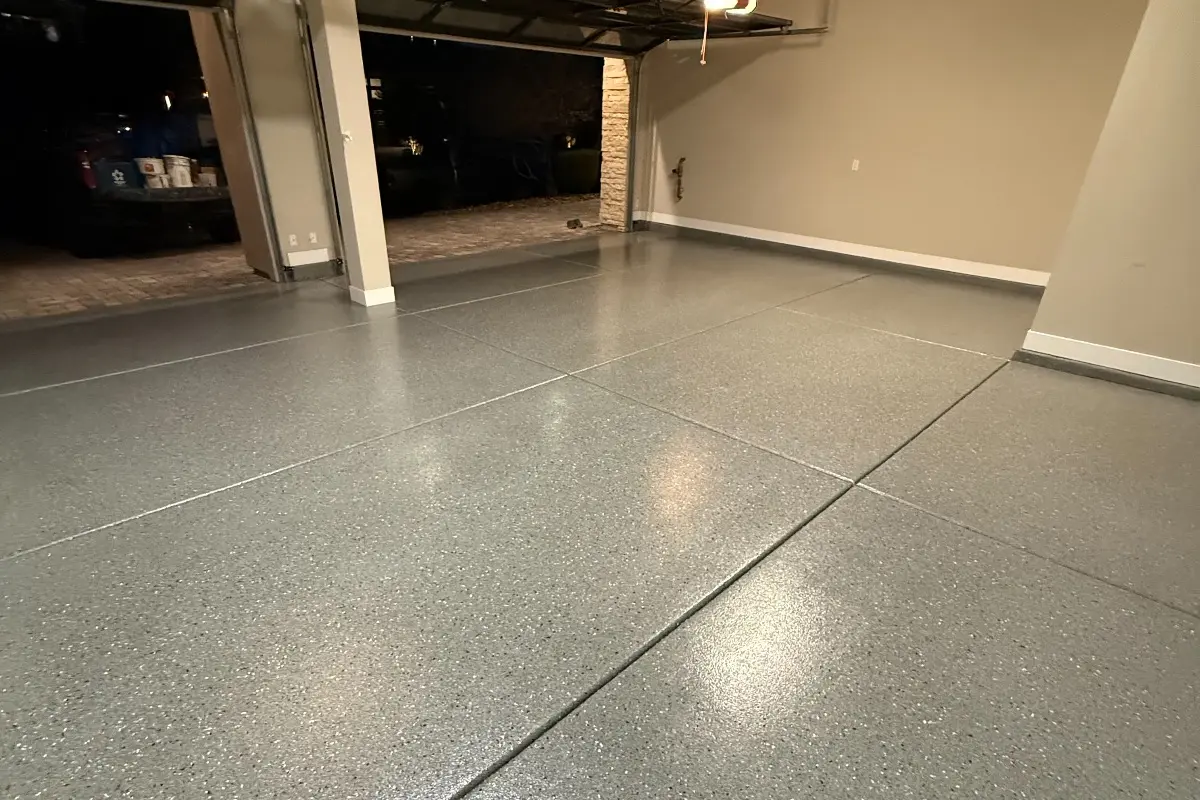
Getting three quotes for an epoxy floor and watching the prices swing from $1,500 to $6,000 for the same garage is confusing if you don’t know what’s actually driving the difference. It’s rarely just the brand of epoxy on the label. It’s prep work, materials, and what’s included in the warranty. Here’s what actually separates a floor that lasts 15 years from one that peels in 18 months, and how to evaluate an epoxy flooring company in Las Vegas before you sign anything.
Questions to Ask Every Contractor
What does your surface prep process look like?
This is the most important question you can ask, full stop. Proper prep means mechanically grinding or shot-blasting the concrete to open its pores so the coating can bond. Ask specifically: will they grind the floor, or just acid etch it? Acid etching is a cheaper, faster shortcut that produces a weaker bond than mechanical grinding. Any contractor who can’t clearly explain their prep method, or who says etching is “just as good,” should raise a flag.
Do you test for moisture before installing?
Concrete slabs, even in a dry climate like Las Vegas, can hold moisture that pushes up through the surface after a coating is applied, causing bubbling or delamination. A moisture test (often a simple calcium chloride or relative humidity test) takes a few minutes and tells the installer whether a vapor barrier primer is needed before coating. If a contractor skips this without explanation, ask why.
What materials are you using, and why?
There’s a real difference between straight epoxy, polyaspartic, and polyurea systems, and a good contractor should be able to explain the tradeoffs without being asked twice.
- Epoxy is durable and cost-effective as a base coat but can be slower to cure and more prone to UV yellowing as a topcoat.
- Polyaspartic cures fast (sometimes within a day), resists UV yellowing, and holds up well to temperature swings, making it a strong topcoat choice for Las Vegas garages.
- Polyurea is highly flexible and abrasion-resistant, often used in commercial or heavy-traffic settings, and also handles temperature extremes well.
Most quality residential systems use an epoxy base coat for adhesion and build, then a polyaspartic or polyurea topcoat for durability and UV resistance. If a quote only mentions “epoxy” with no topcoat detail, ask what’s actually going on the floor. See our polyaspartic vs. epoxy comparison for how these chemistries actually differ.
What’s covered under your warranty?
Ask for the warranty in writing, and read the actual terms, not just the number of years. Some warranties only cover material defects, not labor, prep failures, or peeling caused by moisture. Ask what voids the warranty (harsh chemical cleaners, certain types of parking mats, etc.) and how a claim actually gets handled if something goes wrong.
Are you licensed and insured?
Any legitimate flooring contractor in Nevada should be able to provide proof of a state contractor’s license and liability insurance without hesitation. This protects you if something goes wrong on your property during the job. Don’t take “we’ve done this a hundred times” as a substitute for actual documentation. Ask to see it, and verify the license number if you want extra peace of mind.
Red Flags to Watch For
Bids that seem too low
If one quote is dramatically lower than the others for the same square footage and system, find out why before getting excited. The most common reason is that prep is being cut, a thinner coating is being applied, or a cheaper topcoat is being substituted without being clearly disclosed.
No mention of grinding or prep in the quote
If a written estimate doesn’t mention surface preparation at all, that’s a problem. Prep isn’t an optional add-on, it’s the foundation the entire job depends on. A quote that jumps straight from “clean the floor” to “apply coating” is skipping the step that determines whether the floor lasts.
Vague or verbal-only warranty terms
“We stand behind our work” isn’t a warranty. If a contractor won’t put warranty terms in writing before you sign a contract, treat that as a serious red flag, not a minor inconvenience.
High-pressure sales tactics
Same-day discounts, “sign today or lose this price,” and pushy in-home sales pitches are common in the flooring industry generally. A contractor confident in their work doesn’t need to pressure you into a same-visit decision on a job that will be on your floor for a decade or more.
How to Compare Quotes Apples-to-Apples
Don’t compare quotes on price alone. Line them up side by side and check:
- Square footage calculation. Make sure everyone measured the same area, including or excluding things like the garage apron consistently.
- Number of coats and system type. A one-coat epoxy quote and a three-coat epoxy/polyaspartic system quote are not the same job, even if the price looks close.
- Prep method. Grinding versus etching should be spelled out, not assumed.
- Cure time and downtime. Some systems allow foot traffic in 24 hours and vehicle traffic in a few days; others take much longer. If you need your garage back quickly, this matters.
- What’s excluded. Crack repair, moisture barrier primers, and baseboards or cove details are sometimes priced separately. Know what’s actually included before comparing bottom-line numbers.
As a general reference point, residential epoxy and polyaspartic garage floor systems in most markets run roughly $3 to $12 per square foot depending on the number of coats, decorative flake, and topcoat material used. Quotes far outside that range in either direction deserve a second look. See our full epoxy flooring cost guide or our garage floor epoxy cost breakdown by size for more detail.
Why Prep Matters More Than the Topcoat Brand
It’s tempting to focus on which brand or product line a contractor uses, but the truth is that a mediocre coating installed over properly prepped concrete will outperform a premium coating installed over a poorly prepped slab almost every time. The bond between the coating and the concrete is the foundation of the whole system. If that bond fails, everything on top of it fails with it, regardless of how good the topcoat was.
Desert Climate Questions Worth Asking
Is the topcoat UV-stable?
Standard epoxy yellows under sun exposure. If your garage door sees direct sun for part of the day, ask specifically whether the topcoat is UV-stable, which is a key feature of polyaspartic and polyurea finishes.
How does the system handle Las Vegas summer heat?
Slab surface temperatures can get extremely hot in summer, and materials need to be applied and cured within specific temperature windows to bond correctly. Ask how the contractor handles installation timing and cure conditions during the hottest months, since rushing a cure in extreme heat can affect the final bond quality.
FAQ
Is it worth paying more for polyaspartic over standard epoxy in Las Vegas?
For most Las Vegas garages, yes. Polyaspartic topcoats resist UV yellowing and handle the wide temperature swings between summer days and desert nights better than standard epoxy. The added cost usually pays off in fewer years lost to fading, cracking, or hot tire marks.
How long should I expect my garage to be unusable during installation?
Most residential jobs take 1 to 3 days depending on square footage, number of coats, and repair work needed. Foot traffic is often allowed within 24 hours with polyaspartic systems, but full vehicle weight typically needs several more days to fully cure, especially in extreme summer heat where cure timing needs to be managed carefully.
Can a contractor install epoxy directly over my existing garage floor without grinding?
Not properly. Any existing sealer, paint, or contamination on the slab has to be mechanically removed for a new coating to bond correctly. A contractor who offers to skip grinding to save time or money is setting the floor up for early peeling.
Does the heat in Las Vegas mean I should wait for a specific season to install epoxy?
Not necessarily, but installation timing does matter. Experienced contractors manage application and cure schedules around temperature, sometimes working early mornings or adjusting cure windows during peak summer heat to keep the material within its proper working range.
What should I ask about crack repair before getting a quote?
Ask whether the quote includes repairing existing cracks in the slab, and how they’re addressing it. Cracks that aren’t properly filled and stabilized before coating can telegraph through the new floor or become a failure point later.
How do I verify a contractor is actually licensed in Nevada?
Ask for their contractor’s license number directly and cross-check it against the Nevada State Contractors Board’s public license lookup. This takes a couple of minutes and confirms the license is active and in good standing before you commit to a job.
Why Reveles Concrete Fits These Criteria
Reveles Concrete uses mechanical surface preparation rather than acid etching, tests slabs for moisture where warranted, and offers UV-stable topcoat options built for Las Vegas heat and sun exposure. For businesses, see our commercial epoxy flooring guide for industry-specific system recommendations. Licensing, insurance, and warranty terms are provided in writing, not just promised verbally. If you’re comparing contractors using the checklist above, Reveles Concrete is worth adding to your list. Request a free estimate today and get a clear, honest quote for your garage or shop floor.